
Disability Insurance for Radiologists
As an Independent Disability Insurance Broker, we have access to exclusive discounts and negotiated pricing most captive agents can’t offer — see the full breakdown near the end of this page.
Disability Insurance for Radiologists

Jason Stolz CLTC, CRPC, DIA, CAA
Disability insurance for radiologists is one of the most strategically important financial decisions a physician in this specialty can make — and one where the combination of exceptional income, unique occupational risk factors, and the career length required to maximize a radiology practice’s earning potential creates a planning scenario where the financial stakes of disability are among the highest in all of medicine. Radiologists occupy a distinctive position in the disability risk landscape: on the surface, a physician who reads images at a workstation appears to face lower physical risk than surgeons or emergency medicine physicians who perform invasive procedures in demanding environments. The reality is more complex. Radiologists face a documented constellation of occupational hazards — from chronic neck and back conditions driven by sustained workstation posture demands, to radiation exposure risk in interventional and fluoroscopic subspecialties, to one of the highest burnout rates in medicine — that create genuine and profession-specific disability pathways that a properly structured policy must address. A 2024 poll found that 44% of male radiologists and 65% of female radiologists report burnout, while some studies find the overall prevalence exceeds 80%. A cross-sectional study of radiographers found pooled musculoskeletal disorder prevalence as high as 85%, most commonly affecting the neck and lower back. These are the disability risks that matter for income protection planning — and with radiologist total compensation ranging from $450,000 to well above $600,000 annually for interventional subspecialists, the financial exposure of an unprotected disability is extraordinary. At Diversified Insurance Brokers, we help radiologists across all subspecialties and practice settings design disability insurance strategies that reflect these specific risks, income structures, and career planning considerations. For a foundational overview before examining radiology-specific planning, our disability insurance services overview provides essential context, and our resource on disability insurance for physicians covers the broader physician planning framework that radiology-specific considerations build upon.
Protect Your Income as a Radiologist
Compare disability insurance options designed for physician-level income, subspecialty risk profiles, and radiology practice structures.
Request Disability Insurance OptionsQuestions? Call 800-533-5969
What Radiologists Actually Do — Why the Risk Profile Is More Complex Than It Appears
Radiology is a physician specialty built on image interpretation, diagnostic reasoning, and procedural expertise — and the nature of these activities creates occupational risk profiles that differ substantially across diagnostic and interventional subspecialties. Understanding what radiologists actually do across different practice contexts is the foundation for understanding why disability insurance design must be tailored to subspecialty, not just to the general category of “physician.”
Diagnostic radiologists spend the majority of their clinical time in a darkened reading room environment, interpreting imaging studies across multiple modalities — plain radiography, computed tomography, magnetic resonance imaging, ultrasound, nuclear medicine, and PET imaging. Modern high-volume diagnostic radiology involves reading hundreds of studies per day in a fast-paced, production-measured environment where turnaround time metrics are tracked and productivity expectations are significant. The physical demands of this environment — sustained forward neck flexion and shoulder elevation while reading from workstations, prolonged sitting in ergonomically suboptimal positions, repetitive mouse-clicking and keyboard interaction across extended interpretation sessions, and sustained high-intensity visual focus on high-resolution monitors — generate the musculoskeletal loading that drives the documented high prevalence of neck, shoulder, upper back, and wrist conditions among diagnostic radiologists and radiographers.
A 2024 systematic review and meta-analysis of occupational health challenges in radiography found pooled musculoskeletal disorder prevalence of up to 85%, with neck and lower back the most commonly affected regions. The workstation ergonomics of high-volume image reading are a primary driver: a radiologist who reads 300 CT studies in a day may spend 8 to 10 consecutive hours in the reading room, with minimal postural variation, sustained cervical spine loading in forward-flexed postures, and repetitive upper extremity movements that accumulate occupational loading across thousands of clinical hours. Over a career spanning 25 to 35 years in active practice, this cumulative load becomes the primary musculoskeletal risk factor for diagnostic radiologists — not a single acute injury event, but a gradual-onset chronic condition pattern that develops progressively and eventually impairs the ability to sustain full-volume reading productivity.
Interventional radiology (IR) — both integrated and traditional pathway — adds a substantially different and in many respects more acute risk dimension. Interventional radiologists perform image-guided procedures: vascular access, arterial and venous interventions, drain and catheter placements, biopsy procedures, tumor ablations, vertebroplasty and kyphoplasty, and a wide range of minimally invasive procedures across organ systems. These procedures require sustained standing at fluoroscopy tables in lead protective equipment that weighs 10 to 20 pounds or more — lead aprons, thyroid shields, and in many settings leaded glasses and additional protective garments that must be worn throughout prolonged procedural cases. The musculoskeletal consequences of prolonged lead apron wear are well documented: compressive loading of the cervical and lumbar spine from the weight and position of lead garments, combined with the sustained procedural postures of fluoroscopy table work, produces documented rates of cervical and lumbar degenerative changes in interventional radiologists that exceed those of age-matched comparison populations.
Radiation exposure is the most distinctive occupational hazard in interventional radiology and fluoroscopy-intensive subspecialties. While modern radiation safety practices, dose monitoring, and protective equipment have substantially reduced individual exposure compared to early-career radiologists practicing decades ago, the occupational exposure risk is real and career-long. Studies have found excess cancer risk in radiologists, with leukemia risk particularly elevated in early workers operating before modern dose standards, and documented concern for breast and skin cancer risk across exposure cohorts. Interventional radiologists, cardiologists who perform fluoroscopic procedures, and radiologists who conduct special procedure work are considered to be at higher radiation exposure than pure diagnostic image-reading colleagues, and this differential risk is reflected in disability insurance underwriting for radiation-exposed subspecialists.
Burnout: Radiology’s Most Prevalent and Underappreciated Disability Risk
Burnout in radiology represents one of the most consequential and most underinsured disability risks in the specialty — precisely because it develops gradually, resists easy clinical categorization, and is frequently managed through career modification rather than formal disability claims until it reaches the threshold of clinical mental health conditions that definitively impair professional function.
The data on radiologist burnout is stark. A 2024 poll found that 44% of male radiologists and 65% of female radiologists report experiencing burnout. A German study found that 76.7% of participating radiologists met criteria for burnout in their population. Research has consistently placed radiology in the middle-to-high end of all physician specialties for burnout prevalence, with some studies finding overall rates exceeding 80%. Interventional radiology reports even higher burnout rates than diagnostic radiology, reflecting the compound demands of long procedural days, unpredictable emergency consults, and the physical toll of lead apron wear and sustained procedural work.
The structural drivers of radiologist burnout are well-established: increasing imaging volume with decreasing reimbursement per study, turnaround time pressure that creates a continuous production-line quality to image reading, the professional isolation of reading room work that reduces collegial interaction, the persistent threat of AI-based automation to parts of the specialty’s value proposition, administrative burden, and the “moral injury” of perceived substandard care delivery when imaging volume prevents adequate time for complex case interpretation. These factors create a chronic stress environment that, sustained over years, produces the emotional exhaustion, depersonalization, and reduced sense of professional efficacy that define clinical burnout.
When burnout progresses to clinical-level major depression or generalized anxiety disorder — with symptoms severe enough to impair concentration, decision quality, and the clinical performance that radiology demands — it constitutes a genuine occupational disability. A radiologist who can no longer maintain the sustained attention required for high-volume image reading, whose clinical judgment is impaired by depression, or who is unable to maintain the emotional regulation required for complex patient communication and procedure performance is experiencing real impairment of their professional function. Disability policies that cover mental health conditions without restrictive 24-month benefit period limitations are essential for radiologists whose most realistic disability pathway involves burnout-driven mental health conditions. For those already considering coverage, our resource on whether disability insurance is worth it provides the cost-benefit framework that makes the value especially clear for high-income specialties like radiology, and our resource on disability insurance riders explained covers how mental health provisions are structured across different policy types.
The Specific Occupational Hazard Categories for Radiologists
Cervical spine conditions from workstation-based reading are the most prevalent musculoskeletal disability pathway for diagnostic radiologists. Sustained forward head posture during image interpretation creates anterior loading on the cervical spine that generates progressive disc degeneration, herniation, and facet joint wear — particularly at C5-C6 and C6-C7, the most commonly affected levels in occupational cervical spine conditions. A radiologist who develops cervical disc herniation with radiculopathy producing arm pain, numbness, and weakness may be unable to sustain the sustained workstation hours that high-volume diagnostic reading requires. Even subthreshold cervical pain that requires regular pain management, physical therapy, and activity modification can progressively reduce productive reading hours below the productivity expectations of a clinical practice or employment arrangement.
Lead apron musculoskeletal syndrome in interventional radiologists is a well-documented and profession-specific occupational health condition. Lead aprons distribute weight unevenly across the shoulders and lower back, creating a pendulum effect that generates significant spinal loading with each movement and postural adjustment during procedural work. Interventional radiologists who perform high procedural volumes over years develop lumbar and cervical degenerative changes that occur at earlier ages and higher rates than in their diagnostic colleagues. Studies have found statistically significant differences in lumbar disc degeneration rates between interventional radiologists and diagnostic-only radiologists, attributable to the chronic lead apron loading of long procedural careers. The disability implications are significant: a lumbar condition severe enough to prevent the prolonged standing required for interventional procedures effectively ends the interventional portion of the radiologist’s practice, with major income implications for IR-trained physicians whose compensation premium reflects that procedural capacity.
Eye strain and visual fatigue represent a distinctive occupational health concern for radiologists that is less commonly discussed but clinically documented. High-volume image reading requires sustained high-intensity visual concentration on high-resolution diagnostic monitors across many hours of reading sessions. Radiologists report significantly elevated rates of chronic eye strain, dry eye syndrome, and visual fatigue symptoms compared to physician populations in less visually demanding roles. While visual conditions rarely produce total disability in isolation, they can contribute to the cumulative functional burden that reduces sustainable reading productivity — and in combination with other conditions can push a radiologist’s overall functional capacity below the threshold required for full clinical performance.
Radiation-related illness risk — while substantially reduced compared to historical radiology practice — remains a documented occupational concern for radiologists with significant fluoroscopy and IR exposure over career-long timeframes. The excess cancer risk documented in epidemiological studies of radiologist cohorts, while modest in absolute terms, represents a genuine occupational health exposure that distinguishes this specialty from physician groups with purely diagnostic clinical roles. A cancer diagnosis at any stage represents a disability scenario that disability insurance addresses directly — providing income replacement during treatment, recovery, and any period of permanent functional limitation that follows.
Radiology Income Structure: Why the Financial Stakes Are Exceptional
The financial exposure of disability is exceptionally high for radiologists because of the combination of high absolute income levels with the long training pathway required to generate that income — creating a scenario where any disability event during the working career produces a disproportionately large lifetime financial impact.
Radiologist total compensation has risen dramatically in recent years. According to Doximity’s 2025 Physician Compensation Report, diagnostic radiologists reported average annual compensation of $571,749, while interventional radiologists reported $572,617. Medscape’s 2025 Physician Compensation Report found average radiologist total compensation of $526,000. Verified compensation data from active physicians shows median radiologist total compensation of approximately $585,000 as of 2025, with interventional and neuroradiologists regularly exceeding $600,000 to $700,000 and top private practice partners in high-volume markets reporting compensation above $800,000. These compensation levels rank radiology among the three highest-compensated physician specialties in American medicine, alongside orthopedic surgery and plastic surgery.
The pathway to this income is long and requires significant investment. Radiology training begins with four years of medical school — typically generating $200,000 to $300,000 or more in educational debt — followed by a five-year diagnostic radiology residency (including PGY-1 internship year), after which the majority of radiologists complete a one to two year fellowship in a subspecialty such as interventional radiology, neuroradiology, musculoskeletal radiology, or breast imaging. Total training duration from medical school entry to independent practice is typically 9 to 11 years, with attending-level income commencing only at the conclusion of that training pathway. The consequence is that the productive earning career of a radiologist — during which the high compensation levels that justify income protection are actually generated — occupies only the final 25 to 35 years of a working life that began decades earlier. A disability occurring at any point in that productive career forecloses an exceptional income stream that required extraordinary educational investment to access.
The financial exposure calculation is direct: a radiologist earning $550,000 annually who becomes disabled at age 45 and cannot return to practice faces a potential 20-year income gap of $11 million in foregone earnings — before accounting for retirement savings contributions, practice equity accumulation, and the compounding investment growth that those income streams would have supported. Even a partial disability that reduces productivity and compensation by 40% represents a $4.4 million lifetime impact. These numbers make disability insurance premium expenditure — even at the high amounts appropriate for top-decile physician incomes — the most economically rational protection purchase available to this specialty. Our resource on how much disability insurance you need helps translate income levels into specific benefit amounts, and our resource on high income disability insurance covers the specific underwriting and policy design considerations for physician-level compensation.
Practice Settings and Their Specific Risk Profiles
Private practice radiology groups represent the highest-earning practice setting and are where the majority of U.S. radiologists practice. Private practice typically offers higher total compensation than employed positions — the differential between private practice partners and hospital-employed radiologists is typically 20 to 35% — but involves practice management responsibility, capital investment in imaging equipment, business overhead obligations, and the income variability that comes with partnership income structures. For private practice radiologist-owners, disability insurance must address both personal income replacement and, for larger ownership interests, business overhead protection. Our resource on business overhead disability insurance covers how this separate layer of protection addresses the practice expense obligations that continue during a personal disability, and our resource on key person disability insurance addresses the business impact dimension when a partner-radiologist’s disability affects the practice’s operational and financial capacity.
Hospital-employed radiology typically provides more stable and predictable income with defined salary structures and employer benefits, including access to group long-term disability coverage. The limitation of employer group coverage for high-income radiologists — where the group policy’s standard benefit cap may protect only a fraction of actual compensation — is particularly acute. A hospital-employed radiologist earning $500,000 annually whose employer group LTD policy has a $15,000 monthly maximum benefit cap receives only $180,000 annually in group coverage — 36% of actual income — creating a $320,000 annual gap that individual disability insurance must fill.
Teleradiology and remote reading is a growing practice model in which radiologists interpret images remotely from home offices or teleradiology hubs. While teleradiology eliminates some of the physical hazards of clinical practice settings, it may actually increase certain workstation-based ergonomic risks by reducing the environmental oversight and ergonomic equipment that formal clinical settings provide. Teleradiologists also face the income exposure unique to independent contractor arrangements — no employer sick leave, no group disability coverage, and immediate income cessation if a health event prevents reading. Our resource on disability insurance for independent contractors covers the coverage design and income documentation considerations specific to contract-based physician arrangements.
Academic radiology combines clinical practice with research, education, and administrative responsibilities, typically at compensation levels somewhat below private practice peers. The burnout risk in academic radiology reflects the compound pressure of clinical productivity requirements alongside research output expectations, grant funding pressures, teaching responsibilities, and committee obligations — creating a professional workload that is administratively and intellectually demanding beyond the clinical image-reading component alone.
The Own-Occupation Definition: Its Critical Importance for Radiologists
For radiologists, the disability definition in any insurance policy they consider is the most consequential single provision — because for a subspecialty-trained physician with a highly specific clinical function, the difference between own-occupation and any-occupation coverage is the difference between a policy that pays in realistic scenarios and one that fails exactly when it is most needed.
Under a true own-occupation disability definition, a radiologist is considered disabled when they cannot perform the material and substantial duties of their specific occupation as a radiologist — even if they could theoretically perform some other type of work. An interventional radiologist whose lumbar condition prevents the prolonged standing required for fluoroscopy table procedures would receive benefits under own-occupation coverage even if they could perform purely diagnostic reading work. A diagnostic radiologist whose cervical condition and associated headache disorder prevents sustained workstation reading productivity would receive benefits even if they could perform administrative or teaching roles. The policy protects the radiology income specifically — the income that reflects 9 to 11 years of training and a lifetime of subspecialty development.
Under an any-occupation standard — which most group policies apply after 24 months — the same radiologist might be denied benefits because a physician with their training could theoretically perform a range of medically-related roles. This definition failure is particularly acute for high-income radiologists because the financial gap between “some medical role” and “full radiology practice income” is so large. Our resource on own-occupation disability insurance explains how this definition is written and applied in real claim scenarios, and our resource on disability insurance for medical residency explains why radiologists should establish own-occupation coverage during training — before the occupational risk accumulation of a full practice career begins and before age drives premiums higher.
Residual Disability Coverage: Essential for Production-Measured Radiology Practice
Radiology is one of medicine’s most explicitly production-measured specialties — compensation is frequently tied directly to RVU (relative value unit) generation, reading volume, and procedural output. This productivity-income linkage makes residual disability coverage especially important, because any condition that reduces reading productivity or procedural capacity below full output produces a direct and proportionate income reduction — long before any total disability threshold is reached.
A radiologist managing a cervical condition that limits reading to 6 hours per day instead of 10 hours is generating 40% less RVU production and receiving proportionally reduced compensation. A radiologist recovering from shoulder surgery who is cleared for diagnostic reading but cannot perform procedures is losing the procedural income component entirely. An IR radiologist managing chronic back pain who limits standing procedures to 4 per day instead of 8 is earning significantly less than pre-disability compensation without technically being unable to work. Residual disability coverage pays a proportionate benefit that addresses these partial disability scenarios — providing financial support throughout the recovery continuum rather than only at its most extreme end. Our resource on residual disability insurance benefits explained covers how these proportionate benefit calculations work and why they are indispensable for production-measured medical specialties like radiology.
The Employer Coverage Gap and Individual Policy Strategy
Hospital-employed and large-group-employed radiologists typically have access to employer group LTD coverage — and understanding the limitations of that coverage is essential for any radiologist whose financial planning assumes it provides meaningful income protection.
Standard group LTD policies cap monthly benefits at a defined maximum — commonly $10,000 to $20,000 per month — that represents a small fraction of a high-earning radiologist’s actual monthly income. A radiologist earning $550,000 annually ($45,833 per month) whose group policy caps benefits at $15,000 per month is receiving coverage for only 33% of their actual income even when the policy is functioning as designed. The remaining 67% — over $30,000 per month — is completely unprotected.
Group policies also apply the 24-month own-occupation to any-occupation definition transition that creates the most significant coverage failure for subspecialty physicians. A radiologist who cannot perform IR procedures due to a back condition but can perform diagnostic reading may find that the any-occupation standard applied at month 25 terminates benefits on the grounds that they remain capable of performing diagnostic radiology — even though their subspecialty-trained IR practice generated the income the policy was supposed to replace. Individual disability insurance that maintains own-occupation coverage for the full benefit period, at benefit amounts that genuinely reflect actual compensation, is the solution to this systematic gap. Our resource on why working with an independent disability insurance broker matters explains how independent carrier comparison produces better outcomes for physicians with complex income structures, and our resource on guaranteed issue group disability insurance explains how group coverage works at the employer level for context.
Designing a Disability Policy for Radiologists
Disability insurance for radiologists requires deliberate design that addresses the specialty’s specific income level, subspecialty risk profile, practice structure, and the career-length considerations of a physician with 9 to 11 years of training investment behind them.
The benefit amount should reflect actual total compensation as fully as carrier underwriting rules allow. For radiologists whose income exceeds the maximum monthly benefit most carriers offer individually, a strategy of stacking policies from multiple carriers — each at their individual maximum — can produce the total benefit level that actual income warrants. Our resource on best disability insurance rates provides the framework for comparing carrier-specific benefit maximums and terms.
The own-occupation definition must apply for the full benefit period and be confirmed in the actual policy contract language. For interventional subspecialists whose occupation-specific income reflects both diagnostic and procedural capacity, the definition should specifically protect the radiologist’s inability to perform the duties of their specific subspecialty — not just the broader category of “physician.”
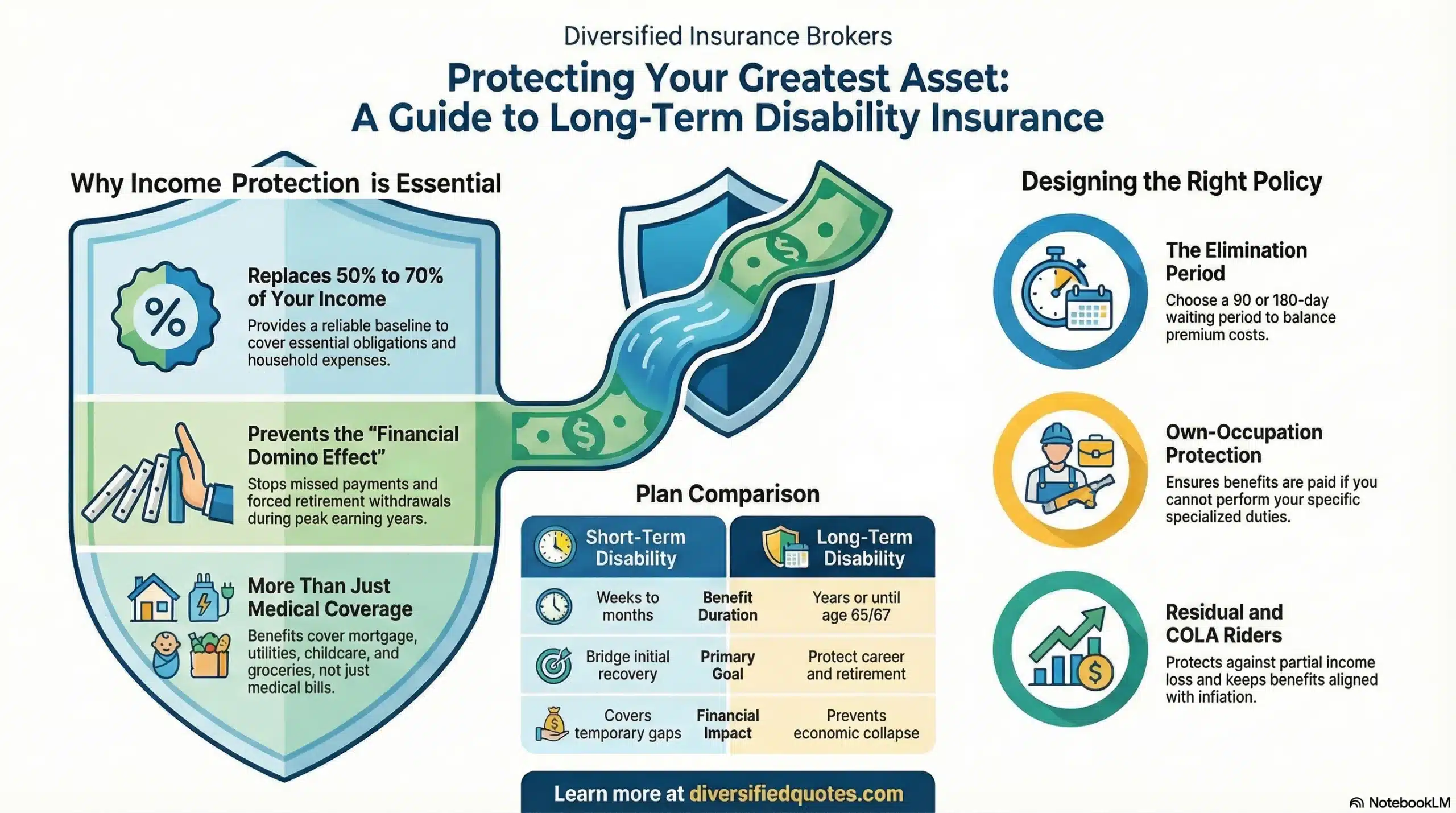
The elimination period should reflect actual financial reserves. Most attending radiologists with established savings can sustain a 90-day elimination period. Radiologists in earlier career stages — particularly those with significant medical school debt still being repaid — should consider a 60-day elimination period given the acute financial pressure of a debt service obligation during disability income replacement. Our resource on disability insurance elimination periods explained provides the framework for calibrating this choice.
The benefit period should extend to age 65 or 67. With training completion occurring at age 32 to 35 for most radiologists, the productive career spans 30 years or more — and a disability occurring at any point during that career warrants full-duration benefits rather than a 5-year period that leaves the most costly long-duration scenarios unprotected.
The COLA rider matters particularly for high-income radiologists, because the dollar amount of a benefit not adjusted for inflation erodes substantially over a 20-year disability claim. At 3% annual inflation, a $25,000 monthly benefit loses approximately 45% of its purchasing power over 20 years without COLA adjustment. Our resource on disability income insurance with COLA explains how this rider is structured and valued.
The future increase option is particularly valuable for radiology residents and fellows establishing coverage during training — allowing them to purchase coverage at training-level incomes with the contractual right to increase benefits as attending-level and subspecialty income develops, without new underwriting. Our resource on disability insurance future insurability riders covers how this protection works for physicians in training.
For radiologists who are practice owners or partners, business overhead expense coverage addresses the practice-level financial exposure that personal disability insurance does not cover. Our resource on disability business overhead expense coverage explains the separate BOE policy structure that protects the practice while personal DI protects household income. For radiologist partnerships managing buy-sell agreements, our resource on buy-sell disability insurance covers how disability-triggered buyout protection works within radiology practice ownership structures.
When to Apply: Radiology Residency Is the Optimal Window
The optimal time for a radiologist to establish disability insurance is during residency — before fellowship, before attending-level practice begins accumulating the occupational health history that can produce exclusion riders, and at the youngest age that produces the lowest locked-in premium for a career-long policy.
A radiology resident who applies during PGY-2 or PGY-3 can establish a policy at age 28 to 30 at premiums that will be locked in for the next 35 years. The future increase option purchased with the policy allows coverage to expand as income grows from resident stipend to fellowship year to first-year attending to senior subspecialist partner — all without new medical underwriting. Health history at the time of residency application is typically clean, before the sustained workstation postures of a full diagnostic reading career have produced the documented cervical and lumbar conditions that appear in medical records of mid-career radiologists.
A radiologist who delays application to age 42, after a decade of attending practice, faces not only 2 to 3 times higher annual premiums but potentially the documentation of occupational health conditions — cervical symptoms from workstation reading, lumbar symptoms from lead apron wear in IR — that produce exclusion riders limiting coverage for exactly the most likely disability scenarios. Our resource on why young physicians need disability coverage addresses this timing argument directly, and our resource on how to get the best disability insurance rates explains all the factors that drive coverage quality and cost.
Get Disability Insurance Quotes for Radiologists
We compare options across carriers for physician-level income and subspecialty risk profiles to find the right combination of definition strength, benefit design, and long-term value.
Request Disability Insurance OptionsQuestions? Call 800-533-5969
Financial Protection Essentials
Income protection resources, policy design guides, and disability insurance planning tools for physicians and high-income medical specialists.
Related Pages
Talk With an Advisor Today
Choose how you’d like to connect—call or message us, then book a time that works for you.
Schedule here:
calendly.com/jason-dibcompanies/diversified-quotes
Licensed in all 50 states • Fiduciary, family-owned since 1980
Frequently Asked Questions: Disability Insurance for Radiologists
Radiologists face a distinctive occupational risk profile that differs meaningfully across diagnostic and interventional subspecialties. For diagnostic radiologists, the primary risks are cervical and lumbar spine conditions from sustained workstation reading postures, upper extremity repetitive strain from prolonged mouse-click and keyboard interaction during high-volume image interpretation, and clinical burnout from the production-measured, high-turnaround reading environment. A 2024 systematic review found pooled musculoskeletal disorder prevalence among radiographers of up to 85%, with neck and lower back most commonly affected — conditions that develop gradually from the accumulated loading of thousands of reading room hours.
For interventional radiologists, lead apron musculoskeletal syndrome adds a significant and subspecialty-specific risk dimension. Prolonged wear of 10 to 20-pound lead protective garments during fluoroscopy table procedures generates documented cervical and lumbar disc degeneration that occurs at earlier ages and higher rates in IR radiologists than in diagnostic-only colleagues. Burnout affects 44% to 65%+ of radiologists depending on subspecialty and study methodology. Our resource on disability insurance for physicians provides broader context on how these radiology-specific risks compare to other medical specialties.
The amount of disability insurance a radiologist needs is determined by their actual monthly income and financial obligations — not by any standard formula. With radiologist total compensation typically ranging from $450,000 to well above $600,000 annually for attending subspecialists, the monthly income requiring replacement can easily exceed $40,000 to $50,000. Individual disability insurance carriers typically set maximum monthly benefit limits in the $15,000 to $25,000 range, meaning that a radiologist earning $550,000 annually may need to stack policies from multiple carriers to approach meaningful income replacement relative to actual compensation.
A practical starting framework: identify the monthly expenses that must be maintained during a disability period — household obligations, medical school debt service, practice or business commitments — and ensure the total disability benefit from all sources covers those obligations without requiring asset liquidation. Our resource on how much disability insurance you need provides the full framework for this calculation, and our resource on high income disability insurance addresses the carrier-specific considerations for physician-level compensation.
Burnout itself is not a clinical diagnosis recognized as a disability claim trigger — it is a workplace phenomenon with psychological components. However, when burnout progresses to clinical-level major depressive disorder, generalized anxiety disorder, or another mental health condition that meets DSM diagnostic criteria and produces functional impairments preventing the performance of professional duties, it can and does qualify for disability insurance benefits under policies that cover mental health conditions. For radiologists whose ability to perform high-volume image interpretation requires sustained attention and clinical judgment, a mental health condition that impairs these cognitive capabilities represents genuine occupational disability.
The critical policy provision is the mental health benefit period limitation. Some carriers cap mental health disability benefits at 24 months even when physical disability benefits would pay to age 65. For a radiologist whose most realistic disability pathway involves burnout-driven mental health conditions — documented at 44% to 65%+ prevalence — selecting a policy without this 24-month mental health limitation is a priority that must be explicitly confirmed in the policy contract language. Our resource on disability insurance riders explained covers how mental health provisions are structured across different policy types.
For the vast majority of radiologists, employer group long-term disability coverage is dramatically insufficient relative to actual compensation. The most common group LTD benefit cap is $10,000 to $20,000 per month — amounts that represent a small fraction of a radiologist’s actual monthly income. A radiologist earning $550,000 annually ($45,833 per month) whose group policy caps at $15,000 per month has only 33% of their income protected even when the group policy functions exactly as designed. The remaining 67% is completely unprotected without individual supplemental coverage.
Beyond the benefit cap gap, group policies apply the 24-month own-occupation to any-occupation definition transition that creates the most significant coverage failure for subspecialty physicians. Group policies also do not follow the radiologist if employment changes. Individual disability insurance that fills the income gap above the group policy cap, maintains own-occupation coverage for the full benefit period, and provides portable protection is the standard that radiology income protection requires. Our resource on guaranteed issue group disability insurance explains how group coverage is structured and where individual coverage fills the consistent gaps.
Yes — interventional radiologists have a materially different occupational risk profile that should influence both the disability definition language and the coverage amount. Interventional radiology commands a significant income premium over diagnostic radiology — $100,000 to $200,000 annually in many markets — reflecting additional training, procedural risk, call requirements, and physical demands. A disability policy designed around a standard diagnostic radiology income significantly underinsures the IR physician whose total compensation includes this procedural premium.
An IR radiologist who can perform diagnostic reading but can no longer perform the prolonged standing, lead apron wear, and procedural demands of interventional work has experienced a genuine occupational disability that reduces their actual compensation substantially — but an any-occupation definition would deny benefits on the grounds that they can still practice diagnostic radiology. Our resource on disability insurance for high earners covers the coverage design considerations for physician-level income, and our resource on buy-sell disability insurance addresses planning for IR radiologists who are practice partners.
The optimal window is during residency training — specifically PGY-2 or PGY-3. Applying during residency produces the lowest locked-in premium for a career-long policy, establishes coverage before occupational health history begins appearing in medical records, and provides the future increase option that allows coverage to expand from resident stipend to fellowship to attending to partner without new medical underwriting.
A radiology resident who applies at age 28 and a practicing radiologist who applies at age 45 pay dramatically different premiums — the older applicant may pay 2 to 3 times more annually, compounded across every premium payment for 20 remaining working years. The radiologist applying at 45 may also have documented cervical or lumbar symptoms from years of reading room practice that produce exclusion riders on exactly the most likely disability scenarios. Our resource on disability insurance for medical residency provides specific guidance on establishing coverage during training.
Radiology practice owners face a two-layer disability risk that personal disability insurance addresses only partially. Personal DI protects household income but does not address the practice’s fixed overhead obligations that continue regardless of whether the owner-physician is generating clinical revenue. A radiology practice with equipment leases, staff payroll, malpractice insurance, billing service contracts, and IT infrastructure costs can face hundreds of thousands of dollars in annual overhead that continues during a personal disability.
Business overhead expense disability insurance is a separate policy that reimburses documented fixed practice expenses during a disability period, typically for 12 to 24 months — allowing the practice to hire a locum radiologist or make orderly decisions about the practice’s future without the compound pressure of both personal income loss and ongoing practice obligations. Our resource on disability business overhead expense coverage explains the BOE policy structure, and our resource on key person disability insurance addresses the business-level impact of a partner’s disability.
About the Author:
Jason Stolz, CLTC, CRPC, DIA, CAA and Chief Underwriter at Diversified Insurance Brokers (NPN 20471358), is a senior insurance and retirement professional with more than 25 years of real-world experience helping individuals, families, and business owners protect their income, assets, and long-term financial stability. As a long-time partner of the nationally licensed independent agency Diversified Insurance Brokers, Jason provides trusted guidance across multiple specialties—including fixed and indexed annuities, long-term care planning, personal and business disability insurance, life insurance solutions, Group Health, Travel Medical and Evacuation Insurance, and short-term health coverage. Diversified Insurance Brokers maintains active contracts with over 100 highly rated insurance carriers, ensuring clients have access to a broad and competitive marketplace.
His practical, education-first approach has earned recognition in publications such as VoyageATL, and contributions from his agency featured in Kiplinger and GoBankingRates— highlighting his commitment to financial clarity and client-focused planning. Drawing on deep product knowledge and years of hands-on field experience, Jason helps clients evaluate carriers, compare strategies, and build retirement and protection plans that are both secure and cost-efficient. Visitors who want to explore current annuity rates and compare options across multiple insurers can also use this annuity quote and comparison tool.
Explore More Disability Insurance Options: Browse our complete guide to Disability Insurance for Physicians & Medical Specialists — covering physicians, surgeons, anesthesiologists, radiologists, podiatrists & medical specialists from 100+ carriers.
Last Reviewed: June 8, 2026 |
Reviewed by: Jason Stolz, CLTC, CRPC, DIA, CAA
Chief Underwriter, Diversified Insurance Brokers, Inc. | NPN: 20471358 | Diversified Insurance Brokers, Inc. — Licensed in all 50 states
Fact Checked by: Tonia Pettitt, CMIP©
Medicare Specialist, Diversified Insurance Brokers, Inc. | NPN: 14374308 | Diversified Insurance Brokers, Inc. — Licensed in all 50 states
Did you find this content helpful? Leave us a Google review — it helps others find trustworthy guidance too.
Editorial Standards: Diversified Insurance Brokers maintains rigorous editorial standards to ensure accuracy, clarity, and independence in all content. Learn more about our editorial standards and commitment to transparency.
