
What is Variable Universal Life Insurance
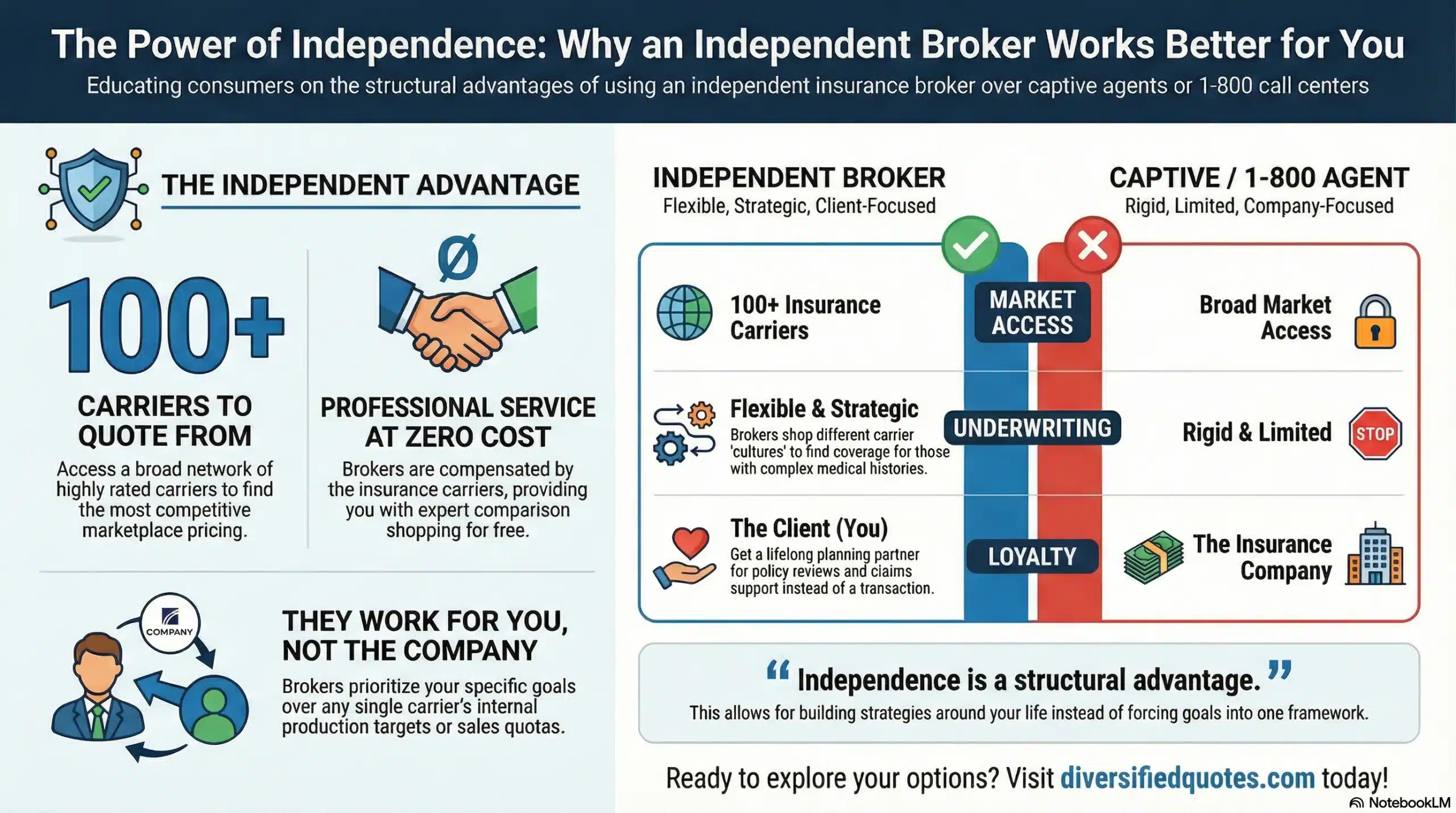
As an Independent Life Insurance Broker, we compare rates across 100+ carriers and prescreen every application before submission.
What is Variable Universal Life Insurance

Jason Stolz CLTC, CRPC, DIA, CAA
Variable universal life insurance is the one type of life insurance that isn’t just an insurance product — it’s legally a security, registered with the SEC, sold with a prospectus, and offered only by professionals who hold a securities license in addition to their state insurance license. That single fact changes almost everything about how VUL should be evaluated, and it’s routinely left out of the marketing materials that describe it. At Diversified Insurance Brokers, we specialize in permanent life insurance — whole life, universal life, guaranteed universal life, and indexed universal life — and we believe the most useful thing we can do on this page is explain VUL honestly and completely, including the parts that make it a fundamentally different product from every other type of permanent coverage. This page covers exactly what variable universal life is, how the investment sub-accounts actually work, the real risk of loss it carries that other permanent products don’t, its distinct fee structure, and who it genuinely fits — so that if you’re evaluating a VUL illustration, you understand precisely what you’re looking at.
Been shown a VUL illustration and want an honest, independent explanation of what it actually means? Let’s talk through it.
Talk to a Life Insurance Specialist
| Feature | Whole Life | Indexed Universal Life | Variable Universal Life |
|---|---|---|---|
| Legal Classification | Insurance product | Insurance product | Registered security |
| Who Can Sell It | Licensed life insurance agent | Licensed life insurance agent | Agent with a securities registration and broker-dealer affiliation |
| Disclosure Required | Policy illustration | Policy illustration | SEC-registered prospectus |
| Cash Value Growth | Guaranteed, set by insurer | Linked to an index, with a cap and floor | Directly invested in market sub-accounts |
| Downside Protection | Full — cash value cannot decline | Floor, often 0%, protects against index losses | None — cash value can lose value directly |
| Lapse Risk | Very low, if premiums paid as scheduled | Moderate — depends on funding and crediting | Real — poor investment performance can cause a lapse |
The rest of this page unpacks each row of that table — what it actually means for VUL to be a security, how the underlying sub-accounts work, the fee structure layered on top of them, the genuine risk of loss and lapse, the tax treatment, and honestly, who this product fits and who it doesn’t. We’ll also be direct about our own role: our specialty is whole life, universal life, guaranteed universal life, and indexed universal life, and we believe you deserve a complete, honest explanation of VUL before deciding whether it’s worth pursuing with a properly licensed securities professional.
What Variable Universal Life Insurance Actually Is
Variable universal life is, structurally, a form of universal life insurance — it carries universal life’s flexible premium structure and adjustable death benefit. What makes it “variable” is how the cash value grows: rather than crediting a declared interest rate set by the insurer, or tracking an index with a cap and floor, a VUL policy lets you allocate your cash value directly into a menu of investment sub-accounts, similar in structure to mutual funds, covering a range of asset classes and risk levels. Your cash value rises and falls with the actual performance of whatever sub-accounts you’ve selected — there is no insurer-declared floor beneath you, and no cap limiting your upside either.
This is the fundamental tradeoff that defines the entire product: VUL offers the highest growth ceiling of any permanent life insurance type, because your money is genuinely invested rather than credited a rate the insurer controls, but it also carries the only real risk of direct investment loss inside the policy. Our comparison of indexed universal life versus variable universal life covers this distinction in more depth, since the two are frequently confused with each other despite working in genuinely different ways — IUL never loses value from a declining index, while VUL genuinely can.
The Detail Almost Nobody Explains Clearly: VUL Is a Security
Here is the single most important thing to understand about variable universal life, and it’s a detail that gets glossed over far too often: because the cash value is invested directly in market sub-accounts, a VUL policy is legally classified as a security under federal law, registered with the Securities and Exchange Commission, not merely an insurance product regulated at the state level like every other type discussed on this page.
That classification carries real, practical consequences. A VUL policy must be sold with an SEC-registered prospectus — a formal disclosure document covering the policy’s features, fees, expenses, sales charges, and the specific investment sub-accounts available — delivered to you before or at the time you apply, not simply summarized in an illustration. And the professional presenting it to you must hold a securities registration, commonly a FINRA Series 6 or Series 7 license, in addition to their state life insurance license, and must be affiliated with a registered broker-dealer. A standard life insurance agent, however experienced, is not legally permitted to sell VUL unless they hold this additional registration. If you’re ever shown a VUL illustration, it’s entirely reasonable to ask directly whether the person presenting it holds the securities registration required to sell it — a properly licensed professional will have no hesitation confirming this, and their answer tells you a great deal about how seriously the product is being handled.
The Real Risk of Loss — and of the Policy Lapsing
Every VUL prospectus we’ve reviewed contains some version of the same direct warning, and it’s worth stating in plain language rather than letting it stay buried in the fine print: your cash value in a VUL policy is not guaranteed, is not FDIC insured, is not backed by any government agency, and can genuinely lose value — including the possibility of losing the full amount invested — depending on how the underlying sub-accounts perform. This is categorically different from whole life, where cash value is guaranteed never to decline, and different even from indexed universal life, where a floor (often zero) protects against a declining index reducing your cash value.
The consequence that matters most practically is lapse risk. Because the cost of insurance, administrative charges, and other policy expenses are deducted from your cash value regardless of how your investments perform, a period of poor market returns combined with insufficient premium funding can genuinely cause a VUL policy to run out of cash value and lapse — potentially leaving you without coverage at exactly the point in life when replacing it would be most expensive or impossible. This is a real, documented risk described directly in VUL prospectuses, not a hypothetical worst case, and it’s the central reason VUL demands more active, ongoing attention from a policyholder than whole life or guaranteed universal life, which are built specifically to avoid this outcome.
Not sure whether a VUL illustration you’ve seen adequately explains the loss and lapse risk? Let’s review it together.
Get an Honest Second Look
How the Fees Actually Stack Up
VUL’s fee structure is genuinely more layered than any other permanent life insurance type, precisely because it combines an insurance product with a securities wrapper. Understanding the pieces helps explain why VUL’s costs deserve careful scrutiny before committing.
The cost of insurance charge — the mortality-based cost of the underlying death benefit — is present in every universal life product, VUL included, and typically increases with age. A mortality and expense risk charge, commonly abbreviated M&E, compensates the insurer for the insurance guarantees and risks it retains within the variable structure, and is layered on top of whatever the underlying investment sub-accounts themselves charge in fund management fees. Administrative charges cover the ongoing cost of maintaining the policy and the securities infrastructure behind it. And, as with most permanent life insurance, a surrender charge period typically applies in the earlier policy years, reducing what you’d receive if you fully surrendered the contract before that period ends.
Taken together, this fee stack is meaningfully more complex than whole life’s single guaranteed-rate structure or even indexed universal life’s cap-and-floor design, and it’s precisely why the prospectus — not a simplified illustration — is the document that actually discloses the full cost picture. Reviewing the fee tables in the prospectus directly, rather than relying solely on a sales illustration, is an essential step before committing to any VUL policy.
Tax Treatment: Similar Advantages, With an Important Caveat
On the tax side, VUL shares the core advantages common to cash-value life insurance generally: growth inside the policy accumulates tax-deferred, policy loans against cash value are generally received income-tax-free as long as the policy remains in force and isn’t classified as a Modified Endowment Contract, and the death benefit paid to beneficiaries is generally income-tax-free. These features make VUL, like other permanent products, a legitimate tool for certain estate and legacy planning goals when the underlying insurance need genuinely calls for permanent coverage.
The important caveat is the Modified Endowment Contract, or MEC, test — a federal tax rule that applies to any cash-value life insurance policy, VUL included, that’s funded too aggressively relative to its death benefit in the early years. If a policy is overfunded past this threshold, it loses the favorable loan and withdrawal tax treatment and is instead taxed more like an annuity, with gains taxed as ordinary income on withdrawal and a potential ten percent penalty before age fifty-nine and a half. Because VUL is often marketed with an emphasis on cash accumulation and investment growth, it’s precisely the kind of product where an aggressive funding strategy can inadvertently trigger MEC status if it isn’t monitored carefully. This is genuinely a conversation to have with a tax professional before funding any cash-value policy aggressively, VUL very much included.
Who Variable Universal Life Genuinely Fits — and Who It Doesn’t
Being direct about fit is more useful than treating every product as right for everyone, so here is our honest read.
VUL fits well for someone who has a genuine, permanent life insurance need — not simply a desire for market exposure inside an insurance wrapper — combined with real comfort with investment risk, the financial capacity to fund the policy adequately even through periods of poor market performance, and the discipline to monitor it on an ongoing basis rather than treating it as a set-and-forget purchase. It’s also relevant in certain business contexts, such as executive compensation and deferred compensation funding arrangements, where VUL structures are commonly used precisely because the sponsoring business has the resources and sophistication to manage the underlying investment risk actively.
VUL fits poorly for a buyer whose primary goal is simply guaranteed, predictable permanent coverage — whole life or guaranteed universal life deliver that far more reliably. It fits poorly for anyone who can’t commit to monitoring the policy’s performance and adjusting funding over time, since the lapse risk described above is real and consequential. And it fits poorly for someone drawn to VUL primarily as an investment vehicle rather than for a genuine insurance need — whether life insurance is a good investment at all is a fair question worth asking honestly before layering investment risk on top of insurance costs, and for many people, maximizing traditional retirement accounts first and buying the right amount of appropriately structured life insurance separately is the more efficient path to both goals.
If You’re Comparing VUL Against Other Permanent Options
If a genuine permanent need is what’s driving the conversation, it’s worth comparing VUL honestly against the alternatives before assuming it’s the right fit. Whole life delivers the most certainty, at the highest cost per dollar of coverage. Guaranteed universal life offers death benefit certainty similar to whole life at a often lower cost, without the same cash value emphasis. Indexed universal life offers meaningfully more growth potential than either without VUL’s direct downside exposure, trading some upside for that protection through caps and participation rates. Our broader overview of the different types of life insurance places all of these side by side, and it’s genuinely worth reading before concluding VUL is the right answer to your specific goal, since two or three of these alternatives may accomplish the same underlying objective with meaningfully less risk.
For very high-net-worth buyers with sophisticated planning needs, it’s also worth knowing that structures like private placement life insurance exist as another security-classified option built specifically for accredited and qualified investors, often with lower cost structures than retail VUL for sufficiently large policies — a genuinely different conversation from standard VUL, but worth knowing about if the scale of your planning warrants it.
How We Help — Honestly
Because variable universal life is a registered security, our role here is a specific and honest one: our specialty is placing whole life, universal life, guaranteed universal life, and indexed universal life across the carriers we represent, and we will tell you plainly and completely how each of those compares against VUL for your actual goal — including in the genuine cases where none of those alternatives accomplishes what you’re truly trying to do and VUL, placed through a properly securities-licensed professional, is the more appropriate tool.
What we won’t do is let you walk into a VUL purchase without understanding exactly what you’re buying — the security classification, the prospectus you’re entitled to review before applying, the real risk of loss and lapse, and the layered fee structure that a simplified illustration doesn’t always make obvious. If you’re evaluating a VUL policy you’ve already been shown, we’re glad to review it with you and help you understand precisely what it does and doesn’t guarantee. And if what you actually need is guaranteed, predictable permanent coverage without the securities-related complexity, we specialize in exactly that, and our guidance on choosing the right policy and how much coverage you need is exactly where that conversation starts.
Want an honest comparison of VUL against whole life, guaranteed UL, or indexed UL for your specific goal?
Get Your Honest Policy Comparison
Financial Protection Essentials
Explore wealth strategies, estate planning tools, and retirement distribution options.
Talk With an Advisor Today
Choose how you’d like to connect—call or message us, then book a time that works for you.
Schedule here:
calendly.com/jason-dibcompanies/diversified-quotes
Licensed in all 50 states • Fiduciary, family-owned since 1980
What is variable universal life insurance, in plain terms?
Variable universal life is structurally a form of universal life insurance — it carries the same flexible premium structure and adjustable death benefit — but its cash value grows differently. Rather than crediting a declared interest rate the insurer controls, or tracking an index with a cap and floor, a VUL policy lets you allocate your cash value directly into a menu of investment sub-accounts, similar in structure to mutual funds, spanning a range of asset classes and risk levels. Your cash value rises and falls with the actual performance of whatever sub-accounts you’ve selected — there is no insurer-declared floor beneath you, and no cap limiting your upside either. This is the fundamental tradeoff that defines the product: VUL offers the highest growth ceiling of any permanent life insurance type because your money is genuinely invested, but it also carries the only real risk of direct investment loss inside the policy, which is categorically different from whole life or indexed universal life.
Is variable universal life insurance a security?
Yes, and this is the single most important thing to understand about VUL before evaluating anything else about it. Because the cash value is invested directly in market sub-accounts, a VUL policy is legally classified as a security under federal law, registered with the Securities and Exchange Commission, not merely an insurance product regulated at the state level like every other permanent life insurance type. That classification carries real consequences: a VUL policy must be sold with an SEC-registered prospectus — a formal disclosure document covering the policy’s features, fees, expenses, sales charges, and the specific investment sub-accounts available — delivered before or at the time you apply, and the professional presenting it must hold a securities registration, commonly a FINRA Series 6 or Series 7 license, in addition to their state life insurance license, and must be affiliated with a registered broker-dealer. A standard life insurance agent is not legally permitted to sell VUL without this additional registration, and it’s entirely reasonable to ask directly whether the person presenting a VUL illustration holds it.
Can I actually lose money with a VUL policy?
Yes, and this is worth stating plainly rather than glossing over. Your cash value in a VUL policy is not guaranteed, is not FDIC insured, is not backed by any government agency, and can genuinely lose value, including the possibility of losing the full amount invested, depending on how the underlying sub-accounts perform. This is categorically different from whole life, where cash value is guaranteed never to decline, and different even from indexed universal life, where a floor, often zero, protects against a declining index reducing your cash value. The practical consequence is real lapse risk: because the cost of insurance, administrative charges, and other policy expenses are deducted from your cash value regardless of investment performance, a period of poor returns combined with insufficient premium funding can genuinely cause a VUL policy to run out of cash value and lapse, potentially leaving you without coverage at exactly the point in life when replacing it would be most expensive or impossible. This risk is described directly in VUL prospectuses and is the central reason VUL demands more active, ongoing attention than whole life or guaranteed universal life.
What fees does variable universal life insurance actually carry?
More layers than any other permanent life insurance type, because VUL combines an insurance product with a securities wrapper. The cost of insurance charge, the mortality-based cost of the underlying death benefit, is present in every universal life product and typically increases with age. A mortality and expense risk charge, commonly called M&E, compensates the insurer for the insurance guarantees and risks it retains within the variable structure, layered on top of whatever fund management fees the underlying investment sub-accounts themselves charge. Administrative charges cover the ongoing cost of maintaining the policy and its securities infrastructure. And, as with most permanent life insurance, a surrender charge period typically applies in the earlier policy years. This fee stack is meaningfully more complex than whole life’s single guaranteed-rate structure or indexed universal life’s cap-and-floor design, which is precisely why reviewing the fee tables in the SEC-registered prospectus directly, rather than relying solely on a sales illustration, is an essential step before committing.
How is variable universal life insurance taxed?
VUL shares the core tax advantages common to cash-value life insurance generally: growth inside the policy accumulates tax-deferred, policy loans against cash value are generally received income-tax-free as long as the policy remains in force and isn’t classified as a Modified Endowment Contract, and the death benefit paid to beneficiaries is generally income-tax-free. The important caveat is the Modified Endowment Contract, or MEC, test, a federal tax rule that applies to any cash-value life insurance policy funded too aggressively relative to its death benefit in the early years. If a policy is overfunded past this threshold, it loses the favorable loan and withdrawal tax treatment and is instead taxed more like an annuity, with gains taxed as ordinary income on withdrawal and a potential ten percent penalty before age fifty-nine and a half. Because VUL is often marketed with an emphasis on cash accumulation and investment growth, it’s precisely the kind of product where an aggressive funding strategy can inadvertently trigger MEC status if it isn’t monitored carefully, which is worth discussing with a tax professional before funding any policy aggressively.
Who is variable universal life insurance actually right for?
VUL fits well for someone with a genuine, permanent life insurance need, combined with real comfort with investment risk, the financial capacity to fund the policy adequately even through periods of poor market performance, and the discipline to monitor it on an ongoing basis rather than treating it as a set-and-forget purchase. It also comes up in certain business contexts, such as executive compensation and deferred compensation funding, where the sponsoring business has the resources and sophistication to manage the underlying investment risk actively. VUL fits poorly for a buyer whose primary goal is simply guaranteed, predictable permanent coverage, since whole life or guaranteed universal life deliver that far more reliably. It fits poorly for anyone who can’t commit to monitoring the policy over time, given the real lapse risk involved. And it fits poorly for someone drawn to VUL primarily as an investment vehicle rather than for a genuine insurance need, since layering investment risk on top of insurance costs is rarely the most efficient way to accomplish either goal separately.
What should I compare VUL against before deciding it’s right for me?
Whole life, guaranteed universal life, and indexed universal life are all worth comparing honestly before assuming VUL is the answer. Whole life delivers the most certainty, at the highest cost per dollar of coverage. Guaranteed universal life offers death benefit certainty similar to whole life, often at a lower cost, without the same cash value emphasis. Indexed universal life offers meaningfully more growth potential than either without VUL’s direct downside exposure, trading some upside for that protection through caps and participation rates. Two or three of these alternatives may accomplish the same underlying objective with meaningfully less risk than VUL carries, which is exactly why the comparison is worth running before committing to a security-classified product with real lapse risk. For very high-net-worth buyers with sophisticated planning needs, it’s also worth knowing that private placement life insurance exists as another security-classified option, often with lower cost structures than retail VUL for sufficiently large policies.
Does your agency sell variable universal life insurance directly?
Our specialty is placing whole life, universal life, guaranteed universal life, and indexed universal life across the carriers we represent — the permanent life insurance products that don’t carry VUL’s securities classification. Because VUL legally requires a securities registration in addition to a state insurance license to sell, we believe the most useful thing we can do is make sure you understand it completely: the security classification, the prospectus you’re entitled to review before applying, the real risk of loss and lapse, and the layered fee structure that a simplified illustration doesn’t always make obvious. If you’re evaluating a VUL policy you’ve already been shown, we’re glad to review it with you and compare it honestly against the alternatives we specialize in. And in the genuine cases where none of those alternatives accomplishes what you’re truly trying to do, we’ll tell you that plainly and make sure whoever helps you with VUL specifically holds the securities registration the product requires.
About the Author:
Jason Stolz, CLTC, CRPC, DIA, CAA and Chief Underwriter at Diversified Insurance Brokers (NPN 20471358), is a senior insurance and retirement professional with more than 25 years of real-world experience helping individuals, families, and business owners protect their income, assets, and long-term financial stability. As a long-time partner of the nationally licensed independent agency Diversified Insurance Brokers, Jason provides trusted guidance across multiple specialties—including fixed and indexed annuities, long-term care planning, personal and business disability insurance, life insurance solutions, Group Health, Travel Medical and Evacuation Insurance, and short-term health coverage. Diversified Insurance Brokers maintains active contracts with over 100 highly rated insurance carriers, ensuring clients have access to a broad and competitive marketplace.
His practical, education-first approach has earned recognition in publications such as VoyageATL, and contributions from his agency featured in Kiplinger and GoBankingRates— highlighting his commitment to financial clarity and client-focused planning. Drawing on deep product knowledge and years of hands-on field experience, Jason helps clients evaluate carriers, compare strategies, and build retirement and protection plans that are both secure and cost-efficient. Visitors who want to explore current annuity rates and compare options across multiple insurers can also use this annuity quote and comparison tool.
Explore More Life Insurance Options: Browse our complete guide to How Life Insurance Works — covering term life, whole life, final expense, annuity alternatives & more from 100+ carriers.
Last Reviewed: August 12, 2026 |
Reviewed by: Jason Stolz, CLTC, CRPC, DIA, CAA
Chief Underwriter, Diversified Insurance Brokers, Inc. | NPN: 20471358 | Diversified Insurance Brokers, Inc. — Licensed in all 50 states
Fact Checked by: Tonia Pettitt, CMIP©
Medicare Specialist, Diversified Insurance Brokers, Inc. | NPN: 14374308 | Diversified Insurance Brokers, Inc. — Licensed in all 50 states
Did you find this content helpful? Leave us a Google review — it helps others find trustworthy guidance too.
Editorial Standards: Diversified Insurance Brokers maintains rigorous editorial standards to ensure accuracy, clarity, and independence in all content. Learn more about our editorial standards and commitment to transparency.
