
Disability Insurance for Florists
As an Independent Disability Insurance Broker, we have access to exclusive discounts and negotiated pricing most captive agents can’t offer — see the full breakdown near the end of this page.
Disability Insurance for Florists

Jason Stolz CLTC, CRPC, DIA, CAA
Disability insurance for florists is an essential form of income protection for creative small business professionals whose livelihoods depend entirely on their hands — the same hands that wire boutonnieres, strip thorns from roses, cut and condition stems with sharp tools, wrestle with heavy urns and arrangements, and execute the sustained precision fine motor work that transforms raw flowers into the centerpieces, wedding bouquets, and event installations that define a successful floral career. Whether you own and operate your own retail flower shop, work as an independent floral designer serving weddings and events, provide freelance floral styling for photographers and commercial clients, or manage a studio-based floral design practice — your income is entirely tied to your physical capacity to work with your hands in a craft environment that carries more occupational health risk than its delicate subject matter suggests.
The floral profession is widely underestimated from an occupational health standpoint. From the outside, arranging flowers appears to be gentle, creative work. From the inside, it involves sustained hand and wrist repetitive motion across full workdays, daily contact with thorns and sharp cutting tools that produce cuts and puncture wounds at rates that accumulate across a career, consistent exposure to pesticide and herbicide residues on commercially grown flower stems, daily use of aerosol floral sprays and sealants in shop environments, heavy lifting of large arrangements and supply orders, and the physical demands of event setup and breakdown that add significant acute injury exposure to the cumulative wear of daily design work.
At Diversified Insurance Brokers, we help florists, floral designers, flower shop owners, and floral event specialists structure disability insurance coverage that reflects the genuine physical demands and occupational health risks of floral work, the predominantly self-employed income structure of the floral profession, and the specific conditions most likely to interrupt or end a florist’s ability to earn.
Protect Your Floral Business Income
Compare disability insurance options designed for retail florists, floral designers, wedding floral specialists, and all floral business professionals.
The Occupational Classification Advantage for Florists
One of the most practically important facts about disability insurance for florists is the favorable occupational classification the profession receives. Disability insurance carriers assign class ratings based on the nature of work, physical demands, and estimated disability risk. Florists — whose work is primarily craft-based, light-to-moderate physical, and conducted in a shop or studio environment — are typically classified at the 5A or 5 tier, which is among the most favorable available in the individual disability insurance market.
This favorable classification produces meaningful practical benefits. At the 5A tier, florists have access to own-occupation disability definitions — the most protective available — non-cancelable and guaranteed renewable policy provisions, benefit periods extending to age 65 or 67, and the full range of supplemental riders including residual disability coverage, future increase options, and cost-of-living adjustment protection. The classification also produces competitive premium rates relative to the income being protected, making comprehensive disability coverage accessible at a cost that represents a modest percentage of annual floral business revenue.
For florists who also perform significant event installation, outdoor wedding setup, or heavy delivery work as a regular component of their duties, it is worth discussing the full scope of occupational duties with an independent broker, since duty mix can affect classification outcomes between carriers. The same favorable occupational classification dynamic benefits other craft and creative service professionals, including draftsmen and precision craft professionals who receive similarly favorable classifications based on their non-hazardous professional environment.
Repetitive Strain Injuries — The Most Prevalent Disability Risk for Florists
Disability insurance for florists must be built around an understanding of the specific conditions most likely to interrupt a floral career — and repetitive strain injuries of the hands, wrists, and forearms top that list for any florist who works a full design schedule. The hand and wrist mechanics of floral work — sustained gripping of stems and tools, repetitive cutting and wiring motions, the fine motor positioning of flower placement in arrangements, the wrapping and taping of bouquets — create exactly the repetitive mechanical loading pattern that produces carpal tunnel syndrome, tendinitis, De Quervain’s tenosynovitis, and trigger finger in sustained precision hand-work professions.
Carpal tunnel syndrome is the most commonly diagnosed repetitive strain condition in occupations involving sustained gripping and repetitive wrist flexion — and a florist who cuts, wires, and arranges flowers across a full design schedule reproduces these mechanics thousands of times per day. For a florist whose entire professional output depends on precise, pain-free hand and wrist function, a carpal tunnel condition that progresses to the point of preventing sustained design work is not a minor inconvenience — it is a genuine occupational disability that eliminates all design income immediately.
De Quervain’s tenosynovitis — inflammation of the tendons running along the thumb side of the wrist — is another repetitive strain condition specifically documented in occupations involving the sustained pinching and gripping motions of precision hand work. Florists who grip and manipulate stems, thorns, wire, and ribbon across full design sessions are directly exposed to the mechanical loading that produces this condition. When severe, De Quervain’s syndrome prevents the pinching and gripping that floral arrangement requires, constituting a genuine occupational disability under an own-occupation disability policy. Our resource on own-occupation disability insurance explained covers precisely how this definition protects florists whose hand-specific disability would not prevent all types of employment.
Cuts, Puncture Wounds, and Hand Injury Risk in Floral Work
Daily contact with sharp cutting tools and thorned stems creates a consistent acute hand injury risk for florists that, while typically producing minor injuries individually, accumulates into a meaningful occupational hand health burden over a floral career. Floral shears, knives, wire cutters, and stem strippers are the primary cutting tools of the trade — each capable of producing lacerations and puncture wounds that, when they strike nerves, tendons, or vascular structures of the hand and fingers, can produce functional limitations far more serious than the surface injury would suggest.
Rose thorns are perhaps the most documented source of florist puncture wounds — producing deep puncture injuries that, unlike surface cuts, introduce plant material and bacteria into the dermis and underlying tissues of the hand. A thorn puncture that introduces bacteria into a tendon sheath can produce septic flexor tenosynovitis — a serious infection requiring surgical irrigation and extended antibiotic treatment that can leave permanent functional limitations affecting the fine motor capacity of the affected finger or hand. For a florist whose income depends on precise hand function, a serious thorn puncture resulting in this type of infection is not merely an occupational hazard — it is a potential career-altering disability event.
Gardener’s disease — sporotrichosis — is a specific fungal infection associated with rose thorn and other plant material punctures, documented specifically among floral workers and gardeners. This fungal infection of the skin and lymphatic system requires sustained antifungal treatment and can produce chronic health consequences that affect continued floral work capacity. Individual disability insurance that covers disability from any cause — including occupational infection and illness — provides the income replacement that a serious hand infection recovery requires. The hand and fine motor injury risk facing florists in precision craft work is parallel to documented risks in other sustained precision hand-work professions, including domestic service and household care professionals whose sustained manual work creates comparable hand health risks.
Chemical and Allergic Exposure — A Documented Disability Risk for Floral Professionals
The chemical exposure environment of a retail florist shop or floral design studio is more significant than most professionals outside the industry appreciate. Commercially grown cut flowers are routinely coated with pesticide and herbicide residues from the growing and transport process — residues that florists contact with bare hands across every stem-processing session of every workday. These pesticide residues create dermally absorbed chemical exposure that, with sustained daily contact across months and years of floral work, can contribute to occupational dermatitis, sensitization reactions, and in research populations of floral workers, elevated rates of certain pesticide-associated health conditions.
Floral aerosols — leaf shine sprays, floral sealants, color sprays, and fragrance enhancers — are used daily in typical retail floral operations and generate airborne chemical exposure in the enclosed shop environment. A florist who uses floral aerosols in a small retail shop without mechanical ventilation may sustain inhalation exposure to aerosolized chemicals across a full working day that, over years of repeated exposure, contributes to occupational respiratory sensitization, reactive airway disease, or occupational asthma. When an occupational respiratory condition reaches a severity that makes continued work in the chemical environment of a floral shop medically inadvisable, it constitutes a genuine occupational disability — one that an own-occupation disability policy addresses directly by recognizing the inability to continue working in the specific floral shop environment even if other less chemically intensive work remains theoretically possible.
Contact dermatitis — both irritant and allergic — is among the most commonly documented occupational skin conditions in floral workers, produced by sustained skin contact with plant sap, latex compounds in certain flowers, cleaning chemicals, and floral chemical products. Allergic contact dermatitis from chrysanthemum sap, compositae family plant allergens, and other floral sensitizers can develop after years of apparently problem-free exposure and, when established, make continued floral work involving direct plant contact genuinely difficult or impossible. The chemical exposure disability risk that florists face from daily plant and product contact parallels that documented in other service professionals with sustained chemical occupational exposure, including cleaning and dry cleaning professionals managing occupational chemical illness risk.
Back Injuries and Physical Demands of Floral Event Work
While the fine craft work of floral design is the defining skill of the profession, the physical demands of event floristry and retail flower shop operation extend well beyond the design table. Large floral arrangements — wedding reception centerpieces, ceremony arch installations, large sympathy pieces, and commercial event installations — are heavy and awkward. Transporting, positioning, and installing large floral pieces in event venues involves the same heavy lifting mechanics that produce back injuries across other service professions, applied to the time-pressured environment of event setup when no alternative to physical exertion is available.
Florists who deliver and install wedding and event floristry regularly lift and carry large arrangements, haul supply containers and flower boxes, climb ladders to install hanging installations, and spend extended hours in the physically demanding bent-over and reaching positions that installation work in event venues requires. The back, shoulder, and knee loading of this event installation work adds a meaningful acute and cumulative physical injury risk to the fine motor repetitive strain exposure of daily design work — creating a dual disability risk profile that disability insurance for florists must address across both dimensions.
Slip and fall risk is an ever-present hazard in the retail florist shop environment — water from flower buckets and vase arrangements creates perpetually wet floor areas, and the combination of wet floors, shop clutter from inventory and supplies, and the busy physical environment of peak floral holidays creates the conditions for slip-and-fall injuries that can produce fractures and other acute injuries requiring extended recovery. The physical service environment that florists navigate in their daily operations parallels that of other active service professionals, including restaurant workers and servers managing acute physical injury risk in similarly demanding service environments.
The Self-Employment Financial Vulnerability of Florists
The vast majority of working florists — particularly those operating independent retail shops, freelance floral design studios, or wedding and event floral businesses — are self-employed. This employment structure creates the most fundamental financial vulnerability in the disability insurance equation: when a florist cannot work, their income stops immediately and completely. There is no employer sick pay. There is no group disability plan. There is no paid leave. The design bench sits empty, the event bookings cannot be fulfilled, and the flower shop revenue disappears — while the fixed costs of the business continue regardless.
For a retail florist shop owner, the fixed costs that continue during a disability include shop lease or mortgage payments, refrigeration and equipment costs, utility bills, inventory restocking obligations (since perishable flower inventory requires ongoing management even if the owner is absent), and any employee payroll for staff who may remain working during the owner’s recovery. A florist whose hand surgery requires eight months of recovery cannot simply pause the shop — the shop continues to exist with its fixed costs and financial obligations regardless of whether the owner is designing.
Individual disability insurance is the only meaningful income replacement available to a self-employed florist during any disabling event. Social Security Disability Insurance exists as a fallback, but qualifying requires demonstrating total inability to perform any substantial gainful employment — an exceptionally high bar — and the application process spans many months to years without any income replacement during the waiting period. For a florist whose household budget depends on regular floral income, SSDI is not a functional substitute for individual disability insurance. The self-employment financial vulnerability facing florists mirrors that of other independent creative and service business owners, including independent contractors managing self-employment income protection without employer-provided benefits.
Case Study: Self-Employed Florist Earning $58,000 Per Year
Consider a self-employed floral designer operating a studio-based wedding and event floral business, earning $58,000 annually across approximately thirty to forty events per year. After developing severe bilateral carpal tunnel syndrome that does not respond adequately to conservative treatment, this florist undergoes bilateral carpal tunnel release surgery requiring a combined recovery period of seven months during which sustained precision design work and heavy arrangement handling are medically prohibited.
| Scenario | Without Disability Insurance | With Disability Insurance |
|---|---|---|
| Monthly Income During Recovery | $0 | $2,400–$3,000 |
| 7-Month Total Income | $0 | $16,800–$21,000 |
| Client and Event Pipeline | Booked events cancelled; client relationships damaged; referral pipeline lost | Financial stability supports arranged coverage for events and planned return |
| Financial Outcome | Savings depleted; shop obligations unmet; financial crisis compounds recovery | Full recovery supported on medical timeline; business preserved |
Carpal tunnel syndrome is one of the most predictable occupational health outcomes for florists who perform sustained precision hand and wrist work across a full design career. Disability insurance for florists ensures this career-disrupting but medically manageable condition does not simultaneously produce a financial catastrophe that pressures premature return to design work before surgical healing is complete — which would risk re-injury and a worse long-term outcome for the hands that a florist’s entire professional future depends on.
Business Overhead Expense Coverage for Floral Business Owners
Florists who own and operate their own retail shops or established floral design studios face a dual financial exposure during any disability — the loss of personal design income and the continuation of business fixed costs. Shop lease or studio rent, refrigeration equipment and maintenance, utility costs, ongoing flower inventory management costs, telephone and website maintenance, and any employee payroll for shop assistants all continue during a disability period regardless of whether the owner can design.
Business overhead expense insurance covers these fixed business costs during a disability period, preventing a temporary health event from producing permanent business closure due to inability to meet ongoing financial obligations during recovery. For a florist who has spent years building a local brand, a client referral network, and a reputation for floral excellence, maintaining the shop and business infrastructure during recovery has financial value that extends far beyond any individual cost covered by the policy. The combination of personal disability income insurance and business overhead expense coverage creates the most comprehensive financial protection structure available to a self-employed floral business owner facing any disabling event.
Florists whose businesses depend heavily on seasonal revenue — Valentine’s Day and Mother’s Day generating a substantial portion of annual retail flower shop revenue — should factor seasonal income concentration into disability planning. A florist disabled during either of these peak holidays faces a financial loss that is disproportionately large relative to its duration, because the income concentration of those periods sustains the business through quieter months. Understanding how short-term coverage bridges early income gaps is covered in our guide on how to buy short-term disability insurance as part of a comprehensive income protection plan. The seasonal income concentration challenge for florists parallels that facing other event-driven businesses, including event planners whose peak-season disability has disproportionate financial consequences.
Key Policy Features for Florist Disability Insurance
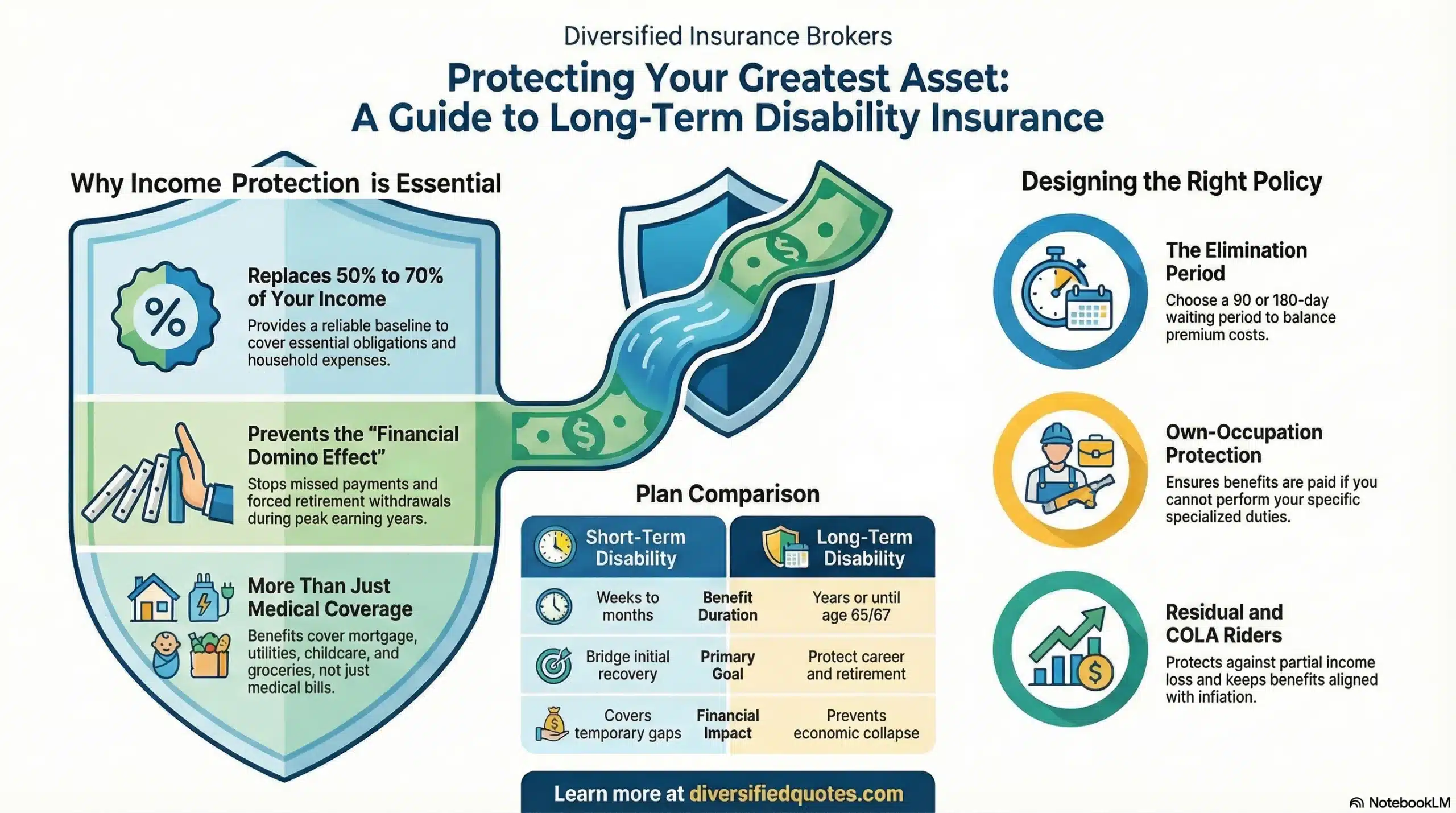
Disability insurance for florists should be structured with specific policy provisions that address the hand-dependent, self-employed, seasonally variable nature of floral business work. The own-occupation definition — discussed at length above — is foundational. A residual disability rider is equally important for florists whose hand conditions may reduce design capacity without eliminating it entirely. A florist recovering from carpal tunnel surgery who can manage five to ten hours of light design work per week, but cannot sustain a full event calendar, earns reduced income without being totally disabled. Without a residual rider, a total-disability-only policy pays nothing during this graduated return phase. A residual rider supplements reduced design income proportionally throughout the return-to-full-capacity arc. Our full resource on how residual disability insurance benefits work explains this critical feature in complete detail.
A cost-of-living adjustment rider is valuable for florists who may face extended disability from progressive hand conditions, chronic dermatitis, or occupational respiratory illness — preserving the real purchasing power of disability benefits across an extended claim period. Our resource on disability income insurance with a COLA rider explains how this protection works. The elimination period should be calibrated to the florist’s available financial reserves, their ability to sustain fixed business costs during the waiting period, and whether a short-term disability policy bridges the initial gap. Our full guide on how disability insurance elimination periods work provides the framework for this decision.
Income Documentation for Self-Employed Florists
Disability insurance carriers base benefit amounts on verified earned income — typically using federal tax returns, with Schedule C net profit as the primary figure for self-employed florists. For floral business owners who deduct significant business expenses — flower inventory, shop supplies, delivery vehicle costs, event installation equipment, and any employee payroll — the reported Schedule C net profit may understate the florist’s actual financial need during a disability. A florist whose gross floral revenue is $120,000 but whose Schedule C net profit after all business deductions is $52,000 can only insure based on the net figure — which produces a benefit amount that may be substantially lower than their actual household financial need.
For florists whose annual income varies significantly based on event booking volume, the number of weddings served in a given season, and the success of peak holiday retail periods, a weighted average of recent income years may produce a more favorable benefit calculation than a single-year snapshot during a lean period. An experienced independent broker who understands floral business income documentation and how seasonal and variable floral income structures are best presented to underwriters is essential for securing a benefit amount that reflects genuine earning capacity. The self-employment income documentation challenge for florists mirrors that of other creative service business owners, including caterers and event food service business owners managing variable self-employment income documentation for underwriting purposes.
Why Florists Should Work with an Independent Disability Insurance Broker
Disability insurance for florists involves occupational classification assessment, hand-specific injury coverage evaluation, self-employment income documentation, and policy feature comparison that benefits from independent broker expertise. An independent broker who understands the floral industry’s occupational health profile, who knows how to present floral business income to underwriters most effectively, and who can compare policy definitions and mental health coverage provisions across multiple carriers simultaneously produces materially better coverage outcomes than a standard retail application.
At Diversified Insurance Brokers, we work with florists, floral designers, and flower shop owners across all business structures — retail shops, studio-based event florists, freelance floral designers, and wholesale flower business operators — to structure disability coverage that reflects how florists actually earn, what conditions would actually impair their ability to design, and what policy features provide the most meaningful financial protection for their specific business and income structure. Our dedicated resource on why independent disability insurance brokers matter explains the full value of this approach. And our resource on whether disability insurance is worth the investment provides the foundational financial case for coverage that applies with particular clarity to a self-employed florist with no employer safety net and hands that are the direct source of all professional income.
Final Thoughts on Disability Insurance for Florists
Florists transform living plant material into expressions of celebration, grief, love, and beauty that mark the most important occasions of their clients’ lives. The professional skill that makes that possible — the hand dexterity, the botanical knowledge, the design eye, the physical execution of floral installation — takes years to develop and represents the core of a florist’s professional identity and income-generating capacity. A carpal tunnel condition, a serious thorn puncture infection, a contact dermatitis that prevents plant contact, or a back injury from event installation can interrupt or end a floral career with the same financial immediacy as any physical trade injury, but without any of the institutional safety nets that employed workers in other industries might expect.
Disability insurance for florists is the financial tool that ensures a hand or health event does not become a career-ending financial catastrophe. A well-structured policy — built around an own-occupation definition that protects floral design income specifically, meaningful residual disability coverage for graduated return to design work, and benefit amounts calibrated to actual floral business income — provides the income replacement that allows a florist to recover from any disabling condition from a position of financial stability and return to their craft when their hands and health are genuinely ready.
Related Pages
Talk With an Advisor Today
Choose how you’d like to connect—call or message us, then book a time that works for you.
Schedule here:
calendly.com/jason-dibcompanies/diversified-quotes
Licensed in all 50 states • Fiduciary, family-owned since 1980
Disability Insurance for Florists FAQs
Yes, florists can obtain individual disability insurance and are typically classified at the 5A or 5 occupational tier — among the most favorable classifications available in the individual disability insurance market. This classification reflects the craft-based, light-to-moderate physical, shop-environment nature of floral work and produces meaningful practical benefits: access to own-occupation disability definitions, non-cancelable and guaranteed renewable policy provisions, benefit periods extending to age 65 or 67, and the full range of supplemental riders at competitive premium rates. The favorable classification makes comprehensive disability coverage accessible to florists at a cost representing a modest percentage of annual floral business revenue. Florists who also perform significant event installation, heavy delivery work, or outdoor setup as a regular component of their duties should discuss their full duty profile with an independent broker, since duty mix can affect classification outcomes between carriers.
Repetitive strain injuries of the hands and wrists are the most prevalent disability risk for florists — carpal tunnel syndrome, De Quervain’s tenosynovitis, trigger finger, and tendinitis all develop from the sustained precision hand and wrist work of floral design. A florist who cuts, wires, and arranges flowers across a full design schedule reproduces the gripping and wrist flexion mechanics that produce these conditions thousands of times per day. Cuts and puncture wounds from thorns and cutting tools are a daily occupational hazard — and serious thorn puncture infections including septic flexor tenosynovitis and sporotrichosis can produce hand injuries far more serious than the surface wound suggests. Contact dermatitis and allergic sensitization from chrysanthemum sap, latex compounds in certain flowers, and floral chemicals affect the ability to continue plant contact work. Respiratory sensitization from floral aerosols and pesticide residues on commercially grown flower stems creates occupational illness risk. Back injuries from heavy arrangement lifting, delivery, and event installation add acute physical injury exposure to the cumulative fine motor wear. For a parallel on hand-specific disability risk in precision craft work, see our page on disability insurance for precision professionals whose income depends on sustained fine motor capacity.
Yes. Individual disability insurance covers carpal tunnel syndrome when the condition meets the policy’s definition of disability — either total disability preventing all design work or partial disability reducing design capacity below the threshold that triggers residual benefits. Because carpal tunnel syndrome is a known and documented risk in sustained precision hand-work professions, underwriters may review hand and wrist health history carefully for floral design applicants. A pre-existing diagnosed carpal tunnel condition at the time of application may result in an exclusion rider or modified policy terms. This is one of the most important reasons to apply for disability insurance early in a floral career — before the cumulative repetitive motion of years of design work has produced the hand and wrist conditions that are a predictable occupational outcome for sustained florists. Coverage secured before these conditions develop ensures they are covered under the existing policy when they eventually emerge — as they predictably do over a sustained design career.
Own-occupation disability insurance pays benefits when a condition prevents a florist from performing the specific duties of their floral design profession — sustained precision hand work, stem processing, arrangement assembly, event installation — regardless of whether they could theoretically perform other types of less hand-intensive work. Any-occupation coverage only pays if the florist cannot perform virtually any gainful employment. A florist whose severe carpal tunnel syndrome prevents sustained design work but who could technically perform sedentary non-design work would receive no any-occupation benefits, while an own-occupation policy recognizes the genuine inability to practice floral design and pays accordingly. For a profession where the professional output — floral design — is entirely hand-dependent, the any-occupation definition provides almost no meaningful income protection for the conditions most likely to disable a working florist. Own-occupation coverage is the only definition that actually protects floral design income. For context on how the own-occupation distinction works in practice for precision craft professionals, see our resource on disability insurance for professionals whose income depends on specific occupational capacity.
Residual disability coverage pays proportional benefits when a disabling condition reduces a florist’s design capacity and income without eliminating the ability to work entirely. A florist recovering from carpal tunnel surgery may be medically cleared for limited light design work — perhaps five to ten hours of careful arrangement work per week — months before they can safely sustain a full event floral calendar with the physical demands of heavy wedding installations. During this graduated return period, design income is significantly reduced without being fully eliminated. Without a residual disability rider, a total-disability-only policy pays nothing during this period because the florist can technically work in some limited capacity. A residual rider supplements reduced design income proportionally throughout the return-to-full-capacity arc, providing continuous financial support from the onset of disability through full return to normal floral business volume. For florists whose recovery from hand conditions typically involves months of graduated return rather than a binary on-off timeline, this rider is essential for the disability policy to function as genuine income protection across the entire recovery period.
Seasonal income concentration is an important planning consideration for both income documentation and elimination period selection in disability insurance for florists. Valentine’s Day and Mother’s Day together generate a disproportionate share of annual retail flower shop revenue — a florist disabled during either of these periods faces an income loss that is larger in absolute terms than the daily income figures would suggest. For disability insurance underwriting purposes, carriers base benefit amounts on verified earned income using tax returns, and for florists whose annual income varies significantly based on event booking volume and holiday retail periods, a weighted average of recent income years may produce a more favorable benefit calculation than a single lean-year snapshot. The elimination period — the waiting time before benefits begin — should also account for whether a disability occurring during peak holiday season creates more acute financial urgency than one occurring during a quieter period. An experienced independent broker who understands floral business income seasonality can guide both the income documentation presentation and the elimination period selection to produce the most appropriate benefit structure. For related context on seasonal income in disability insurance planning, see our resource on disability insurance for seasonal and event-driven self-employed professionals.
Yes, and the case is particularly strong for retail florist shop owners whose fixed business costs — shop lease, refrigeration equipment, utilities, and any employee payroll — continue regardless of whether the owner can design. Personal disability income insurance replaces the owner’s earned income during a disability, but it does not cover these ongoing business costs, which must be paid from personal disability benefits or savings that were not intended to sustain a retail flower shop operation. Business overhead expense insurance covers these fixed business costs during a disability period, preventing a temporary hand injury or health event from forcing permanent closure of an established floral business. For a florist who has invested years building a local brand, a wedding client referral network, and a reputation for floral excellence, maintaining the shop infrastructure during recovery has financial value that extends far beyond any individual monthly cost covered. Personal disability insurance and business overhead expense coverage address two distinct financial needs and are most effective when structured together for any floral business owner.
The elimination period should be calibrated to the florist’s available emergency savings, their ability to sustain fixed business costs during the waiting period, and the seasonal timing risk of a disability occurring during a peak revenue period. Self-employed florists with no employer sick pay and limited emergency savings — particularly those early in their business development — should seriously evaluate 30 or 60-day elimination periods that provide faster benefit access, even at higher premium cost. For a sole floral business owner whose design income stops immediately when they cannot work while shop costs continue, the financial urgency of a disability begins on day one. Florists with stronger reserves, a working partner whose income can bridge the household through a 90-day waiting period, or a disability occurring during a slower business season may comfortably accept a 90-day elimination period. Our full guide on how elimination periods work provides the complete framework for calibrating this decision to individual financial circumstances.
Yes. Individual disability insurance covers disability from any cause — including occupational illness from chemical exposure or allergic sensitization — when the condition meets the policy’s definition of disability. A florist who develops disabling occupational dermatitis from chrysanthemum sap or other plant allergens, or a respiratory condition from floral aerosol exposure that makes continued shop work medically inadvisable, qualifies for disability benefits under a well-structured own-occupation policy when the condition prevents continued floral design work. The critical planning consideration is timing: applying for disability insurance before allergic or chemical sensitization conditions have been diagnosed and documented is essential. A documented allergic condition at the time of application may result in exclusion riders. Securing comprehensive coverage while health is fully intact protects against the sensitization and exposure consequences that may develop over subsequent years of floral work — exactly as applying early protects against the hand and wrist conditions that are a predictable career-long outcome. For parallel context on chemical exposure disability coverage, see our resource on disability insurance for professionals managing chemical occupational exposure and sensitization risk.
The best time is as early as possible in a floral career — ideally when first establishing a floral business or entering the profession, before the cumulative hand and wrist conditions of sustained design work, allergic sensitization from plant contact, or back conditions from event installation have accumulated in the medical record. Disability insurance premiums are based in part on age and health status at the time of application, and younger florists in excellent hand and overall health secure the most comprehensive coverage at the most favorable rates. Carpal tunnel syndrome, De Quervain’s tenosynovitis, contact dermatitis, and other floral occupational health outcomes that develop predictably over a design career can result in exclusion riders or restricted terms if present at application. Applying before these conditions develop ensures they are covered under an existing policy when they eventually appear — as they typically do over a sustained floral career. A future increase option rider secured early also allows benefit amounts to grow with floral business revenue without requiring new medical underwriting as the business develops.
An independent broker has access to multiple disability insurance carriers and can compare occupational class assignments, own-occupation definition language, residual disability provisions, income documentation approaches for floral business income structures, and premium structures across the full marketplace. For florists, the differences between carriers in how they handle floral business self-employment income documentation, how they classify floral design versus floral event installation duties, and what exclusion rider policies they apply for hand and wrist conditions produce meaningfully different coverage outcomes. A captive agent representing a single carrier can only present that company’s approach. At Diversified Insurance Brokers, we evaluate the full competitive landscape for every florist we work with and structure coverage that is genuinely calibrated to how florists earn their income, what conditions would most likely prevent them from designing, and what policy features provide the most meaningful financial protection for the floral business they have built. Our resource on why independent disability insurance brokers matter explains this value for self-employed small business professionals in full detail.
About the Author:
Jason Stolz, CLTC, CRPC, DIA, CAA and Chief Underwriter at Diversified Insurance Brokers (NPN 20471358), is a senior insurance and retirement professional with more than 25 years of real-world experience helping individuals, families, and business owners protect their income, assets, and long-term financial stability. As a long-time partner of the nationally licensed independent agency Diversified Insurance Brokers, Jason provides trusted guidance across multiple specialties—including fixed and indexed annuities, long-term care planning, personal and business disability insurance, life insurance solutions, Group Health, Travel Medical and Evacuation Insurance, and short-term health coverage. Diversified Insurance Brokers maintains active contracts with over 100 highly rated insurance carriers, ensuring clients have access to a broad and competitive marketplace.
His practical, education-first approach has earned recognition in publications such as VoyageATL, and contributions from his agency featured in Kiplinger and GoBankingRates— highlighting his commitment to financial clarity and client-focused planning. Drawing on deep product knowledge and years of hands-on field experience, Jason helps clients evaluate carriers, compare strategies, and build retirement and protection plans that are both secure and cost-efficient. Visitors who want to explore current annuity rates and compare options across multiple insurers can also use this annuity quote and comparison tool.
Explore More Disability Insurance Options: Browse our complete guide to Disability Insurance for Food, Hospitality, Arts & Entertainment — covering chefs, musicians, actors, bartenders, hospitality workers & entertainment professionals from 100+ carriers.
Last Reviewed: June 8, 2026 |
Reviewed by: Jason Stolz, CLTC, CRPC, DIA, CAA
Chief Underwriter, Diversified Insurance Brokers, Inc. | NPN: 20471358 | Diversified Insurance Brokers, Inc. — Licensed in all 50 states
Fact Checked by: Tonia Pettitt, CMIP©
Medicare Specialist, Diversified Insurance Brokers, Inc. | NPN: 14374308 | Diversified Insurance Brokers, Inc. — Licensed in all 50 states
Did you find this content helpful? Leave us a Google review — it helps others find trustworthy guidance too.
Editorial Standards: Diversified Insurance Brokers maintains rigorous editorial standards to ensure accuracy, clarity, and independence in all content. Learn more about our editorial standards and commitment to transparency.
