
Is Sentinel Security Life a Good Insurance Company?
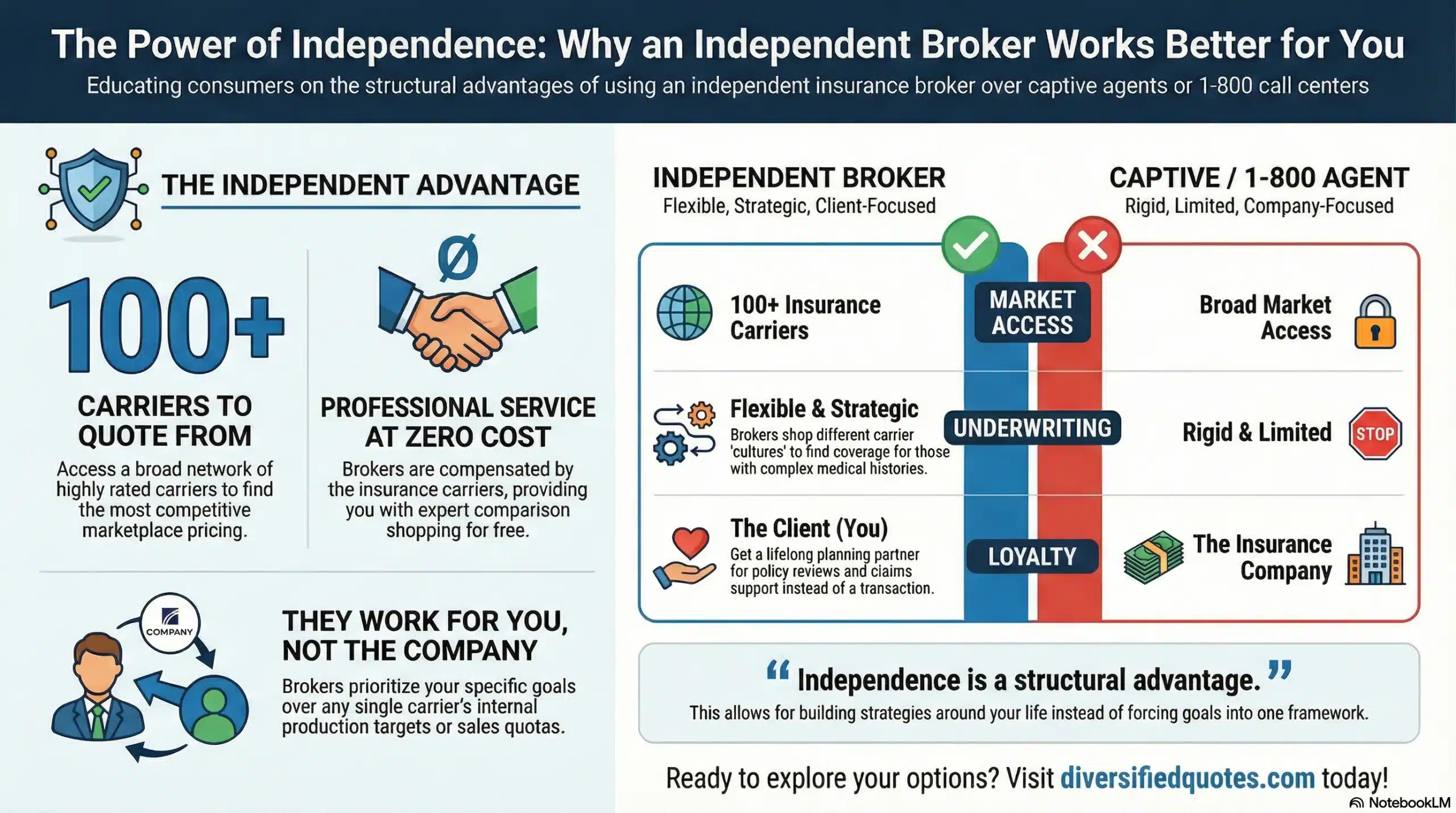
View the table near the end of the page to see why working with an independent insurance broker provides you the best possible rates.
Is Sentinel Security Life a Good Insurance Company?

Jason Stolz CLTC, CRPC, DIA, CAA
Sentinel Security Life Insurance Company is a Salt Lake City, Utah insurer founded in 1948 that has historically served the senior market through final expense whole life insurance, Medicare supplement plans, fixed annuities, and indexed annuities. It was acquired in 2015 by Advantage Capital Partners (A-CAP), controlled by Kenneth King. Since that acquisition, the company has been at the center of one of the most serious regulatory and financial controversies in the recent US life insurance industry. The AM Best Financial Strength Rating is currently B++ (Good) Under Review with Negative Implications — materially below the A- threshold that most independent financial advisors and planners require as a minimum for annuity placements. The sequence of events leading to that rating status — a state regulatory emergency order, a rehabilitation petition, massive investment exposure to a criminally charged PE firm, a cybersecurity breach, and an AM Best downgrade — is detailed in full below. This is not a page where Jason Stolz, CLTC, CRPC, DIA, CAA, and the team at Diversified Insurance Brokers can offer a balanced pros-and-cons evaluation. The honest evaluation of Sentinel Security Life, given the documented facts, is that placing new retirement savings here carries material financial risk that clients deserve to understand completely before making any decision.
Ensure you are receiving the absolute top rates
Current Fixed Annuity Rates
Compare today’s best fixed annuity rates from top carriers.
Current Bonus Annuity Rates
See which annuities offer the highest upfront bonus today.
Request an Annuity Quote
Submit our annuity request form to get personalized rate options.
Lifetime Income Calculator
Use our calculator to see how much guaranteed income your annuity can provide.
See Real-Term Rates Side by Side
Life Insurance Quoter
Key Facts at a Glance
| Category | Details |
|---|---|
| Founded / HQ | Founded 1948 by Utah funeral directors; Salt Lake City, Utah; acquired 2015 by Advantage Capital Partners (A-CAP), controlled by Kenneth King; 36 states |
| AM Best Rating | B++ (Good) — Under Review with Negative Implications (downgraded January 2026); materially below the A- minimum standard most advisors require for annuity placements |
| State Regulatory Action | December 2024: Utah Commissioner emergency order barring new business — regulators cited hazardous financial condition; March 2025: rehabilitation petition filed; May 2025: case dismissed after mediation agreement |
| 777 Partners Exposure | A-CAP invested ~$2.1 billion (~26% of admitted assets) in 777 Partners-linked investments; 777 Partners co-founder criminally charged in $500M fraud; independent valuation found some loans recoverable at zero to eleven cents on the dollar |
| Cybersecurity Breach | April 7–15, 2025: unauthorized access exposing SSNs, financial account info, medical records, dates of birth of policyholders, beneficiaries, and others |
| Products | Final expense whole life; Medicare supplement; fixed annuities (including Personal Choice MYGA); indexed annuities; senior market focus |
| Current Status | Authorized to write new business following case dismissal; A-CAP pursuing phased rollout; AM Best rating remains under review with negative implications as of latest available information |
The AM Best Rating Problem
AM Best B++ (Good) Under Review with Negative Implications is not a minor concern in the context of an annuity or life insurance placement. B++ sits two full categories below the A- threshold that most independent financial advisors, planners, and broker-dealers maintain as a minimum standard for recommending annuity products. The “Under Review with Negative Implications” designation means AM Best has signaled it is actively considering further downgrades. The January 2026 downgrade action followed a prolonged dispute — Sentinel Security Life and Atlantic Coast Life (a sibling A-CAP entity) actually sued AM Best in 2024 to prevent the downgrade, claiming the methodology was flawed. That lawsuit was settled. The rating was then downgraded anyway. The under-review-negative status means the rating may decline further depending on how the financial, regulatory, and investment situation develops. The standard AM Best A- minimum exists for a straightforward reason: annuity contracts are multi-year or lifetime commitments. When you place retirement savings in an annuity, the financial strength of the issuer needs to be strong enough to honor those obligations across a market cycle, a recession, or a major claim event. Our resource on what an AM Best rating means covers the full rating scale and the practical implications of a B++ under review designation relative to the A-rated carriers that dominate the competitive annuity market. Our resource on the state guaranty association covers the policyholder protection backstop that applies if a carrier becomes insolvent — the guaranty association limits are an important context for understanding the real risk of a carrier insolvency, not a reason to be complacent about carrier quality.
The 777 Partners Investment Problem
The most serious structural concern in the Utah regulators’ case against Sentinel Security Life involves A-CAP’s investment of approximately $2.1 billion — roughly 26% of the Utah insurers’ total admitted assets — in entities connected to 777 Partners LLC. Utah regulators alleged that A-CAP directed policyholder premiums into high-risk, high-return investments through 777 Partners in exchange for reinsurance arrangements that allowed the companies to continue writing new business without increasing capital reserves. In October 2025, the FBI charged 777 Partners co-founder Joshua Wander in connection with a $500 million fraud scheme targeting private lenders and investors. An independent valuation by Harvest Investments found that expected recoveries on certain 777 Partners-linked loans ranged from zero to eleven cents on the dollar — meaning a significant portion of the asset base may be worth far less than the book values that appeared on Sentinel Security’s statutory balance sheet. A-CAP disputes this assessment and maintains that the insurers are financially sound and capable of meeting all policyholder obligations. The Utah rehabilitation petition, which would have transferred control of the company to state regulators, was ultimately dismissed after the parties agreed to mediation — not because regulators concluded the company was financially sound, but because the parties agreed to resolve their dispute through a non-litigation process. Following the dismissal, A-CAP resumed new business writing. The 777 Partners exposure is the specific concern that drove independent advisors to recommend against new placements at Sentinel Security — not general discomfort with the carrier, but a documented asset quality question with specific dollar amounts and an FBI criminal case attached to the counterparty.
The Regulatory Timeline: What Happened Step by Step
Understanding the Sentinel Security regulatory situation requires reading the full timeline rather than any single event. Utah regulators cited three specific concerns in their examinations: the company had more than 10% of its investments concentrated in a single entity (a statutory violation); it was using incoming premium revenue to meet existing financial obligations as they came due rather than from surplus (a structure regulators described as hazardous); and many of its investments were in entities owned by its own parent company, creating conflicts of interest. The December 2024 emergency order barring new business was described by the Utah Insurance Commissioner’s office as necessary because the condition “presents an immediate and significant danger to the public health, safety, or welfare.” A-CAP contested these findings vigorously. A Utah judge stayed the emergency order pending a trial. The Utah Department then filed a formal rehabilitation petition in March 2025. The trial was scheduled for May 2025. Before the trial concluded, both sides agreed to pause litigation and participate in mediation. In May 2025, Judge Amber Mettler signed an order dismissing the case after the parties reached a mediated resolution. The terms of the resolution were not publicly disclosed, and neither the Utah Insurance Department nor A-CAP commented on the details. The fact that the case was dismissed does not mean the regulators concluded the concerns were unfounded — it means the parties chose to resolve their dispute outside of court. The Utah Insurance Department stated it continues to monitor the financial condition of Sentinel Security and its affiliates. The AM Best Under Review with Negative Implications designation, maintained through and after the dismissal, reflects that the rating agency’s concerns about the company’s financial condition remain unresolved to AM Best’s satisfaction as of its most recent review.
The Personal Choice MYGA: Product Overview and Context
Sentinel Security Life’s Personal Choice MYGA is a multi-year guaranteed annuity — a straightforward fixed-rate accumulation product in the same product category as MYGAs from A-rated carriers. Our product review of the Sentinel Security Personal Choice MYGA covers the rate structure, terms, and withdrawal provisions. The product itself is not inherently different in design from MYGAs available from carriers with stronger financial strength profiles. Rates on some Sentinel Security MYGAs have historically been competitive or above-market — which is consistent with the pattern regulators identified, where companies offering above-market rates need to take on higher investment risk to deliver those returns. An above-market MYGA rate from a B++ under-review carrier is not the same value proposition as a slightly lower rate from an A-rated carrier. The rate differential does not compensate for the difference in financial strength and the specific documented concerns about asset quality at Sentinel Security. For clients who encountered Sentinel Security through competitive rate comparisons, our resources on whether you can lose money in an annuity and fixed income investment options cover the context for why carrier financial strength is as important as rate in the MYGA comparison. The question of whether rates are available elsewhere is always yes — our independent annuity broker comparison process runs rates against 75+ carriers including the full field of A-rated MYGA providers.
The Cybersecurity Breach
Between April 7 and April 15, 2025, Sentinel Security Life and its affiliate Atlantic Coast Life experienced a cybersecurity breach that resulted in unauthorized access to personally identifiable information. Sentinel Security completed its investigation in December 2025 and disclosed that the breach may have exposed names, Social Security numbers, individual taxpayer identification numbers, financial account information, dates of birth, medical records, and health insurance details of current and former policyholders, certificate holders, beneficiaries, and others who had interacted with the companies. This is the full scope of sensitive data — SSNs, financial account numbers, and medical records in combination represent a maximum-severity personal data exposure. Sentinel Security stated it was unaware of any confirmed misuse of the compromised data and said it was reviewing internal policies and processes for storing and accessing personal information. Any current or former Sentinel Security policyholder, beneficiary, or applicant should monitor their credit reports and financial accounts. If you receive a notification from Sentinel Security about this breach, the standard protections apply: place fraud alerts or credit freezes with the three major credit bureaus, review all financial accounts for unauthorized activity, and consider identity monitoring services. Our resource on leaving Social Security benefits on the table covers an adjacent area where identity theft and data compromise can affect benefit claims. For seniors managing Medicare alongside life insurance and annuities, our resources on whether Medicare is expensive and enrolling in Medicare at 65 cover the coverage planning that runs alongside senior insurance decisions. For long-term care planning alongside this review, our resources on whether Medicare and long-term care insurance are the same, hybrid long-term care, guaranteed issue long-term care insurance, and long-term care insurance after age 80 cover the protection planning decisions most relevant to Sentinel Security’s senior market. For final expense planning outside of Sentinel Security, our resource on burial insurance for parents over 70 covers the specific planning need that Sentinel Security’s final expense products historically served — from A-rated carriers. For life insurance alternatives for seniors with specific health conditions that were drawn to Sentinel Security’s simplified issue offerings, our resources on life insurance for diabetics with complications, life insurance for heart attack survivors, and life insurance for heart disease cover senior life insurance underwriting from A-rated carriers in the same simplified issue space. For clients evaluating retirement income longevity without an annuity, our resources on how long money lasts in retirement, how long savings last in retirement, and how long a SEP IRA lasts in retirement cover the longevity risk context that motivates annuity purchases and should inform the carrier selection decision. For Social Security claiming decisions that interact with annuity income timing, our resources on how delayed retirement credits boost Social Security and strategies for widows claiming Social Security cover planning adjacent to retirement income decisions. For employer group health planning alongside individual retirement decisions, our resource on group health for 20 employees covers the small employer context that often runs parallel. For carrier comparisons at stronger financial strength levels, our resources on Is Guardian Life a Good Company, Is Nationwide a Good Company, Is Lincoln Financial a Good Company, and Is Pacific Life a Good Company cover A-rated alternatives in the life insurance and annuity space where the financial strength concerns documented at Sentinel Security do not exist.
Talk With an Advisor Today
Choose how you’d like to connect—call or message us, then book a time that works for you.
Schedule here:
calendly.com/jason-dibcompanies/diversified-quotes
Licensed in all 50 states • Fiduciary, family-owned since 1980
Frequently Asked Questions: Is Sentinel Security Life a Good Insurance Company?
What is Sentinel Security Life’s current AM Best rating?
Sentinel Security Life Insurance Company currently holds AM Best B++ (Good) Under Review with Negative Implications, following a downgrade action by AM Best in January 2026. B++ is two full categories below A- — the minimum financial strength threshold that most independent financial advisors, planners, and broker-dealers maintain as a standard for annuity placements. The “Under Review with Negative Implications” designation means AM Best is actively evaluating the possibility of further downgrades. This downgrade followed a prolonged dispute in which Sentinel Security and its affiliate Atlantic Coast Life sued AM Best in 2024 attempting to prevent the downgrade — that lawsuit was settled, and the downgrade proceeded. The under-review-negative status reflects AM Best’s ongoing assessment of Sentinel Security’s balance sheet quality, regulatory history, and financial condition. A-CAP, the parent company, maintains that its insurers are financially sound and capable of meeting all policyholder obligations. For clients evaluating carrier ratings, our resource on what an AM Best rating means covers the full 15-category scale and the practical significance of the B++ versus A- distinction for annuity placements.
What happened with the Utah regulatory action against Sentinel Security Life?
In December 2024, Utah Insurance Commissioner Jonathan Pike signed an emergency order barring Sentinel Security Life from writing new business after December 31, 2024, citing hazardous financial condition. Regulators stated the company was using incoming premium revenue to meet existing obligations — a structure described as financially dangerous because when incoming premium stops, the company cannot pay. Utah examiners also cited violations of investment concentration rules and conflicts of interest from investing in A-CAP-controlled entities. A-CAP appealed, and a judge stayed the order pending a May 2025 trial. In March 2025, the Commissioner filed a formal rehabilitation petition asking a court to place the company under regulatory control. Before the trial concluded, the parties agreed to mediation. In May 2025, the case was dismissed. Utah regulators stated they continue to monitor the financial condition of Sentinel Security. The dismissal reflects a mediated resolution rather than a judicial determination that the company was financially sound. A-CAP resumed new business writing following the dismissal. The AM Best Under Review with Negative Implications designation remained in place after the dismissal.
What is the connection between Sentinel Security Life and 777 Partners?
Beginning around 2020, A-CAP (Sentinel Security Life’s parent company) directed approximately $2.1 billion — roughly 26% of the Utah insurers’ total admitted assets — into investments connected to 777 Partners LLC, a private equity firm. Utah regulators alleged that A-CAP arranged for Sentinel Security and its reinsurers to invest in 777 Partners-linked loans and short-term notes in exchange for reinsurance arrangements that allowed the insurers to continue writing new business without building up capital reserves. In October 2025, the FBI charged Joshua Wander, co-founder of 777 Partners, in connection with a $500 million fraud scheme targeting private lenders and investors. An independent valuation by Harvest Investments — commissioned during the regulatory proceedings — found that expected recoveries on certain 777 Partners-linked loans ranged from zero to eleven cents on the dollar, suggesting that a significant portion of the assets backing Sentinel Security’s obligations may be worth far less than their stated values. A-CAP disputes this assessment. The 777 Partners exposure is the specific asset quality concern that drove the rating actions and regulatory proceedings — it is not a general concern about the company’s operations but a documented, specific investment question with a criminal case attached to the counterparty.
What should existing Sentinel Security Life policyholders do?
Existing policyholders have several practical considerations. First, if you received a notification about the April 2025 cybersecurity breach, take it seriously — the breach exposed Social Security numbers, financial account information, medical records, and dates of birth. Place fraud alerts or credit freezes with the three major credit bureaus (Equifax, Experian, TransUnion), review all financial accounts for unauthorized activity, and consider identity monitoring services. Second, for existing annuity or life insurance contracts, the immediate question is whether to maintain the contract or execute a 1035 exchange to a carrier with stronger financial strength. That decision requires analyzing your current contract’s surrender schedule, any applicable surrender charges or MVA, and the specific guarantees in your contract. Our resources on annuity surrender charges and MVA and how 1035 exchanges work cover the mechanics of that decision. Third, understand what state guaranty association coverage applies to your contract — our resource on the state guaranty association covers the per-state limits and what they cover. Consulting with an independent licensed advisor who can review your specific contract and the current regulatory situation is the appropriate next step. Our second opinion review service covers this type of existing policy evaluation at no cost.
Should I place new retirement savings with Sentinel Security Life?
Given the documented facts — AM Best B++ Under Review with Negative Implications, $2.1 billion in 777 Partners-linked investments with an independent valuation showing some at near-zero recovery value, a Utah regulatory emergency order, a rehabilitation petition, a cybersecurity breach, and an FBI criminal case attached to the investment counterparty — placing new retirement savings with Sentinel Security Life is not something we can recommend. The A-rated MYGA and FIA market is competitive and deep. The full field of A-rated carriers offers competitive rates at stronger financial strength profiles. The rate differential between a B++ under-review carrier and an A-rated carrier does not compensate for the documented financial strength gap and the unresolved asset quality questions. We include the Personal Choice MYGA product review on this site because consumers searching for Sentinel Security deserve an honest, complete evaluation of what they are considering — not because we recommend new placements. For clients who want to compare A-rated MYGAs and FIAs across the full market, our resource on choosing the best independent annuity broker covers the multi-carrier comparison process, and our resources on how long savings last in retirement and fixed income investment options cover the retirement income planning context for clients evaluating whether an annuity from any carrier is the right choice.
About the Author:
Jason Stolz, CLTC, CRPC, DIA, CAA and Chief Underwriter at Diversified Insurance Brokers (NPN 20471358), is a senior insurance and retirement professional with more than 25 years of real-world experience helping individuals, families, and business owners protect their income, assets, and long-term financial stability. As a long-time partner of the nationally licensed independent agency Diversified Insurance Brokers, Jason provides trusted guidance across multiple specialties—including fixed and indexed annuities, long-term care planning, personal and business disability insurance, life insurance solutions, Group Health, Travel Medical and Evacuation Insurance, and short-term health coverage. Diversified Insurance Brokers maintains active contracts with over 100 highly rated insurance carriers, ensuring clients have access to a broad and competitive marketplace.
His practical, education-first approach has earned recognition in publications such as VoyageATL, and contributions from his agency featured in Kiplinger and GoBankingRates— highlighting his commitment to financial clarity and client-focused planning. Drawing on deep product knowledge and years of hands-on field experience, Jason helps clients evaluate carriers, compare strategies, and build retirement and protection plans that are both secure and cost-efficient. Visitors who want to explore current annuity rates and compare options across multiple insurers can also use this annuity quote and comparison tool.
Review More Carrier Reviews: Browse our complete Burial Insurance Company Reviews — covering Mutual of Omaha, Americo, Globe Life, Colonial Penn, and more burial insurance carriers.
Last Reviewed: June 12, 2026 |
Reviewed by: Jason Stolz, CLTC, CRPC, DIA, CAA
Chief Underwriter, Diversified Insurance Brokers, Inc. | NPN: 20471358 | Diversified Insurance Brokers, Inc. — Licensed in all 50 states
Fact Checked by: Tonia Pettitt, CMIP©
Medicare Specialist, Diversified Insurance Brokers, Inc. | NPN: 14374308 | Diversified Insurance Brokers, Inc. — Licensed in all 50 states
Did you find this content helpful? Leave us a Google review — it helps others find trustworthy guidance too.
Editorial Standards: Diversified Insurance Brokers maintains rigorous editorial standards to ensure accuracy, clarity, and independence in all content. Learn more about our editorial standards and commitment to transparency.
