
Best Life Insurance Rates
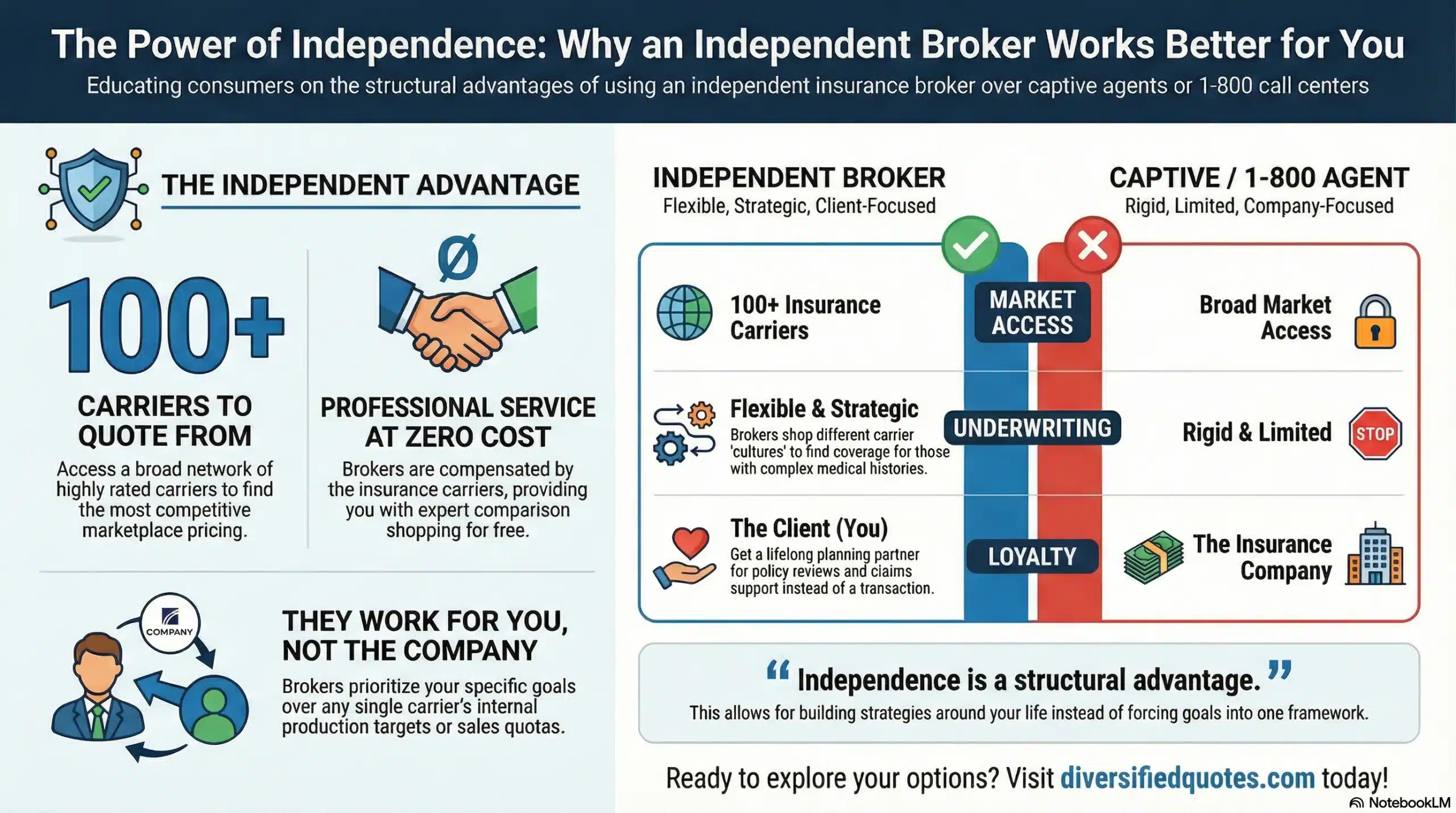
As an Independent Life Insurance Broker, we compare rates across 100+ carriers and prescreen every application before submission.
Best Life Insurance Rates

Jason Stolz CLTC, CRPC, DIA, CAA
The best life insurance rate is not a number you find by searching one company’s website — it is the lowest premium a highly rated carrier will offer for your specific profile after evaluating your age, health history, medications, build, tobacco status, driving record, and lifestyle. That definition matters because it explains why two people of the same age shopping for the same coverage can receive quotes that differ by 50% or more from the same carrier, and why the same person can receive very different offers from different carriers on the same day. Life insurance pricing is personal, and the gap between the rate you get by accepting the first offer and the rate you get by matching your profile to the right carrier can be measured in hundreds or thousands of dollars over the life of the policy. The single most powerful tool for getting the best life insurance rate is multi-carrier comparison with a broker who understands which carriers are most favorable for which profiles — not a brand name, not an advertisement, and not the first quote returned. Our life insurance quotes resource covers the full quoting process, and our life insurance services overview covers how we match profiles to carriers across more than 100 options.
Understanding what drives life insurance pricing transforms the rate shopping process from guesswork into strategy. The variables that most significantly move your rate are age at application, health classification, tobacco status, term length, face amount, and policy type. Each of these is addressed in detail on this page. One clarifying point upfront: the rate benchmarks and comparisons throughout use approximate directional ranges that illustrate how these variables interact. They are not quotes. Actual rates depend on your specific profile, state, and the carrier on the date of application. Life insurance rates change continuously as carriers update their pricing tables — the Quoter above always shows current live pricing for your specific inputs.
One framing point that shapes everything else here: the health class you qualify for is the highest-leverage variable in your control. Moving from Standard to Preferred Plus on a term policy can cut your premium by 30-50% or more for identical coverage. That gap means the carrier and underwriting match is not a secondary consideration — it is where most of your potential savings live. A carrier that prices your specific profile in a better class will produce a meaningfully lower rate than a carrier with lower headline pricing that assigns you a worse class. Our resources on life insurance with pre-existing conditions and life insurance table ratings explained cover the underwriting classification mechanics in detail.
See Real-Term Rates Side by Side
Life Insurance Quoter
Health Class Comparison — The Most Important Rate Variable
Every applicant is assigned to a rate class after underwriting review. That class determines which premium table applies — and the difference between classes is substantial. The table below reflects how the market generally defines each class and how each affects pricing relative to Standard. Exact criteria vary by carrier, which is why the same applicant can qualify for different classes at different companies.
| Rate Class | Typical Health Requirements | Approximate Premium vs. Standard | Best For |
|---|---|---|---|
| Preferred Plus (Super Preferred) |
Excellent health; ideal height/weight ratio; clean labs (blood pressure, cholesterol, glucose); no significant family history of early mortality; clean driving record; no tobacco use for 3-5+ years (varies by carrier) | Lowest available — typically 30-50%+ below Standard for the same coverage | Applicants in excellent health who meet all criteria; a minority of applicants qualify; standards are strict |
| Preferred | Very good health; minor imperfections acceptable — slightly elevated but controlled cholesterol, minor family history, BMI within range; no tobacco typically 3-5 years; generally clean driving record | Roughly 15-30% below Standard; meaningfully better than Standard for the same coverage | Good-health applicants who don’t meet every Preferred Plus criterion; the most common “best available” class for healthy-but-not-perfect profiles |
| Standard Plus | Good health with some controlled conditions; may include well-managed blood pressure or cholesterol on medication; BMI slightly above Preferred range; minor driving violations | Roughly 5-15% below Standard; better than Standard but a meaningful gap remains vs. Preferred | Applicants with minor health factors well under control; bridge between Preferred and Standard |
| Standard | Average health; more significant history acceptable; overweight but not severely; controlled chronic conditions (varies widely by carrier); moderate driving history | Baseline rate — represents average risk pricing and is the reference point against which all other classes are measured | Applicants with average health profiles; common result for those with multiple controlled conditions or weight concerns |
| Substandard / Table-Rated | Higher-risk health history — significant recent diagnoses, poorly controlled conditions, elevated build factors, DUI history, hazardous occupations or avocations; eligible for coverage but at higher rate | 25-200%+ above Standard depending on the specific table rating; each rating level typically adds approximately 25% above Standard | Applicants with significant health history who can still qualify for traditional coverage; carrier selection is especially important at this level |
| Tobacco / Smoker Rates | Separate premium tables for tobacco users; most carriers define use as any tobacco or nicotine product within the past 12-24 months (carrier-specific); includes cigarettes, cigars, pipe, vaping, chewing tobacco | Typically 2-3x non-tobacco Standard rates for the same coverage; the single largest per-unit rate increase in the market | Required for all current users; carrier definitions vary on cigar vs. cigarette, vaping, and look-back periods — comparison across carriers is especially important |
Rate class definitions, eligibility criteria, and premium differentials vary by carrier, state, product, face amount, and date of application. Premium differentials shown are approximate directional ranges reflecting general market patterns — not quotes. The same applicant may qualify for different classes at different carriers because each carrier weights underwriting factors according to its own guidelines. Multi-carrier comparison using your actual health profile is the only reliable way to determine the best available rate class for your specific situation.
What Drives Life Insurance Rates — The Six Core Variables
Age at application is consistently the most powerful pricing variable for term life insurance. Rates rise with every birthday — the increase is gradual through the 30s, more pronounced in the 40s, and accelerates sharply after 50. Because premiums are locked at issue for the full policy term, applying earlier locks a lower rate permanently. A 20-year term purchased at 38 carries that age-38 rate for the full 20 years even as the insured turns 40, 45, 50, and 55. Waiting — for any reason — means a higher locked rate for however long the policy stays in force. The financial argument for applying as soon as a coverage need exists is straightforward: every year of delay adds permanent cost to every year of the policy’s life.
Health history and current health status shape your rate class assignment, which is the second major variable. Carriers evaluate a similar set of factors — blood pressure, cholesterol, glucose, BMI, prescription history, family medical history, prior diagnoses — but they weight each factor differently. One carrier may treat controlled hypertension as a Standard factor; another may offer Preferred pricing for the same profile if overall health metrics are strong. This carrier-specific variation is the core reason why shopping your profile matters even when you believe your health is straightforward. Our resource on what is a life insurance exam covers how the underwriting process works and when completing a full medical exam can improve your rate class relative to simplified underwriting.
Tobacco and nicotine status is the third variable and represents the largest per-unit rate increase in the market. Tobacco users are placed on entirely separate premium tables from non-users, typically at two to three times the non-tobacco rate for equivalent coverage. A former smoker who has remained tobacco-free for the carrier’s defined look-back period can qualify for non-tobacco rates — and that transition can produce material premium savings. Carrier definitions vary on what constitutes tobacco use (cigarettes vs. cigars vs. vaping vs. nicotine patches), so comparison across carriers is especially important for tobacco users and recent quitters. Our resource on life insurance for smokers covers carrier comparison strategy for tobacco profiles specifically.
Term length is the fourth variable. Longer terms cost more because the carrier accepts the risk obligation for more years — more probability of a claim over the policy’s life. The relationship is not linear: a 30-year term does not cost three times a 10-year term. But the difference is real, and the right term length depends on what you are protecting and for how long. The risk of buying too short a term is that you need to reapply later at an older age — and at a higher rate that reflects both your age at that time and any health changes in the interim. Our resources on 20-year term life insurance and 30-year term life insurance cover those specific term lengths, and our term life insurance calculator lets you compare multiple term lengths against each other with your own inputs.
Face amount is the fifth variable. Larger face amounts produce higher premiums, though the relationship is generally not strictly proportional — there are threshold points where the per-thousand cost shifts. Choosing the right face amount means right-sizing coverage to the obligation being protected rather than defaulting to a round number. Our resource on how much life insurance do I need covers the coverage sizing framework, and our resource on how much does life insurance cost covers the cost framework across coverage amounts and policy types. Policy type is the sixth variable — term life provides the lowest near-term cost per dollar of coverage; permanent life insurance (whole life, universal life, indexed universal life) costs substantially more because it is designed for lifetime coverage and may include a cash value component. Our resource on permanent life insurance covers the permanent coverage category in full.
The Health Class Gap — Where Most Savings Live
The difference between Preferred Plus and Standard on the same policy can reduce the monthly premium by roughly 30-50% or more — for identical coverage from the same product type at the same face amount. Over a 20-year term, that difference compounds into significant cumulative premium savings. This is why the health class you qualify for matters as much as which carrier you choose, and why profile-to-carrier matching is the primary optimization lever in life insurance rate shopping. The headline rate advertised by any specific carrier is largely irrelevant if that carrier assigns your profile a worse health class than another carrier would. The correct comparison is always class-adjusted: what is the best health class each carrier will offer your specific profile, and what does that produce as a premium?
The practical implication is that applicants should not simply select the carrier with the most recognizable name or the lowest advertised rate. They should identify the carrier most likely to approve their specific profile at the best available class — then compare the resulting premium against strong alternatives. For applicants with any health complexity, that matching process requires knowledge of which carriers are favorable for which conditions. Our resource on life insurance with pre-existing conditions covers the matching strategy for health-complex profiles. Our resource on life insurance table ratings explained covers substandard classifications and how table ratings work for applicants who cannot qualify for Standard. For an independent review of any offer already received, our second-opinion life insurance quote review provides the multi-carrier comparison that confirms whether the rate and class are competitive. Our best independent insurance agent resource covers why independent broker access to multiple carriers is the structural advantage in this process.
Term Life vs. Permanent — The Cost Comparison
Term life insurance is the lowest-cost structure for a large death benefit over a defined period. The premium pays for mortality protection only — no cash value, no investment component, no premium allocation to anything beyond the death benefit for the selected term. Permanent life insurance (whole life, universal life, indexed universal life) provides lifetime coverage with a cash value component and costs substantially more per dollar of death benefit in the near term. The exact multiple varies by age, carrier, and product design, but the difference is consistently significant — permanent life typically costs many times more than term for equivalent face amounts, particularly at younger purchase ages. This cost differential explains why term is the standard recommendation for income replacement, mortgage protection, and family protection needs where the coverage horizon is definable. The remaining premium savings can be deployed toward other financial priorities. Permanent insurance serves distinct planning objectives where the permanence and cash value have specific value: estate planning, final expense certainty, business insurance, and strategies covered in our resource on life insurance strategies the wealthy use. Our resource on whole life insurance for people on fixed income covers permanent coverage specifically for constrained premium budgets.
No-Exam vs. Fully Underwritten — When Each Makes Sense
Accelerated underwriting pathways have expanded significantly as carriers have developed algorithmic tools that can approve applicants quickly using database checks and risk modeling rather than requiring blood draws and physical measurements. For healthy applicants who qualify, no-exam coverage can be competitive with strong issue timelines — sometimes same-day. The assumption that no-exam automatically means lower cost, however, is not accurate. For applicants whose actual lab results would support a better health class than the algorithm predicts — particularly those whose recorded history understates their current health — completing full underwriting with an actual exam can unlock a better rate class and produce a lower premium than the simplified offer. The exam itself has no cost to the applicant; it is covered by the carrier. The trade-off is time rather than money. The right choice depends on your health profile, the face amount applied for, and your timeline priority. Our resource on no-exam life insurance covers when each pathway produces the better outcome and how to evaluate which applies to your situation.
Common Mistakes That Lead to Higher Rates
The most preventable mistakes in life insurance rate shopping consistently involve carrier mismatch, timing delays, and wrong assumptions about underwriting. Applying with a carrier that is not favorable for your profile produces a worse rate class — or a decline — even if the carrier appears competitive for clean-profile applicants. A decline from the wrong carrier creates a record in the Medical Information Bureau (MIB) that other carriers will see, which can complicate subsequent applications. Avoiding this requires pre-screening the health profile against carrier guidelines with a knowledgeable broker before any application is submitted. Waiting too long is the second major mistake — every year of delay adds permanent cost to every year of coverage, and new health developments in the interim can shift the rate class available. Choosing too short a term is the third — forcing a reapplication at an older age, at a higher rate, with whatever health changes have occurred in the interval. And assuming no-exam is always cheaper is the fourth — when full underwriting would have produced a better class and lower premium, the convenience of skipping the exam costs money over the entire policy term. Our resource on life insurance for Hodgkin’s and lymphoma illustrates the impaired-risk carrier matching process in a specific context, demonstrating why profile-first carrier selection produces better outcomes than brand selection.
Talk With an Advisor Today
Choose how you’d like to connect—call or message us, then book a time that works for you.
Schedule here:
calendly.com/jason-dibcompanies/diversified-quotes
Licensed in all 50 states • Fiduciary, family-owned since 1980
FAQs: Best Life Insurance Rates
What is the most important factor in getting the best life insurance rate?
The health class you qualify for is the highest-leverage variable. Moving from Standard to Preferred Plus can cut the premium by 30-50% or more for the same coverage amount, term length, and face amount. Because each carrier applies its own underwriting criteria to assign that class, the same applicant can qualify for different classes at different carriers — meaning a carrier that appears competitive on a headline rate may produce a higher final premium if it assigns a worse class than a competitor would. Multi-carrier comparison, with each carrier evaluated against your specific profile, is the only reliable way to find the genuinely lowest rate.
How does age affect life insurance rates?
Rates rise with every birthday because older ages carry higher statistical mortality risk. The increase is gradual through the 30s, more meaningful in the 40s, and accelerates sharply after 50. Because the rate is locked at issue for the full policy term, applying earlier locks a permanently lower premium. A policy purchased at 38 carries that 38-year-old rate for the full term — even as the insured turns 45, 50, and beyond. Every year of delay adds permanent cost to every year of coverage, which is the core financial argument for applying as soon as a coverage need exists rather than waiting for a better time.
What health classes do life insurance carriers use?
Most carriers use a tiered classification structure: Preferred Plus (or Super Preferred) is the best class — requiring excellent health, ideal labs, and clean history across all underwriting dimensions. Preferred accepts very good health with minor imperfections. Standard Plus and Standard represent progressively average health profiles with more conditions acceptable. Substandard or table-rated classes are assigned for elevated-risk profiles and carry premiums above Standard, typically in 25% increments per rating level. Separate tobacco rating tables apply for nicotine users. The exact criteria for each class vary by carrier — blood pressure thresholds, BMI ranges, look-back periods, and family history treatment are all carrier-specific — which is why matching your profile to the right carrier can change your class and reduce your rate significantly.
Does tobacco use significantly increase life insurance rates?
Yes — substantially. Tobacco users are placed on entirely separate premium tables that typically run two to three times the equivalent non-tobacco rate for identical coverage. The difference compounds over a multi-year term into a very large total premium premium gap. Carrier definitions of tobacco vary in ways that matter: some treat occasional cigars differently from daily cigarettes; some use 12-month look-back periods while others use 24 months; some have more competitive tobacco pricing than others for specific usage patterns. Former users who have been tobacco-free for the carrier’s required period can qualify for non-tobacco rates — and that transition can produce material premium savings worth timing carefully for the right application.
Is term life or whole life insurance cheaper?
Term life insurance is substantially cheaper than whole life for the same face amount in the near term. Term provides a death benefit for a defined period with no cash value; the entire premium funds pure mortality protection. Whole life provides lifetime coverage and builds cash value — the higher premium reflects both the permanent death benefit obligation and the cash value accumulation component. The cost multiple is significant, particularly at younger purchase ages. Term is generally recommended for income replacement, mortgage protection, and family protection where the coverage horizon is finite. Permanent insurance serves planning objectives where lifetime coverage and cash value have specific value: estate planning, final expense certainty, business strategies, and certain long-term planning structures.
Is no-exam life insurance cheaper than fully underwritten coverage?
Not always. No-exam coverage can be competitive for healthy applicants who qualify for favorable algorithmic risk assessments, and it offers faster issue timelines. For applicants whose actual lab results would support a better health class than the algorithmic model assigns — particularly those whose recorded history understates current health — completing full medical underwriting can unlock a better rate class and a lower premium. The exam costs the applicant nothing; it is carrier-covered. The trade-off is time rather than money. The right path depends on your health profile, face amount, and timeline priority. Skipping the exam when full underwriting would have produced a better class means paying a higher premium for the entire policy term.
What term length should I choose?
The best term length matches the longest active financial obligation being protected — a 30-year mortgage justifies a 30-year term; a need that ends when children finish college in 18 years might justify a 20-year term; a short-term bridge might justify 10 years. The risk of choosing too short a term is being forced to reapply later at an older age and at a higher rate, with whatever health changes have occurred in the interim. Locking a longer term when health is favorable is consistently more cost-effective over the full planning horizon than planning to reapply at a shorter term later — even if the longer term appears more expensive today on a monthly basis.
Which company has the best life insurance rates?
No single company consistently produces the best rate for every profile. Carriers have different underwriting strengths — some are most competitive for clean profiles in younger age bands; others are more favorable for certain controlled conditions; others price older age segments more competitively. The best rate for your specific situation comes from matching your application to the carrier whose guidelines treat your profile most favorably, not from recognizing a brand name. This is exactly what multi-carrier independent broker comparison produces: not simply who has the lowest advertised rate, but which carrier assigns your profile the best health class — and what premium that produces after class assignment is correctly accounted for.
About the Author:
Jason Stolz, CLTC, CRPC, DIA, CAA and Chief Underwriter at Diversified Insurance Brokers (NPN 20471358), is a senior insurance and retirement professional with more than 25 years of real-world experience helping individuals, families, and business owners protect their income, assets, and long-term financial stability. As a long-time partner of the nationally licensed independent agency Diversified Insurance Brokers, Jason provides trusted guidance across multiple specialties—including fixed and indexed annuities, long-term care planning, personal and business disability insurance, life insurance solutions, Group Health, Travel Medical and Evacuation Insurance, and short-term health coverage. Diversified Insurance Brokers maintains active contracts with over 100 highly rated insurance carriers, ensuring clients have access to a broad and competitive marketplace.
His practical, education-first approach has earned recognition in publications such as VoyageATL, and contributions from his agency featured in Kiplinger and GoBankingRates— highlighting his commitment to financial clarity and client-focused planning. Drawing on deep product knowledge and years of hands-on field experience, Jason helps clients evaluate carriers, compare strategies, and build retirement and protection plans that are both secure and cost-efficient. Visitors who want to explore current annuity rates and compare options across multiple insurers can also use this annuity quote and comparison tool.
Explore More Life Insurance Options: Browse our complete guide to Life Insurance Buying & Cost Education — covering how to buy, costs, calculators, rates & buying guides from 100+ carriers.
Last Reviewed: June 3, 2026 |
Reviewed by: Jason Stolz, CLTC, CRPC, DIA, CAA
Chief Underwriter, Diversified Insurance Brokers, Inc. | NPN: 20471358 | Diversified Insurance Brokers, Inc. — Licensed in all 50 states
Fact Checked by: Tonia Pettitt, CMIP©
Medicare Specialist, Diversified Insurance Brokers, Inc. | NPN: 14374308 | Diversified Insurance Brokers, Inc. — Licensed in all 50 states
Did you find this content helpful? Leave us a Google review — it helps others find trustworthy guidance too.
Editorial Standards: Diversified Insurance Brokers maintains rigorous editorial standards to ensure accuracy, clarity, and independence in all content. Learn more about our editorial standards and commitment to transparency.
