
Is Ability Insurance a Good Insurance Company?
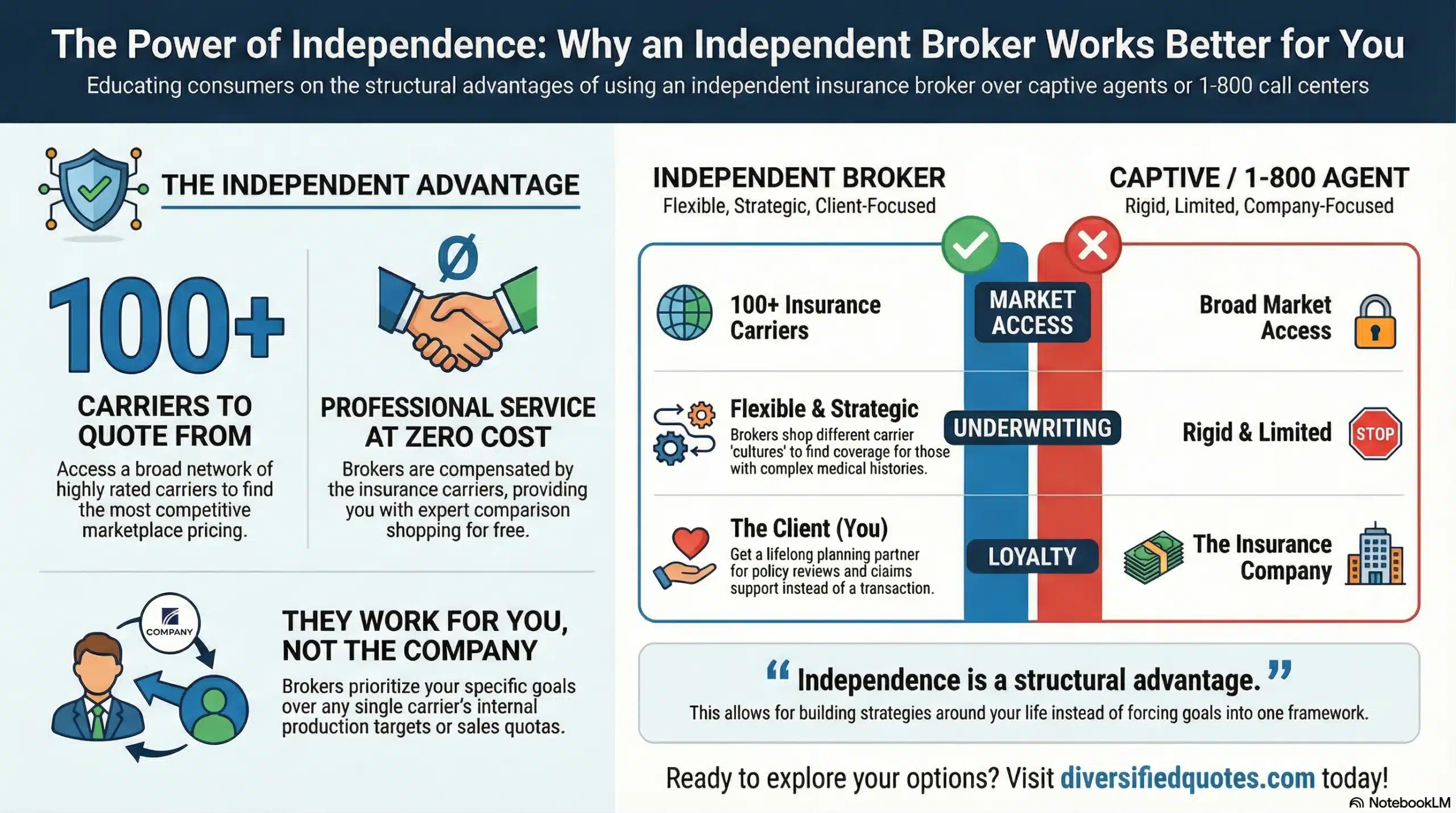
View the table near the end of the page to see why working with an independent insurance broker provides you the best possible rates.
Is Ability Insurance a Good Insurance Company?

Jason Stolz CLTC, CRPC, DIA, CAA
AM Best Rating Disclosure: Ability Insurance Company holds an AM Best Financial Strength Rating of B+ (Good) with a stable outlook. AM Best places B+ in its “Good” category, below the A-range ratings held by many larger annuity carriers. Ratings can change at any time, so confirm the current rating directly with AM Best before purchasing any contract.
Ability Insurance Company is a legitimate, state-regulated Nebraska insurer with an AM Best Financial Strength Rating of B+ (Good) and a stable outlook, which makes it a reasonable choice for some multi-year guaranteed annuity buyers, but not an automatic one for every buyer. The company has existed for more than five decades, yet it only recently began issuing its own annuities directly. For years its business centered on running off a closed block of long-term care policies and reinsuring portions of other insurers’ annuities. Today it sells the ReliAbility MYGA, a fixed-rate annuity offered in 3, 5, 7, and 10-year terms with a $5,000 minimum premium. Whether Ability is a good fit depends on how you weigh its competitive positioning against a newer direct-writing track record, a B+ rating, and contract provisions such as optional withdrawal riders that reduce the credited rate. This review covers the company’s history, ownership, rating, investment approach, legacy long-term care business, and the details of the ReliAbility MYGA, so you can decide with the full picture in front of you.
Jason Stolz, CLTC, CRPC, DIA, CAA, is Chief Underwriter at Diversified Insurance Brokers, and our office actively places the ReliAbility MYGA for clients alongside multi-year guaranteed annuities from many other carriers. As an independent annuity broker representing more than 100 insurance companies, we can show you how Ability’s contract compares with options from carriers of different sizes and ratings, including A-rated alternatives at the same term, so the choice is made on rate, terms, and carrier strength together rather than on any single number.
Want to see how the ReliAbility MYGA compares for your deposit?
Compare Ability MYGA Options
Ability Insurance Company at a Glance
The table below summarizes the key facts about Ability Insurance Company and its current annuity product. Ratings, licensing, and product availability can change, so confirm the current details before applying.
| Category | Details |
|---|---|
| Company | Ability Insurance Company, originally Medico Life Insurance Company |
| Home office and domicile | Lincoln, Nebraska; regulated by the Nebraska Department of Insurance |
| Parent company | Mount Logan Capital Inc., a Nasdaq-listed alternative asset management and insurance solutions company |
| AM Best Financial Strength Rating | B+ (Good), stable outlook |
| AM Best Issuer Credit Rating | bbb- (Good), stable outlook |
| Current annuity product | ReliAbility MYGA in 3, 5, 7, and 10-year terms; compare it with other leading MYGA options |
| Minimum premium and issue ages | $5,000 single premium; issue ages 0 to 90, age last birthday |
| Legacy business | Closed block of long-term care policies, with much of the claim risk reinsured to other companies |
| Licensing | Around 40 states and the District of Columbia; availability varies by state |
| Market benchmark | See today’s highest annuity rates by term |
Ensure you are receiving the absolute top rates
Current Fixed Annuity Rates
Compare today’s best fixed annuity rates from top carriers.
Current Bonus Annuity Rates
See which annuities offer the highest upfront bonus today.
Request an Annuity Quote
Submit our annuity request form to get personalized rate options.
Lifetime Income Calculator
Use our calculator to see how much guaranteed income your annuity can provide.
Is Ability Insurance a Good Company? Our Overall Assessment
Ability Insurance Company is a sound option for the right buyer, with clear trade-offs that should be understood before you commit money. On the positive side, it is a licensed, regulated insurer with a long corporate history, a B+ (Good) rating from AM Best with a stable outlook, risk-adjusted capitalization that AM Best measures at the strong level, and a parent that AM Best expects to contribute capital to fund growth. Its ReliAbility MYGA has a simple structure: one premium, a guaranteed rate for the full term, tax-deferred growth, and a choice of four guarantee periods. A buyer with a modest deposit and a defined timeline can find a lot to like in that design.
The cautions are just as real. Ability is new to issuing annuities directly, and AM Best describes its business profile as limited, citing the startup nature of its growth plans. Its rating sits below the A range held by many established annuity carriers. The brochure lists no penalty-free allowance during the surrender period outside two optional withdrawal riders, and adding either one lowers your credited rate. The standard death benefit is the cash surrender value, which means surrender charges and a market value adjustment can reduce what a beneficiary receives unless you add a separate rider, which also lowers the rate. None of these points disqualifies the company. Together, they mean Ability works best for buyers who compare it carefully against other carriers, choose riders deliberately, and size the deposit with the company’s rating and track record in mind.
Ability’s History: From Medico Life to a Direct Annuity Writer
Ability Insurance Company was incorporated in Nebraska more than five decades ago as Medico Life Insurance Company, a stock life insurer owned at the time by Medico Insurance Company, part of a group that wrote long-term care and other health coverage. The company later changed its name to Ability Insurance Company after it was sold to Ability Resources, and it went on to pass through several owners. According to the Nebraska Department of Insurance, those owners included Ability Resources and its holding company, then Advantage Capital Holdings, and finally Mount Logan Capital, which acquired the company and still controls it today. Through most of that period, the company’s core business was a closed block of long-term care policies, along with reinsurance arrangements that moved much of the long-term care claim risk to other parties.
Under Mount Logan, the strategy shifted toward annuities. Ability first entered the annuity market by reinsuring portions of other insurers’ multi-year guaranteed annuity business, and AM Best notes that the company is now launching a strategy of writing annuities directly after previously focusing on annuity reinsurance and running off its long-term care blocks. The ReliAbility MYGA suite is the first product of that strategy. Ability describes itself on its official About Ability page as an insurance company focused on life and annuity products, wholly owned by Mount Logan Capital. For buyers, the history matters in two ways: it shows a company that has operated under state supervision for a long time, and it shows that the annuity business, the part you would be buying into, is the newest part of the operation.
Ability’s AM Best Rating and What It Means
AM Best assigned Ability Insurance Company a Financial Strength Rating of B+ (Good) and a Long-Term Issuer Credit Rating of “bbb-” (Good), both with a stable outlook. In its announcement, AM Best stated: “The ratings reflect AIC’s balance sheet strength, which AM Best assesses as adequate, as well as its adequate operating performance, limited business profile and appropriate enterprise risk management (ERM).” AM Best added that the balance sheet assessment is underpinned by risk-adjusted capitalization at the strong level, as measured by Best’s Capital Adequacy Ratio, and supported by recent growth in surplus, expected future capital contributions from the parent to fund growth, the company’s position in structured fixed income, and its reinsurance of its run-off long-term care blocks.
Two parts of that assessment deserve attention. The limited business profile reflects that Ability is just beginning to sell annuities directly, and AM Best has said it will watch actual results against the company’s projections as the growth strategy unfolds. The second is the rating level itself. AM Best groups B++ and B+ as “Good,” while A++ through A- are “Superior” and “Excellent.” AM Best views a B+ carrier’s ability to meet its ongoing obligations as good, one level below the excellent and superior ratings, and new business strategies can change a carrier’s profile in either direction. The full letter-grade scale is laid out in what an AM Best rating means for buyers. Because ratings change, check Ability’s current rating with AM Best at the time you buy rather than relying on any figure you read once.
Ownership by Mount Logan Capital and How Ability Invests
Ability is wholly owned by Mount Logan Capital Inc., a Nasdaq-listed company that describes itself as an alternative asset management and insurance solutions business. Mount Logan manages and invests across private and public credit markets in North America, and its asset management subsidiary manages a meaningful portion of Ability’s assets. This kind of structure, in which an asset manager owns an insurer and invests its premiums, has become common in the annuity industry. Supporters say it lets insurers earn higher yields and offer more competitive rates. Critics point out that it can concentrate risk in less liquid credit investments and create conflicts when an affiliate manages the insurer’s money and earns fees from doing so. AM Best’s announcement notes Ability’s position in structured fixed income to enhance yield, which AM Best cited as a support for its balance sheet assessment.
Mount Logan has also described how it plans to grow Ability’s annuity business. Its stated strategy includes ceding some newly written annuity liabilities to third-party reinsurers and receiving ceding commissions in return, a reversal from earlier arrangements in which Ability typically paid those commissions. Reinsurance of this kind does not change your contract: Ability remains the issuer, and your guarantees are backed by its claims-paying ability. Understanding how any insurer invests is part of judging its long-term strength, because the interest your contract earns comes from that portfolio. Our explainer on how fixed annuities deliver guaranteed growth covers how insurers fund declared rates. For most buyers, the practical response to an asset-manager-owned carrier is the same as for any B-range carrier: keep the deposit size reasonable relative to your total savings and compare it with alternatives.
The ReliAbility MYGA: How It Works
The ReliAbility MYGA is a single premium multi-year guaranteed annuity. You make one deposit of at least $5,000, choose a guarantee period of 3, 5, 7, or 10 years, and receive a fixed credited rate that is locked for the full term. No additional contributions are made after issue. The contract is available for issue ages 0 through 90, based on age last birthday, which makes it accessible to buyers well into retirement. Interest compounds tax-deferred until you withdraw it, and your principal and credited interest are not exposed to market losses. Each guarantee period carries its own surrender charge schedule, and a market value adjustment applies to surrenders and excess withdrawals during the surrender period.
The product brochure describes a 30-day free-look period after the contract is delivered, during which you can return it for a full refund of the premium, less any withdrawals already taken. Like other MYGAs, the ReliAbility MYGA works much like a certificate of deposit in that it pays a set rate for a set term, but it is an insurance contract backed by Ability rather than a bank deposit insured by the FDIC, and taxable amounts withdrawn before age 59½ may face a 10% IRS additional tax. Those differences are laid out in how MYGAs compare to CDs for savers weighing both. Credited rates vary by term and change over time with market conditions, so we can confirm the current rate for your state, term, and deposit amount before you apply, along with the rate effect of any riders you choose.
Some design details are easy to overlook. Because the contract accepts only a single premium, you cannot add money later, so a buyer who expects to save more over time would need a separate contract for each later deposit, each with its own term and surrender schedule. The wide issue age range is a real convenience for older buyers, but it also raises the importance of the death benefit choice, since an owner in their eighties holding a 7 or 10-year term faces a meaningful chance that the contract pays a death claim before the surrender period ends. Rates also differ by guarantee period, and a longer term does not always pay more than a shorter one, so it is worth comparing every available term against your actual timeline instead of assuming the longest term is the best value.
ReliAbility MYGA Surrender Charges and Market Value Adjustment
Every guarantee period starts with a 9% surrender charge in the first contract year, and the charge declines each year until the term ends. The schedule applies only to withdrawals above your penalty-free allowance, and because the brochure lists no penalty-free allowance during the surrender period outside the two optional withdrawal riders, a withdrawal from a contract without a rider would generally fall under the schedule. The table below shows the charge for each contract year by guarantee period, as stated in the product brochure.
| Term | Yr 1 | Yr 2 | Yr 3 | Yr 4 | Yr 5 | Yr 6 | Yr 7 | Yr 8 | Yr 9 | Yr 10 |
|---|---|---|---|---|---|---|---|---|---|---|
| 3-Year | 9% | 8% | 7% | — | — | — | — | — | — | — |
| 5-Year | 9% | 8% | 7% | 6% | 5% | — | — | — | — | — |
| 7-Year | 9% | 8% | 7% | 6% | 5% | 4.5% | 3.5% | — | — | — |
| 10-Year | 9% | 8% | 7% | 6% | 5% | 4.5% | 3.5% | 2.5% | 1.5% | 0.5% |
A market value adjustment applies alongside the surrender charge whenever a surrender or excess withdrawal is subject to a charge. An MVA generally reduces the amount you receive if interest rates have risen since your contract was issued and increases it if rates have fallen, so an early exit can cost more or less than the surrender charge alone depending on the rate environment at that time. Our guide on what a market value adjustment is explains the mechanics in more detail. One point matters for long-term planning: the brochure states that the surrender schedule resets if your contract renews into a new term, so renewing extends the period during which charges apply. The 9% first-year charge is in line with many MYGAs, and the 10-year schedule tapers to a low level in its final years, but the practical lesson is the same for any fixed annuity. Choose a term you are confident you can hold, and keep money you may need on short notice outside the contract.
Withdrawal Riders: Accumulated Interest or 10% Annual Access
The brochure promotes flexible access, but the details matter: penalty-free withdrawals come from two optional riders, and each one must be chosen at issue and reduces the credited interest rate. You may select one rider or neither, but not both. The Accumulated Interest Withdrawal Rider lets you withdraw the interest credited in a contract year at no charge, including as systematic payments monthly, quarterly, semi-annually, or annually, with a $100 minimum withdrawal. That design suits a buyer who wants to use the MYGA as an income source while keeping the original premium intact for the full term.
The 10% free withdrawal rider begins in the second contract year. It allows penalty-free withdrawals each year of up to the greater of 10% of the contract value as of the last anniversary or your required minimum distribution. That makes it the more flexible choice for buyers who may need occasional access to principal and for IRA owners who must take required minimum distributions from the contract. The brochure lists no penalty-free allowance during the surrender period outside these two riders, so without one, a withdrawal during that period would generally be subject to the surrender charge and market value adjustment. The right decision depends on how likely you are to need money during the term. If access is unlikely, the base contract avoids the rate reduction. If access is likely, the rider that matches your expected withdrawal pattern may be worth its cost once you compare the reduced rate. To see how other contracts handle access, review annuity free withdrawal rules across the market.
Death Benefit and the Death Benefit Enhancement Rider
The standard death benefit on the ReliAbility MYGA is the full cash surrender value. If the owner dies during the guarantee period, the named beneficiary receives the contract value after any surrender charge and market value adjustment that would apply at that time. That is less generous than many MYGAs, which pay the full contract value at death without those deductions. The difference can be significant, especially in the early years of a long term, when the surrender charge is highest. A beneficiary of a contract in its first year, for example, could receive meaningfully less than the account value under the standard provision.
The optional Death Benefit Enhancement Rider closes that gap. With it, the beneficiary receives the full contract value with no surrender charge or market value adjustment deducted. Like the withdrawal riders, it must be selected at issue and reduces the credited rate. For older buyers, buyers using the contract partly as a legacy asset, and anyone choosing a 7 or 10-year term, the rider deserves serious consideration, because the chance of a death claim during the surrender period rises with age and term length. Naming beneficiaries clearly and keeping them current also matters, since the death benefit passes directly to them outside of probate. Our guide to annuity beneficiary death benefits covers how beneficiaries can receive and are taxed on those proceeds.
What Happens at the End of the Guarantee Period
According to the brochure, Ability sends a renewal notice about 30 days before the guarantee period ends, showing the new renewal rate and your options. You can renew into the same term at the new declared rate, switch to any guarantee period available at that time, take a partial withdrawal and apply the rest to a new term, convert all or part of the contract into a settlement option for income, or surrender the contract without a charge at the end of the term. If you make no election, the contract automatically renews into the same term at the current rate, and the surrender schedule starts over.
That default is the most important detail to plan around. An automatic renewal locks your money into a new surrender schedule at whatever rate Ability declares at that time, which may be higher or lower than what other carriers offer. The window to act is short, so it helps to mark the maturity date when you buy and to compare renewal terms with the wider market before the notice arrives. Our office sends clients advance notice before a guarantee period matures, along with current options to compare, so the decision to renew, move, or take income is made deliberately rather than by default. For buyers who want more frequent decision points, a shorter term or a ladder of several MYGAs can reduce how much money renews at any one time.
Comparing the ReliAbility MYGA with other carriers?
Request a MYGA Comparison
Ability’s Legacy Long-Term Care Block
Before it began issuing annuities, Ability’s main business was a closed block of long-term care insurance, including policies it took over from Medico Insurance Company and business assumed through reinsurance. The company is no longer writing new long-term care coverage, and Mount Logan has said that the block’s morbidity risk, the risk that claims run higher than expected, has been largely reinsured to third parties. AM Best cited that reinsurance as one of the supports for Ability’s balance sheet assessment. Even so, a run-off long-term care block remains a source of long-tail risk for any insurer, which is why it belongs in any review of the company.
For existing long-term care policyholders, the practical issue has been premium increases. Like many older long-term care blocks across the industry, Ability’s policies have been the subject of rate increase filings in multiple states. In one Virginia filing, for example, the company requested an average increase of about 77.6% on older long-term care forms, and state regulators reduced the approved increase to about 50.4%. Policyholders facing an increase typically receive options such as paying the higher premium, reducing benefits to keep the premium closer to its prior level, or accepting a reduced paid-up benefit, and the right choice depends on health, finances, and how likely care is to be needed. Our article on long-term care planning strategies covers broader ways to plan for care costs. The long-term care block does not change the terms of a new ReliAbility MYGA, but it is part of the company you would be relying on. Annuity owners and long-term care policyholders are served by the same insurer and the same balance sheet, so how that block performs over time can influence the company’s overall financial position, even with most of the claim risk reinsured.
Regulatory Oversight and Examination History
Ability is domiciled in Nebraska, so the Nebraska Department of Insurance is its primary financial regulator. Nebraska approved Mount Logan’s acquisition of control through the state’s formal change-of-control process, and the department periodically examines the company’s financial condition. In its most recent publicly available financial examination report, the department’s examiners concluded that the aggregate findings had no material effect on the company’s financial condition. The report did include several governance and administrative recommendations, including holding the annual shareholder meeting required by the company’s bylaws, aligning officer appointments with the bylaws, notifying the department of any future change in auditors, having the board formally approve investment activity each quarter as Nebraska law requires, and bringing custodial agreements into compliance with state rules.
Recommendations of that kind are not unusual in financial examinations, and they are different from findings that question solvency. They do show the type of oversight a smaller, changing insurer receives, and they are worth knowing about. Buyers can also review complaint information for Ability through state insurance department websites and the National Association of Insurance Commissioners, which publish complaint counts relative to a company’s size. Because Ability’s annuity business is new, its annuity complaint history is limited, so the best ongoing indicators will be its AM Best rating, the outlook attached to it, and how the company handles service and renewals as its block of MYGAs grows. State guaranty associations also provide a limited, last-resort safety net set by state law, but that coverage varies by state and should never be the reason to choose any carrier or product.
How the ReliAbility MYGA Compares With Other MYGAs
MYGAs from different carriers are easy to compare because they share the same basic structure, which makes the differences stand out. Against the broader market, the ReliAbility MYGA’s strengths are its low $5,000 minimum, a wide issue age range up to 90, four guarantee periods, and a surrender schedule that tapers to a low level in the final years of the 10-year term. Its limitations are the absence of a built-in penalty-free withdrawal, a standard death benefit that surrender charges and an MVA can shrink, and a carrier rating in the B range. Many competing MYGAs include a free-withdrawal provision or a full-value death benefit in the base contract, so the right comparison is the ReliAbility rate after the riders you need against a competitor’s rate with similar features.
Term length also shapes the comparison. For short commitments, our guide to the best short-term MYGA annuities shows the competitive landscape, and a shorter term limits how long you depend on any one carrier. For longer commitments, our page on the multi-year guaranteed annuity for retirees discusses how to weigh rate against carrier strength over a decade. When a B+ carrier’s rate after riders is only slightly above an A-rated carrier’s rate, the stronger carrier often deserves the edge for a large or long-term deposit. When the gap is meaningful and the deposit is modest, Ability can be a reasonable choice.
Want a side-by-side MYGA quote including Ability?
Get My MYGA Quotes
Using the ReliAbility MYGA in a Retirement Plan
A MYGA works best when it has a defined job in your plan, and the ReliAbility MYGA’s structure points to a few natural uses. The first is as a replacement for a maturing CD or savings held for a known future date. A 3 or 5-year term can line up with a planned expense, the start of retirement, or the age at which you intend to claim Social Security, and the guaranteed rate removes uncertainty about what the money will be worth when that date arrives. The second is as a source of steady interest income. With the Accumulated Interest Withdrawal Rider, a retiree can draw the interest each month or quarter while the original premium stays in place, which can supplement a pension or Social Security without touching principal.
The third use is as one rung in a ladder. Rather than placing all of your fixed money in one contract, you can divide it across several terms, and across more than one carrier, so that money becomes available every few years and no single company holds all of it. A ReliAbility MYGA might fill one rung where its rate is competitive, while a contract from an A-rated carrier fills another. That approach also spreads renewal decisions across several dates, which reduces the risk of renewing everything into a weak rate environment. Finally, for IRA owners who must take required minimum distributions, pairing the contract with the 10% free withdrawal rider keeps those distributions charge-free after the first year. In each case, the term, the rider, and the deposit size should be chosen together, since each one affects the others.
Questions to Ask Before Buying a ReliAbility MYGA
A few questions will clarify whether the ReliAbility MYGA belongs in your plan. Start with the rate you would actually receive. Because every optional rider lowers the credited rate, ask for the rate with the exact riders you intend to choose, and compare that figure with other carriers’ contracts that include similar features. Next, confirm that the product and riders are approved in your state, since Ability is licensed in only part of the country and availability can vary. Ask which types of qualified money the contract accepts if you are funding it from an IRA or employer plan, and confirm how long a quoted rate will be held while a transfer is in process.
Then think through the scenarios the contract is built around. What would you do if you needed money during the term, and does the rider you are choosing cover that need? Would the standard death benefit leave your beneficiaries with less than you intend, and is the Death Benefit Enhancement Rider worth its cost at your age and term length? What is your plan for the end of the term, given that the contract renews automatically into the same term if you do nothing? And finally, how much of your total savings will sit with Ability, and how comfortable are you with that amount given the company’s B+ rating and new direct annuity business? Clear answers to these questions make the decision easy to defend, whichever way it goes.
Who Ability Insurance Fits and Who Should Look Elsewhere
The ReliAbility MYGA tends to fit buyers with a clear timeline who want a guaranteed rate and principal protection, are comfortable with a B+ rated carrier for the amount they are placing, and either do not expect to need access during the term or choose the withdrawal rider that matches their plans. It can suit savers moving a maturing CD who want tax deferral, retirees who want predictable interest income through the Accumulated Interest Withdrawal Rider, and IRA owners who choose the 10% free withdrawal rider to handle required minimum distributions. The low minimum also makes it accessible for smaller deposits, and our guide to annuities for conservative investors explains how a MYGA fits a cautious plan.
Other buyers may be better served elsewhere. Anyone placing a large share of their retirement savings in a single contract should weigh concentration with a carrier that is new to direct annuity writing, and many will prefer to spread money across carriers or favor an A-rated company; our guide to MYGA strategies for affluent individuals covers that approach. Buyers who would rather have penalty-free access and an undiminished death benefit built in, without giving up rate, may find better value in a competing contract that includes those features in its base design. And buyers who want a long track record of annuity service from the issuing company should know that Ability’s direct annuity business is new. None of these points rule Ability out; they simply define where it competes best.
Funding a ReliAbility MYGA: Rollovers, Transfers, and Taxes
A ReliAbility MYGA can be funded with non-qualified savings or with retirement money. For IRA money, a trustee-to-trustee transfer moves the funds directly into an IRA annuity without a taxable distribution, and employer plan balances such as a 401(k) can move by direct rollover. Our guide on transferring a retirement account to an annuity covers the paperwork. If you already own a non-qualified annuity, it can move into a new contract tax-free under Section 1035, provided the exchange is handled directly between companies, though any surrender charge on the old contract would still apply. Because the ReliAbility MYGA accepts a single premium only, transfers from several accounts need to arrive together or be placed in separate contracts.
Taxes follow the funding source. Inside a non-qualified contract, credited interest is not taxed until it comes out, and withdrawals are usually treated as earnings first and taxed as ordinary income until the gain is gone. In a traditional IRA, the account’s rules apply, so withdrawals are taxed as ordinary income and required minimum distributions continue, which is one reason the 10% free withdrawal rider can matter for IRA owners. In either case, taxable amounts withdrawn before age 59½ may face a 10% IRS additional tax unless an exception applies. Our article on how annuities are taxed in retirement explains how annuity income interacts with other retirement income.
Our Verdict on Ability Insurance Company
Ability Insurance Company is a legitimate insurer that has repositioned itself from a long-term care run-off company into a direct writer of multi-year guaranteed annuities. Its B+ (Good) AM Best rating, strong risk-adjusted capitalization as measured by AM Best, stable outlook, and parent capital support are real positives, and the ReliAbility MYGA offers a simple, accessible design with a low minimum and four term choices. The trade-offs are equally clear: a limited business profile while the annuity strategy is new, a rating below the A range, an investment approach tied to an asset-manager parent, a legacy long-term care block, and a contract whose penalty-free withdrawals and full-value death benefit require optional riders that lower the credited rate.
Our view is that Ability is best used thoughtfully rather than by default. For a modest deposit, a term that matches your timeline, and riders chosen to fit how you expect to use the money, the ReliAbility MYGA can be a sensible choice, particularly when its rate after riders compares well with alternatives. For a large share of your savings or a long commitment, compare it carefully with A-rated carriers and consider spreading the money across more than one company. Because our office places the ReliAbility MYGA alongside contracts from many other carriers, we can run that comparison for your exact deposit, state, and term and show you where Ability stands before you decide. If Ability’s rating, business profile, or product terms change over time, those changes belong in the comparison too, which is why the carrier’s current standing should be checked at the time of each quote rather than relying on what was true when this review was written.
Ready to see if Ability is the right fit for your savings?
Request My Annuity Quote
Financial Protection Essentials
More resources for protecting savings, income, and family through retirement.
Talk With an Advisor Today
Choose how you’d like to connect—call or message us, then book a time that works for you.
Schedule here:
calendly.com/jason-dibcompanies/diversified-quotes
Licensed in all 50 states • Fiduciary, family-owned since 1980
Frequently Asked Questions
Is Ability Insurance Company legitimate?
Yes. Ability Insurance Company is a licensed life and annuity insurer domiciled in Nebraska and regulated by the Nebraska Department of Insurance, with a corporate history of more than five decades that began under the name Medico Life Insurance Company. It is owned by Mount Logan Capital, a Nasdaq-listed company, and carries an AM Best Financial Strength Rating of B+ (Good) with a stable outlook. Being legitimate is different from being the right fit, though, so compare Ability’s contract terms and rating with alternatives before buying. Our checklist of questions to ask when researching annuities covers what to review with any carrier.
What is Ability Insurance Company’s AM Best rating?
AM Best has assigned Ability a Financial Strength Rating of B+ (Good) and a Long-Term Issuer Credit Rating of bbb- (Good), both with a stable outlook. AM Best assessed the company’s balance sheet strength as adequate, with risk-adjusted capitalization at the strong level, its operating performance as adequate, its business profile as limited because its direct annuity growth plans are new, and its enterprise risk management as appropriate. B+ sits in AM Best’s Good category, below the A-range ratings held by many larger annuity carriers. Because ratings are reviewed and can move, check AM Best for the latest rating before you buy.
Who owns Ability Insurance Company?
Ability is wholly owned by Mount Logan Capital Inc., a Nasdaq-listed alternative asset management and insurance solutions company that invests across private and public credit markets in North America. Mount Logan acquired Ability after regulatory approval in Nebraska, and its asset management subsidiary manages a meaningful portion of Ability’s investments. Before Mount Logan, the company was owned by Advantage Capital Holdings and, earlier, by Ability Resources, which renamed it from Medico Life Insurance Company. Under Mount Logan, Ability shifted its focus from running off long-term care policies toward annuities, first through reinsurance and now by issuing the ReliAbility MYGA directly.
Is my money safe in a ReliAbility MYGA?
Your principal and credited interest in a ReliAbility MYGA are not exposed to market losses, and the declared rate is guaranteed for the full term. Those guarantees are backed by Ability’s claims-paying ability, not by a bank or a government agency, so the insurer’s financial strength is what stands behind the contract. Ability’s B+ (Good) rating reflects a good, but not top-tier, assessment of that strength. Keeping the deposit to an amount you are comfortable placing with one carrier, and comparing alternatives, is a sensible way to manage that risk. For the distinction between insurer guarantees and bank coverage, see whether annuities are FDIC insured.
Can I withdraw money from a ReliAbility MYGA without a penalty?
During the surrender period, the brochure lists penalty-free access only through two optional riders chosen at issue. The Accumulated Interest Withdrawal Rider lets you take the interest credited each year at no charge, and the 10% free withdrawal rider, starting in year two, allows up to the greater of 10% of the contract value at the last anniversary or your required minimum distribution. Each rider reduces the credited rate, and you cannot choose both. Without a rider, withdrawals during the surrender period are subject to the surrender charge and a market value adjustment. At the end of the term, you can withdraw without a charge. For more on how these schedules are built, read annuity surrender charges explained before choosing a term.
What happens to a ReliAbility MYGA if the owner dies?
Under the standard contract, the named beneficiary receives the full cash surrender value, which is the contract value after any surrender charge and market value adjustment that would apply at that time. If the owner chose the optional Death Benefit Enhancement Rider at issue, the beneficiary instead receives the full contract value with no surrender charge or market value adjustment deducted, although that rider reduces the credited rate. The difference is largest early in a long term, when surrender charges are highest. Beneficiaries generally owe ordinary income tax on the taxable portion they receive, which is the gain in a non-qualified contract and generally the full amount from a traditional IRA, as our page on whether annuity death benefits are taxable explains.
What happens when my ReliAbility MYGA term ends?
About 30 days before the guarantee period ends, Ability sends a notice with the renewal rate and your options. You can renew into the same term, switch to another available term, take a partial withdrawal and renew the rest, convert the contract to a settlement option for income, or surrender it without a charge at the end of the term. If you make no choice, the contract automatically renews into the same term at the current rate, and a new surrender schedule begins. Comparing the renewal rate with other carriers before the deadline is worthwhile, and our guide to the best fixed annuity for retirees can help frame that comparison.
Can I use IRA, 401(k), or TSP money to buy a ReliAbility MYGA?
Retirement money can fund a MYGA held as an IRA annuity. IRA funds can move by trustee-to-trustee transfer, and eligible employer plan balances, including 401(k) and TSP accounts, can move by direct rollover to an IRA, which avoids a taxable distribution when handled correctly. Because the ReliAbility MYGA accepts a single premium, money from several accounts should arrive together or go into separate contracts. If you will need to take required minimum distributions, the 10% free withdrawal rider allows RMDs without a surrender charge starting in year two. Confirm with Ability which types of qualified money it accepts in your state. Our guide to the best annuities for TSP rollovers covers options for federal retirement savings.
I have an older Ability or Medico long-term care policy. What should I know?
Ability continues to administer its closed block of long-term care policies, including coverage that originated with Medico, but it no longer sells new long-term care insurance. Much of the claim risk on that block has been reinsured to other companies, which does not change your policy’s benefits or how you file a claim. Like many older long-term care blocks, these policies have received premium increase requests in several states. If you receive an increase notice, review every option offered, which commonly includes reducing your benefit period, daily benefit, or inflation protection to limit the increase, and keep the policy in force while you decide. Our guide on how long-term care benefit periods work explains one of the most common trade-offs.
How is a ReliAbility MYGA taxed?
In a non-qualified contract, credited interest grows tax-deferred, and you pay ordinary income tax only when you withdraw it, with withdrawals generally treated as earnings first. In an IRA annuity, the IRA’s rules apply, so withdrawals from a traditional IRA are taxed as ordinary income and required minimum distributions continue. Taxable amounts withdrawn before age 59½ may face a 10% IRS additional tax unless an exception applies, in addition to regular income tax. At death, beneficiaries generally owe ordinary income tax on the taxable portion, which is the gain in a non-qualified contract and generally the full amount from a traditional IRA. Our article on the IRS early withdrawal penalty explains when the additional tax applies and when it does not.
About the Author:
Jason Stolz, CLTC, CRPC, DIA, CAA and Chief Underwriter at Diversified Insurance Brokers (NPN 20471358), is a senior insurance and retirement professional with more than 25 years of real-world experience helping individuals, families, and business owners protect their income, assets, and long-term financial stability. As a long-time partner of the nationally licensed independent agency Diversified Insurance Brokers, Jason provides trusted guidance across multiple specialties—including fixed and indexed annuities, long-term care planning, personal and business disability insurance, life insurance solutions, Group Health, Travel Medical and Evacuation Insurance, and short-term health coverage. Diversified Insurance Brokers maintains active contracts with over 100 highly rated insurance carriers, ensuring clients have access to a broad and competitive marketplace.
His practical, education-first approach has earned recognition in publications such as VoyageATL, and contributions from his agency featured in Kiplinger and GoBankingRates— highlighting his commitment to financial clarity and client-focused planning. Drawing on deep product knowledge and years of hands-on field experience, Jason helps clients evaluate carriers, compare strategies, and build retirement and protection plans that are both secure and cost-efficient. Visitors who want to explore current annuity rates and compare options across multiple insurers can also use this annuity quote and comparison tool.
Review More Carrier Reviews: Browse our complete Annuity Company Reviews — covering Allianz, Athene, Jackson National, North American, and more annuity carriers.
Last Reviewed: November 24, 2026 |
Reviewed by: Jason Stolz, CLTC, CRPC, DIA, CAA
Chief Underwriter, Diversified Insurance Brokers, Inc. | NPN: 20471358 | Diversified Insurance Brokers, Inc. — Licensed in all 50 states
Fact Checked by: Tonia Pettitt, CMIP©
Medicare Specialist, Diversified Insurance Brokers, Inc. | NPN: 14374308 | Diversified Insurance Brokers, Inc. — Licensed in all 50 states
Did you find this content helpful? Leave us a Google review — it helps others find trustworthy guidance too.
Editorial Standards: Diversified Insurance Brokers maintains rigorous editorial standards to ensure accuracy, clarity, and independence in all content. Learn more about our editorial standards and commitment to transparency.
