
Disability Insurance for Horse and Animal Trainers
As an Independent Disability Insurance Broker, we have access to exclusive discounts and negotiated pricing most captive agents can’t offer — see the full breakdown near the end of this page.
Disability Insurance for Horse and Animal Trainers

Jason Stolz CLTC, CRPC, DIA, CAA
Disability insurance for horse and animal trainers is essential income protection for professionals whose daily work involves sustained direct physical interaction with animals whose size, strength, speed, and unpredictability create one of the most genuinely hazardous occupational environments in the American workforce. Whether you work as a horse trainer developing racehorses, sport horses, or pleasure horses at a training facility, operate as a self-employed equestrian coach and trainer serving a private client roster, work as a stable employee in thoroughbred racing, provide professional dog training services, train exotic or large animals at a wildlife facility, work as a marine mammal trainer, or practice any other form of professional animal training as a career — your income depends entirely on your physical capacity to continue active hands-on training work in environments where animal-related injuries are not exceptional events but documented, recurring occupational realities.
Published peer-reviewed research on stable staff and horse trainers documents a professional injury picture that is stark and specific: in a single-year study, 43% of stable staff experienced an injury, with only 11.9% reporting no injuries at all. In Japan, 39% of stable staff injuries were caused by horse kicks alone. In Australia, 70% of workers’ compensation claims in the equine industry were due to horse interaction, with stable staff and work riders accounting for 71% of all claims. When kicks, trampling, biting, being struck, and falls from horses are combined, horses themselves account for 50% of all injuries in thoroughbred horse farm research. Published hospital trauma research documents that falls from horses account for 60.6% of horse trauma mechanisms, with being kicked or trampled accounting for 23.2% — and upper extremity injuries represent 52.5% of horse-related hospital injuries, with spinal and pelvic injuries comprising 23.2%. These statistics reflect not a profession with occasional hazard but one where physical injury from animal contact is a pervasive, documented occupational reality throughout a professional career.
At Diversified Insurance Brokers, we help horse trainers, equestrian coaches, animal training professionals, stable operators, and professional animal handlers structure disability insurance coverage that reflects the genuine physical hazard of their work, the predominantly self-employed income structure of most animal training careers, and the policy features that provide the most meaningful financial protection when an animal-contact injury, fall, or other training-related disability prevents continued professional work.
Protect Your Animal Training Income
Compare disability insurance options designed for horse trainers, equestrian professionals, dog trainers, exotic animal trainers, and professional animal handling specialists.
Request Disability Insurance OptionsHorse Trainers — The Documented Injury Profile of Equine Professional Work
Horse training and equine professional work carries one of the most specifically documented occupational injury profiles of any animal-related profession. Horses are large — typically weighing 1,000 to 1,200 pounds for standard breeds and substantially more for draft breeds — fast, powerful, and unpredictable in ways that even experienced professional trainers with decades of equine expertise cannot entirely anticipate or control. The published research on horse trainer and stable staff injury reflects this reality with statistics that place the equine profession clearly in the high-hazard occupational category.
Kicks are the single most consistently documented injury mechanism in equine professional settings — accounting for 39% of all stable staff injuries in Japanese research — and they produce a characteristic injury spectrum that reflects the biomechanical reality of a horse kick’s force. Tibial and fibular fractures from lower leg kicks, rib fractures from body contact kicks, upper extremity fractures and soft tissue injuries from defensive arm positioning during kick incidents, and head and facial trauma from kicks in confined grooming and handling situations all fall within the injury patterns that professional horse trainers sustain as a function of their close daily contact with horses being handled, groomed, loaded, and trained. Combines with trampling, biting, being struck, and being fallen upon, horses themselves account for half of all documented injuries in published thoroughbred farm research — establishing animal contact as the defining occupational hazard of equine professional work.
Falls from horses represent the second major injury mechanism — accounting for 60.6% of horse-related trauma events in published hospital injury series — and for professional horse trainers who ride multiple horses per day in training sessions, the cumulative fall risk over a career substantially exceeds that of recreational riders who mount infrequently. Spinal and pelvic injuries are specifically documented as the most common serious consequence of falls from horses, occurring in 23.2% of horse-related hospital injury series, with these injuries representing the most potentially career-ending category because of the long recovery timelines, permanent functional consequences, and specific physical demands of returning to active horse training work. The horse-contact physical injury disability risk for professional horse trainers parallels that documented for other extreme animal contact professionals, including big game hunting guides managing the documented wildlife contact and physical injury disability risk of sustained dangerous animal professional work.
Upper Extremity Injuries — The Career-Critical Disability for Horse Trainers
Upper extremity injuries represent 52.5% of all horse-related hospital injuries in published trauma research — the most prevalent injury category across all horse-contact mechanisms. For professional horse trainers, upper extremity injuries are specifically and directly career-threatening in a way that goes beyond their general functional consequences, because the hands, wrists, arms, and shoulders are the primary physical tools of the training profession. Reins control, ground work lead lines, longeing equipment, grooming tools, and the sustained physical contact of hands-on training all depend on intact upper extremity function — and an upper extremity injury serious enough to prevent the sustained precision hand and arm work that professional horse training requires constitutes genuine occupational disability even when many other daily activities remain possible.
Ten patients in one hospital injury series sustained finger injuries from being tangled in reins while holding horses — three of whom required amputation. This specific injury mechanism illustrates the extreme occupational hazard that apparently routine horse handling creates for professional trainers: the act of holding a lead or rein — the most basic function of horse management — carries documented amputation risk when a horse pulls back or bolts unexpectedly. Professional horse trainers perform this act dozens of times per day across their working careers, accumulating the at-risk exposure that makes these seemingly routine handling injuries statistically predictable across the profession. The upper extremity disability risk for horse trainers parallels that documented for other fine motor precision professionals in physically hazardous environments, including race car drivers and extreme sport professionals managing upper extremity and physical disability risk in high-hazard professional contexts.
Dog Trainers and Non-Equine Animal Trainers
The animal trainer profession extends well beyond the equine world to encompass professional dog trainers, service animal trainers, protection and working dog specialists, exotic animal trainers at wildlife facilities and entertainment organizations, zoo animal care and training professionals, and marine mammal trainers — each with a distinct occupational hazard profile but sharing the defining characteristic of sustained direct physical interaction with animals whose behavior creates documented injury risk.
Published research on veterinary and animal care workers documents that 98% of veterinary technicians experience an animal-related injury at some point in their careers, and that nearly 70% of veterinary workers’ compensation claims involve contact with animals — with bites, kicks, scratches, and being crushed by restraint equipment as the most commonly documented injury mechanisms. Professional dog trainers who work with protection breeds, aggressive dogs undergoing behavior modification, or large working breeds in active training contexts face bite injury risk that is specific and documented. Exotic animal trainers working with large predatory animals at wildlife facilities face the extreme hazard profile documented for large carnivore contact work. Zoo animal training professionals face the multi-species hazard diversity of working with everything from large ungulates to primates to venomous reptiles across a single professional career.
For all categories of professional animal trainer beyond equine work, the disability insurance planning framework shares the core elements of the horse trainer context — physically hazardous animal contact work, predominantly self-employed or variable-employment income structures, and the specific functional disability that animal-contact injuries create for professionals whose work requires sustained close physical animal management. Our resource on disability insurance for zookeepers and professional zoo animal care workers covers the specific occupational hazard and income protection considerations for institutional animal care professionals. The animal contact injury risk for non-equine animal trainers parallels that documented for other sustained animal handling professionals, including animal control and dog catching professionals managing sustained animal contact disability risk in professional animal handling work and beekeepers and professional apiarists managing animal contact occupational disability risk in sustained insect handling work.
Mental Health — The Invisible but Documented Disability Dimension
Published systematic research on stable staff and horse trainers documents a mental health burden that is striking in both its prevalence and its severity. Among injured stable staff studied in published research, 65% experienced anxiety, 60% experienced depression, and up to 80% of UK stable staff and trainers reported stress linked to financial pressures and limited professional support. Substance misuse was documented at clinically significant levels, with 34% needing treatment for alcohol and 14% for drug misuse. These mental health statistics reflect the sustained occupational stress of working in a physically dangerous environment where injuries are frequent, financial pressures are significant, and professional support structures are often limited.
For disability insurance purposes, the mental health burden documented among horse trainers and stable staff makes the policy’s mental health benefit provisions critically important. Many standard disability insurance policies apply a 24-month limitation to mental health disability benefits — meaning that even when the base policy pays to age 65 for physical disability, mental health conditions are limited to two years of benefits. For horse trainers whose documented injury and occupational stress context creates genuine psychiatric disability risk, evaluating whether a policy provides full benefit period mental health coverage — or only the 24-month limited coverage — is an important planning consideration that should not be overlooked in the coverage evaluation process. The mental health disability risk from sustained high-stress, physically hazardous animal training work parallels that documented for other extreme physical and emotionally demanding outdoor professions, including commercial fishermen and extreme outdoor professionals managing mental health disability risk from sustained financially precarious and physically dangerous professional work.
The Self-Employment and Variable Income Structure of Animal Training
The majority of professional horse trainers and many professional animal trainers across other specializations work as self-employed professionals, independent contractors, or sole proprietors of their own training businesses — generating income through training fees, board, lesson rates, competition performance shares, and client relationships that depend entirely on their personal physical capacity to perform active training work. There is typically no employer sick pay, no group disability plan, and no workers’ compensation for self-employed training operators who have not elected it independently. When a disability prevents active training work, the income stops immediately and completely while stable overhead costs, horse care obligations, and household financial commitments continue regardless.
The income structure for self-employed horse trainers often combines multiple revenue streams — training fees from horses in training, lesson income from equestrian students, competition income from performance bonuses, and board income from horses stabled at the training facility. This multi-stream revenue structure requires specific income documentation expertise when presenting the insurable earned income base for disability insurance underwriting. Multi-year Schedule C income averaging that accurately reflects the combined revenue streams of a horse training practice, minus legitimate business expenses, produces the most accurate insurable income figure for benefit calculation purposes. The self-employment income documentation complexity for horse trainers parallels that facing other self-employed outdoor and animal-related professionals, including farmers and agricultural business operators managing complex self-employment income documentation for disability insurance benefit calculation and independent contractors and self-employed business operators managing income protection without employer-provided benefits.
Case Study: Self-Employed Horse Trainer Earning $68,000 Per Year
Consider a self-employed horse trainer with 12 years of independent training practice, specializing in sport horse development and equestrian coaching, earning $68,000 annually from a combination of training fees, lesson income, and performance bonuses. During a routine longeing session, a horse spooks and strikes the trainer with a rear leg, producing a serious tibial fracture and associated soft tissue injuries requiring surgical fixation and six months of recovery during which active training and riding work is medically prohibited.
| Scenario | Without Disability Insurance | With Disability Insurance |
|---|---|---|
| Monthly Income During Recovery | $0 — no employer, no sick pay, no group plan, no workers’ comp for self-employed | $2,800–$3,400 individual benefit |
| 6-Month Total Income | $0 | $16,800–$20,400 |
| Client and Horse-in-Training Roster | Financial pressure may force premature return before tibial fracture is fully healed — risk of permanent complication | Recovery on medical timeline; return to active training only when leg function genuinely restored |
| Long-Term Training Career | Premature return with inadequate healing may produce permanent functional limitation that truncates career | Complete recovery on medical timeline supports full return to training professional capacity |
Kick injuries from horses during longeing and ground work sessions are among the most specifically documented acute injury mechanisms for professional horse trainers — the animal’s rear-leg strike during a spook or resistance event is a predictable occupational hazard of sustained daily ground training work. Disability insurance for horse and animal trainers ensures that this career-disrupting event does not simultaneously produce a financial crisis that forces premature return to active equine work before fracture healing is genuinely complete.
Key Policy Features for Horse and Animal Trainer Disability Insurance
Disability insurance for horse and animal trainers should incorporate specific policy provisions that address the extreme animal contact physical injury risk, the mental health disability burden documented in this population, the self-employment income structure of most training practices, and the specific functional disability that upper extremity and spinal injuries create for professionals who depend on physical training work. The own-occupation definition is foundational — ensuring that a horse or animal trainer who cannot perform the sustained physical animal handling, riding, longeing, and hands-on training demands of their professional work receives disability benefits regardless of theoretical capacity for other less physically demanding or less animal-intensive work. Our comprehensive resource on own-occupation disability insurance explained covers how this definition protects animal trainer income from the animal-contact physical injury conditions most likely to prevent continued active training work.
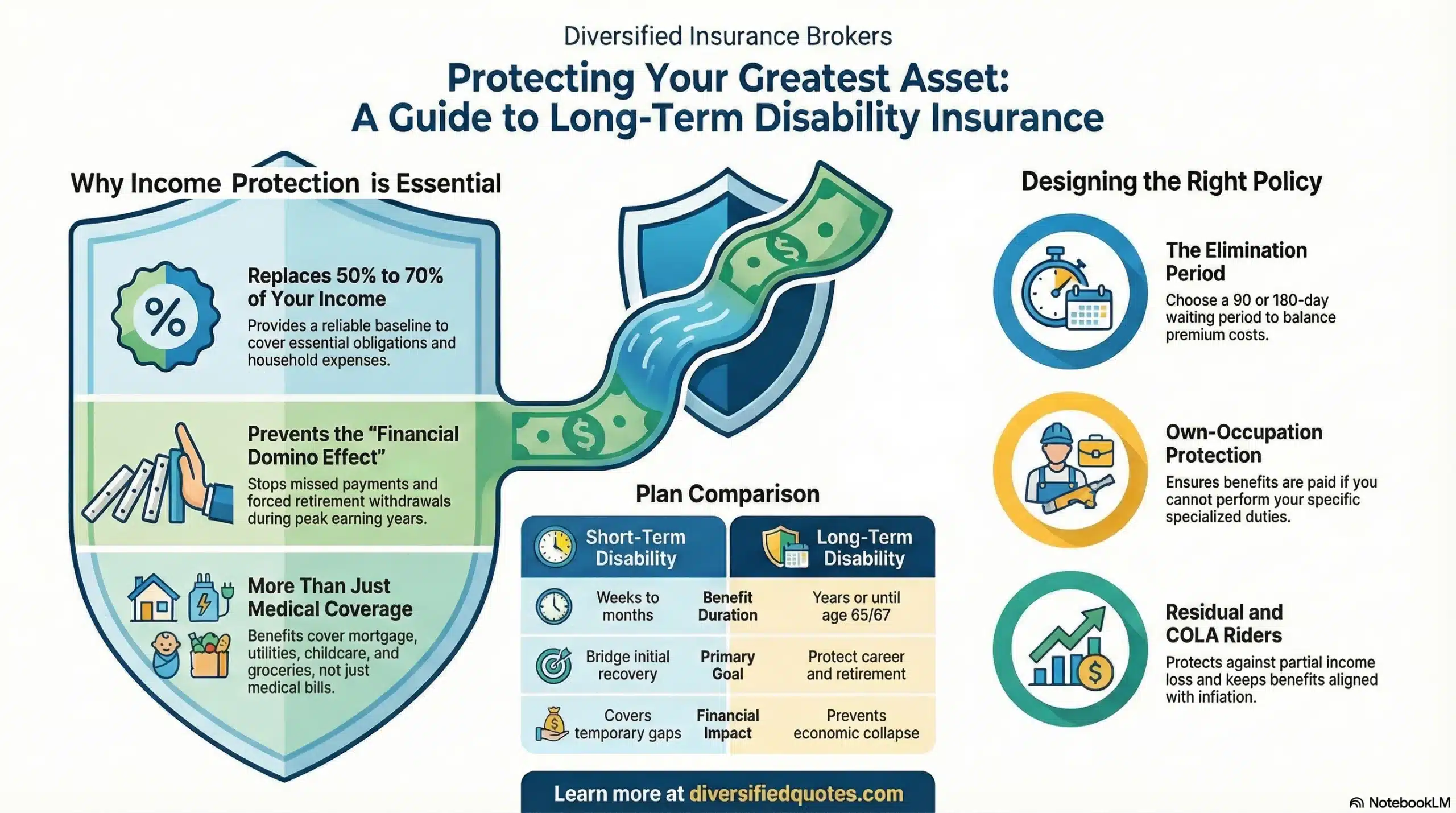
A residual disability rider is important for animal trainers whose injuries may reduce training capacity without eliminating it entirely — a trainer whose fracture recovery allows limited ground work but prohibits riding and active longeing earns reduced income without being totally disabled. Our resource on how residual disability insurance benefits work explains how partial disability coverage supports trainers through graduated return-to-training. Mental health benefit period coverage should be evaluated carefully given the documented anxiety, depression, and stress prevalence in this population — the 24-month limitation that many policies apply deserves explicit evaluation for horse and animal trainers. The elimination period should match available financial reserves given the complete absence of institutional income bridges — our guide on how disability insurance elimination periods work provides the complete framework. A cost-of-living adjustment rider preserves real benefit value across extended disability periods — our resource on disability income insurance with a COLA rider explains this protection. Our guide on how to buy short-term disability insurance covers short-term income protection for animal training professionals.
Occupational Classification and Specialty Market Access
Horse trainers and professional animal trainers face occupational classification challenges that reflect the genuine physical hazard of their work. The documented injury rates of the equine profession — with 43% of stable staff sustaining injuries in a single year — place professional horse training in an elevated risk tier for disability insurance underwriting purposes. Different carriers approach the horse training occupational classification differently, and some standard retail carriers may decline to underwrite professional equine trainer applications or do so with significant restrictions that limit practical coverage value.
Professional animal trainers working with exotic large animals, big cats, marine mammals, and other high-hazard species face occupational classifications that may require specialty market carrier placement. Dog trainers and equestrian coaches who have significant administrative, instructional, or consulting dimensions to their professional work alongside hands-on training may qualify for more favorable classifications than pure production trainers, depending on how their duty profile is documented. Accurately presenting the duty split between direct animal handling work and administrative, instructional, or management functions is an important carrier positioning consideration for trainers with mixed professional profiles. The occupational classification and specialty market access considerations for horse and animal trainers parallel those facing other extreme animal contact professionals, including professional divers and extreme hazard practitioners who require specialty market disability insurance placement.
Why Horse and Animal Trainers Need an Independent Disability Insurance Broker
Disability insurance for horse and animal trainers requires specialty market carrier access for extreme equine and animal contact occupational profiles, knowledge of how to document multi-stream self-employed training income most accurately, experience with the mental health benefit period evaluation that the documented psychological burden of this profession creates, and the ability to present each trainer’s specific duty profile and species contact context most favorably for underwriting. A standard retail application is not optimized for the horse training or professional animal training income and hazard classification context, and a general agent unfamiliar with equine and animal professional disability insurance will not access the carriers or policy features that meaningful professional training income protection requires.
At Diversified Insurance Brokers, we work with horse trainers, equestrian coaches, professional dog trainers, exotic animal trainers, zoo animal professionals, and all categories of professional animal handler to structure disability insurance coverage that accurately reflects the specific hazard of their training work, documents their multi-stream professional income accurately, evaluates mental health benefit period provisions given the documented psychological occupational health burden of animal training careers, and accesses the carriers most favorably disposed to equine and animal training professional occupational profiles. Our dedicated resource on why independent disability insurance brokers matter explains the full value of this approach. Our resource on disability insurance for self-employed professionals covers the foundational income protection framework for the self-employed training practitioners who constitute the majority of this profession.
Final Thoughts on Disability Insurance for Horse and Animal Trainers
Horse trainers and professional animal trainers develop their expertise through years of specialized education, practical experience, and the accumulated animal-specific knowledge that allows them to work safely and effectively with creatures whose size, strength, and unpredictability would make the work genuinely dangerous for anyone without that expertise. Even with that expertise, the injury statistics are clear — this is a profession where physical injury from animal contact is not a rare event but a documented, recurring occupational reality that 43% of stable staff experience in any given year. Without individual disability insurance, a single kick injury, training fall, or other animal-contact event can eliminate months of professional income with no institutional bridge of any kind.
Disability insurance for horse and animal trainers — structured with an own-occupation definition that genuinely protects the specific physical training work the profession requires, a residual disability rider for the graduated recovery timelines that fractures and soft tissue injuries typically produce, mental health benefit period coverage that reflects the documented psychological burden of this profession, and an elimination period matched to available financial reserves — provides the income security that allows a training professional whose career represents years of built expertise to recover from a disabling injury on a medical timeline rather than a financial one.
Related Pages
Talk With an Advisor Today
Choose how you’d like to connect—call or message us, then book a time that works for you.
Schedule here:
calendly.com/jason-dibcompanies/diversified-quotes
Licensed in all 50 states • Fiduciary, family-owned since 1980
Disability Insurance for Horse and Animal Trainers FAQs
Professional horse training and equine stable work is among the most injury-intensive professions documented in occupational health research. Published systematic review research found that 43% of stable staff experienced an injury in a single year, with only 11.9% reporting no injuries at all. In Japanese thoroughbred racing research, 39% of stable staff injuries were caused by horse kicks alone. In Australia, 70% of workers’ compensation claims in the equine industry were attributable to horse interaction. When kicks, trampling, biting, being struck, and falls from horses are combined, horses themselves account for 50% of all documented injuries on thoroughbred horse farms. Published hospital trauma series document that falls from horses account for 60.6% of horse-trauma mechanisms and that being kicked or trampled accounts for 23.2%, with upper extremity injuries comprising 52.5% of all horse-related injuries requiring hospital care. These statistics establish professional horse training as a profession where animal-contact physical injury is not an exceptional event but a routine occupational reality across a professional career. For context on disability insurance for other extreme animal contact professionals, see our page on disability insurance for cattle herders and large animal handlers managing documented animal-contact disability risk in sustained livestock work.
The disability risk profile for horse trainers reflects the specific biomechanical hazards of close professional work with large, powerful, unpredictable animals. Kick injuries — the most consistently documented acute injury mechanism in equine professional research — produce tibial and fibular fractures, rib fractures, upper extremity fractures and soft tissue injuries, and head and facial trauma depending on the kick location relative to the trainer’s body. Falls from horses produce the most serious long-term disability consequences, with spinal and pelvic injuries documented in 23.2% of horse-related hospital injury series — the injury category most associated with extended recovery timelines, surgical intervention, and potential permanent functional limitations. Upper extremity injuries overall — fractures, tendon injuries, nerve injuries, and soft tissue damage from kicks, falls, and rein entanglement incidents — represent 52.5% of all horse-related hospital injuries and are particularly career-critical because of the specific dependence of horse training work on intact hand, wrist, arm, and shoulder function. Trampling injuries produce multiple fractures and crushing injuries. Being struck by the horse’s head during grooming or veterinary procedures produces facial fractures and head trauma. Musculoskeletal career-wear from sustained physical horse handling — back and shoulder conditions from sustained lifting, grooming, and equipment management work across long training careers — rounds out the chronic disability risk profile.
Yes — individual disability insurance covers disability from any qualifying cause including animal-contact injuries when the resulting condition prevents performing the specific physical duties of professional training work. A horse trainer whose tibial fracture from a kick prevents the sustained walking, physical horse handling, riding, and active training work that professional equine training requires qualifies for disability benefits under a well-structured own-occupation policy. A dog trainer whose serious bite injury requires surgical repair and prevents active training work similarly qualifies. An exotic animal trainer whose animal-contact injury prevents returning to large animal training work qualifies under a policy covering any disability from any cause that prevents the specific professional duties involved. The critical planning consideration for horse and animal trainers is the own-occupation definition — ensuring the policy specifically protects the physical training work context rather than only covering total inability to perform any employment. Individual disability insurance has no work-relatedness requirement as workers’ compensation does, covering any qualifying injury regardless of its specific circumstances, as long as it produces the functional disability that prevents professional training work. For context on animal-contact injury disability coverage for professional animal workers, see our page on disability insurance for dairy industry workers managing large animal contact disability risk and coverage requirements.
Own-occupation disability insurance pays benefits when a disabling condition prevents a horse trainer from performing the specific physical and professional demands of their training work — sustained riding and mounting work, active longeing and ground training, physical horse handling and management, and all the specific physical activities that professional horse training requires — regardless of whether they could theoretically perform other less physically demanding or less animal-intensive work. Any-occupation coverage only pays if the trainer cannot perform virtually any gainful employment. A horse trainer whose spinal injury from a training fall prevents the sustained riding and physical horse handling that active training requires but who could theoretically work a sedentary administrative job receives no any-occupation benefits — while an own-occupation policy recognizes the genuine inability to continue professional horse training and pays accordingly. For professional horse trainers whose entire income stream depends on the specific physical capacity to ride, handle, and train horses, the own-occupation definition is not a policy enhancement but the foundational coverage provision that makes disability insurance genuinely meaningful for the profession. Any-occupation coverage provides essentially no practical protection for horse trainers whose disabilities are physical, training-specific, and profession-specific — which is precisely the profile of the most common disabling conditions in the equine profession.
Individual disability insurance policies cover qualifying mental health disability — but many standard policies apply a 24-month limitation to mental health benefits, meaning that even when the base policy pays benefits to age 65 for physical disability, mental health conditions are limited to two years. For horse trainers and equine stable professionals, the published research on mental health burden is specific and serious: 65% of injured stable staff experienced anxiety, 60% experienced depression, and up to 80% of UK stable staff and trainers reported stress linked to financial pressures and limited professional support. This documented mental health prevalence in the equine profession makes the mental health benefit period provision an important policy evaluation criterion that should not be overlooked in the coverage selection process. Some carriers offer full benefit period mental health coverage — matching the physical disability benefit period — while others limit mental health benefits to 24 months regardless of the base benefit period. For horse trainers whose occupational context creates genuine, documented psychological disability risk from repeated physical injury events, sustained financial stress, and the cumulative psychological burden of working in a high-danger environment, securing a policy with the most comprehensive available mental health coverage is an important component of genuinely adequate disability protection. For context on mental health disability coverage for high-stress outdoor professionals, see our page on disability insurance for high-stress professionals requiring comprehensive mental health disability benefit coverage evaluation.
Self-employed horse trainers typically generate professional income through multiple revenue streams — training fees from horses in training at the facility, lesson income from equestrian students, competition performance bonuses, board income from horses stabled at the training operation, and in some cases supplemental advisory or coaching income from clinics and demonstrations. For disability insurance underwriting, all of this income is aggregated as Schedule C self-employment income and averaged across two to three recent complete tax years to establish a representative earning capacity for benefit calculation. The multi-year averaging approach is particularly appropriate for horse trainer income, which typically varies year to year based on the number and quality of horses in training, competition season success, and client roster changes. Business expenses — horse care costs, facility expenses, equipment, travel, and other operating costs — reduce gross training revenue to net Schedule C income, and it is the net figure that represents insurable earned income. For horse trainers whose gross revenue is substantially higher than net Schedule C income due to the significant business expense structure of a training facility operation, working with a broker who understands how to accurately present the income picture for underwriting purposes is important for securing a benefit amount that genuinely reflects professional earning capacity. For context on self-employment income documentation for animal-related professionals, see our page on disability insurance for self-employed professionals managing income documentation requirements for disability insurance underwriting.
Residual disability coverage pays proportional benefits when a disabling condition reduces a horse trainer’s professional work capacity without completely eliminating all training activity. A horse trainer recovering from a tibial fracture from a kick may be medically cleared for limited light barn management — supervising other handlers, providing verbal coaching instruction from a distance, handling administrative functions — months before being medically cleared for active riding and physical training work. During this graduated return period, training income is reduced without being totally eliminated. Without a residual disability rider, a total-disability-only policy pays nothing during these extended partial capacity periods that often last months as orthopedic conditions heal through staged recovery protocols. A residual rider supplements reduced training income proportionally — if training capacity and income are reduced by 60%, the rider pays approximately 60% of the full disability benefit — providing continuous financial support from the onset of disability through complete return to full active training capacity. For horse trainers whose most common disabling conditions — fractures from kicks, soft tissue injuries from falls, post-surgical recovery from spinal events — all follow extended graduated return-to-work timelines rather than sudden binary recovery, the residual rider is essential for the policy to function as genuine income protection across the full arc of a training injury recovery.
The best time for a horse or animal trainer to apply for disability insurance is as early as possible in their professional training career — ideally when first establishing professional training work, before any animal-contact injury history, musculoskeletal conditions from sustained physical training demands, or mental health treatment episodes have been documented in the medical record. The published statistic that 43% of stable staff experience an injury in a single year illustrates how rapidly occupational injury accumulates in this profession — meaning that a trainer who waits several years before applying for disability insurance may already have a documented history of kick injuries, training falls, or soft tissue conditions that can result in exclusion riders at application. Any prior fracture history, back or joint conditions from sustained physical training demands, treatment for anxiety or depression, or other documented health consequences of professional animal training work can result in exclusion riders or restricted coverage terms at application. The non-cancelable and guaranteed renewable provision locks in the early-career health rating for the policy’s entire duration — meaning that the comprehensive coverage secured through an early application before injury history accumulates is maintained regardless of what animal-contact events, falls, or other occupational health developments occur during subsequent years of active training work. A future increase option rider secured early also allows benefit amounts to grow with professional training income as the practice develops, without requiring new medical underwriting when health may have changed from years of physically hazardous horse and animal training.
An independent broker with extreme hazard and animal professional disability insurance expertise accesses multiple carriers and compares occupational class assignments for equine and animal training work, own-occupation definition language for physical animal handling occupations, mental health benefit period provisions for the documented psychological health burden of the profession, residual disability rider terms, multi-stream Schedule C income documentation approaches, and premium structures across the full competitive marketplace. Different carriers approach horse trainer and animal professional occupational classifications differently — some standard retail carriers decline equine professional applications while others write meaningful coverage with appropriate terms — making carrier selection through an independent marketplace evaluation critically important for this professional population. At Diversified Insurance Brokers, we evaluate the full competitive landscape for every horse trainer and animal training professional we work with — identifying which carriers most favorably accommodate each trainer’s specific species, duty profile, and income structure, presenting injury history and occupational context in the most accurate and favorable way for underwriting, ensuring mental health benefit period provisions are explicitly evaluated for a population with documented psychological health burden, and structuring coverage with the own-occupation definitions, residual riders, and benefit periods that professional animal training disability risk specifically requires.
About the Author:
Jason Stolz, CLTC, CRPC, DIA, CAA and Chief Underwriter at Diversified Insurance Brokers (NPN 20471358), is a senior insurance and retirement professional with more than 25 years of real-world experience helping individuals, families, and business owners protect their income, assets, and long-term financial stability. As a long-time partner of the nationally licensed independent agency Diversified Insurance Brokers, Jason provides trusted guidance across multiple specialties—including fixed and indexed annuities, long-term care planning, personal and business disability insurance, life insurance solutions, Group Health, Travel Medical and Evacuation Insurance, and short-term health coverage. Diversified Insurance Brokers maintains active contracts with over 100 highly rated insurance carriers, ensuring clients have access to a broad and competitive marketplace.
His practical, education-first approach has earned recognition in publications such as VoyageATL, and contributions from his agency featured in Kiplinger and GoBankingRates— highlighting his commitment to financial clarity and client-focused planning. Drawing on deep product knowledge and years of hands-on field experience, Jason helps clients evaluate carriers, compare strategies, and build retirement and protection plans that are both secure and cost-efficient. Visitors who want to explore current annuity rates and compare options across multiple insurers can also use this annuity quote and comparison tool.
Explore More Disability Insurance Options: Browse our complete guide to Disability Insurance for Agriculture, Natural Resources & Outdoor Industries — covering farmers, ranchers, fishermen, foresters, miners, oil & gas workers & outdoor industries from 100+ carriers.
Last Reviewed: June 8, 2026 |
Reviewed by: Jason Stolz, CLTC, CRPC, DIA, CAA
Chief Underwriter, Diversified Insurance Brokers, Inc. | NPN: 20471358 | Diversified Insurance Brokers, Inc. — Licensed in all 50 states
Fact Checked by: Tonia Pettitt, CMIP©
Medicare Specialist, Diversified Insurance Brokers, Inc. | NPN: 14374308 | Diversified Insurance Brokers, Inc. — Licensed in all 50 states
Did you find this content helpful? Leave us a Google review — it helps others find trustworthy guidance too.
Editorial Standards: Diversified Insurance Brokers maintains rigorous editorial standards to ensure accuracy, clarity, and independence in all content. Learn more about our editorial standards and commitment to transparency.
