
Best Annuities for SEP IRA Rollover
As an Independent Annuity Broker, we compare rates across 100+ carriers and 1,000 different annuities— not just one company’s product offerings — to find the best fit for your goals.
Best Annuities for SEP IRA Rollover

Jason Stolz CLTC, CRPC, DIA, CAA
At Diversified Insurance Brokers, we specialize in helping self-employed professionals, small business owners, and their employees navigate the transition from an active retirement savings plan to a protected, structured retirement asset. The SEP IRA — Simplified Employee Pension Individual Retirement Account — is among the most widely used small-business retirement vehicles in the country, favored for its exceptionally high contribution limits, its minimal administrative burden, and its total lack of annual testing, Form 5500 filings, or plan document maintenance that employer-sponsored plans require. When a SEP IRA participant terminates the plan, closes the business, or simply decides the time has come to shift from aggressive accumulation to protected growth or guaranteed income, the rollover to an annuity is the most straightforward qualified plan transition in the retirement planning universe. The IRS states it plainly: a SEP-IRA account is a traditional IRA and follows the same investment, distribution, and rollover rules as traditional IRAs. No waiting period. No special penalty tier. No Form 5500. No outstanding loan to resolve first. The SEP IRA rollover to an annuity is a direct, trustee-to-trustee transfer from one IRA to another — the cleanest rollover path of any qualified plan type covered in our rollover series.
That simplicity is both an advantage and a source of its own overlooked complexity. Because the SEP IRA is treated identically to a Traditional IRA at the rollover stage, all of the IRA-level rules apply with full force — including the pro-rata rule that can create unexpected tax consequences if a Roth conversion is part of the plan, the one-per-12-months limitation on indirect IRA rollovers, the RMD obligations beginning at the required beginning date, and the SEPP framework for participants who need income before age 59½. The SEP IRA rollover to an annuity also introduces a dimension that no other rollover type in this series addresses: the Qualified Longevity Annuity Contract, or QLAC. SECURE 2.0 significantly expanded the QLAC rules — eliminating the 25% of account balance cap, increasing the dollar limit, and adding a 90-day free-look period — making the SEP IRA rollover one of the most compelling entry points into a QLAC structure for self-employed professionals who want to address longevity risk within their IRA framework without converting the full balance to immediate income. Understanding the full pros and cons of annuity structures in the SEP IRA rollover context — including how the MYGA, FIA, SPIA, DIA, and QLAC each serve different planning objectives — is the analytical foundation for any product-level comparison.
This guide covers the best annuity options for a SEP IRA rollover, organized by the planning objective the annuity must serve. Our companion pages in the rollover series cover best annuities for a TSP rollover, best annuities for a SIMPLE IRA rollover, and best annuities for a Solo 401(k) rollover. The SEP IRA rollover is the only one in the series that involves no plan-termination administrative steps beyond notifying the IRA custodian — the simplicity that made the SEP IRA attractive to establish is the same simplicity that makes it the easiest to exit.
Ensure you are receiving the absolute top rates
Current Fixed Annuity Rates
Compare today’s best fixed annuity rates from top carriers.
Current Bonus Annuity Rates
See which annuities offer the highest upfront bonus today.
Request an Annuity Quote
Submit our annuity request form to get personalized rate options.
Lifetime Income Calculator
Use our calculator to see how much guaranteed income your annuity can provide.
Why SEP IRAs Get Terminated — and What That Means for Annuity Selection
The SEP IRA termination triggers are more gradual and business-driven than those of other small-business plans. A SEP IRA has no plan document to terminate in the formal sense — the employer simply stops making contributions and closes the plan by notifying employees that no further contributions will be made. The most common termination scenarios, and how each shapes the ideal annuity destination, follow predictable patterns worth understanding before any product evaluation begins.
The uniform-percentage cost escalation trigger is the most prevalent. A self-employed consultant who contributes 25% of their own net self-employment income to their SEP IRA and has no employees faces no uniformity burden. But the moment eligible employees are added — workers who have been employed in at least three of the past five years, are at least 21 years old, and have earned at least the IRS minimum compensation threshold in the current year — the SEP IRA requires that the same percentage contributed for the owner also be contributed for every eligible employee. A business owner contributing the maximum allowable percentage for themselves and then employing several full-time workers faces employer contribution obligations for each worker at that same percentage, often reaching a point where the per-employee cost makes the SEP IRA economically unworkable and triggers migration to a 401(k) plan that allows more selective matching formulas, vesting schedules, and eligibility waiting periods the SEP cannot provide. When the SEP IRA is terminated in connection with a 401(k) plan launch, the SEP IRA balance rolls to a Traditional IRA — and the annuity decision often coincides with a period when the business owner’s self-employment income has grown substantially, the accumulated SEP balance is at its highest point, and the owner is simultaneously beginning to think about protecting what has been built rather than continuing to build aggressively.
The retirement transition trigger is the second common scenario: the self-employed professional who built a meaningful SEP IRA balance over a career of maximized contributions and is now closing the chapter on active self-employment. For a freelance attorney, architect, consultant, or healthcare professional who has been contributing maximally to a SEP IRA for decades, the retirement transition often involves a large accumulated balance that requires a thoughtful distribution and protection strategy rather than a simple rollover to a self-directed IRA for continued equity market exposure. This is where the annuity — specifically the income-oriented structures available within the Traditional IRA wrapper after the SEP rolls over — provides the most distinctive planning value. An annuity does what no IRA brokerage account can do contractually: guarantee that the income never stops regardless of what markets do, how long the participant lives, or what interest rates prevail when distributions begin.
SEP IRA Rollover to Annuity — Five Options Compared by Planning Objective
| Annuity Type | Principal Protection | Growth Potential | Income Certainty | Best SEP Rollover Profile |
|---|---|---|---|---|
| MYGA | Full — declared rate locked for 2–10 years; principal plus interest guaranteed by carrier regardless of market conditions. | Fixed — grows only at declared rate; no market upside participation. Most predictable accumulation path of all annuity types. | Accumulation certainty only; no built-in income stream. Income requires annuitization, SEPP, or repositioning into income vehicle at maturity. | SEP participants within 3–7 years of needing funds who want to lock in a competitive declared rate; MYGA laddering using 3, 5, and 7-year terms to stagger maturities across the accumulation horizon. |
| FIA | Full — 0% floor on indexed accounts; annual reset locks in prior gains. No market-caused principal loss possible. Multiple crediting strategies available within one contract. | Variable upside — capped or participation-rate indexed credits in positive years; 0% in negative years. Over 7–10 years, indexed credits may significantly exceed MYGA declared rates in positive market environments. | Optional income rider (GLWB) converts accumulation to guaranteed lifetime withdrawals when activated, without annuitizing the contract. Income base and account value operate as separate parallel calculations. | SEP participants with 7+ year accumulation horizons who want principal protection alongside indexed growth potential; business owners who have been contributing maximally and want continued growth in a protected structure during the retirement transition. |
| SPIA | Not applicable — premium is irrevocably exchanged for the income stream. No accumulation account remains. The guarantee is the income, not the principal. | None — no accumulation phase after purchase. The premium converts to income immediately; there is no investment account growing alongside the income payments. | Maximum — guaranteed monthly payment for life from day one. Payment does not fluctuate with markets, interest rates, or longevity. Most income-certain structure of any annuity type. | SEP participants at or in retirement who want to replace active self-employment income with guaranteed lifetime income; self-employed professionals without a pension who want to create the pension stream the SEP’s investment structure could not provide. |
| DIA / QLAC | Not applicable for accumulation phase — like SPIA, premium exchanges for future income stream. QLAC is a type of DIA purchased within an IRA; SECURE 2.0 increased the QLAC dollar limit to $200,000 and eliminated the 25% of account balance cap. | None — DIA/QLAC premium converts to a future income stream at a specified date. However, the deferred start date amplifies the monthly payment amount relative to a SPIA purchased at the same age. | Excellent for longevity protection specifically — guaranteed income starting at a future age (typically 80–85) regardless of whether other assets have been exhausted. QLAC premiums are excluded from RMD calculations until income begins. | SEP participants who want to address late-life longevity risk specifically without committing the full SEP rollover to immediate income; the QLAC’s RMD exclusion is uniquely valuable for participants who have large SEP balances and want to manage RMD obligations during the early retirement years. |
| FIA + SPIA Split | Full on FIA portion — 0% floor. SPIA portion is irrevocably committed to income stream. The split strategy provides protection across both the accumulation and income dimensions simultaneously. | Limited to the FIA portion — the SPIA portion has no growth dimension. The split proportion determines how much of the total SEP rollover participates in indexed growth. | Partial but immediate — the SPIA portion generates guaranteed income immediately; the FIA portion remains as a protected growth reserve. Income floor established from day one; growth reserve available for future needs or legacy. | Self-employed professionals who need to replace active income immediately (SPIA component) while maintaining a protected growth reserve for large future expenses, Roth conversion opportunities, or legacy planning (FIA component). Particularly effective for SEP participants who have large balances relative to their immediate income need. |
The QLAC Opportunity — Why the SEP IRA Is an Ideal QLAC Funding Source
The Qualified Longevity Annuity Contract is a specific type of deferred income annuity that can be purchased within a Traditional IRA — which is exactly what a SEP IRA becomes at the rollover stage. SECURE 2.0 made the QLAC substantially more useful by eliminating the 25% of account balance cap (previously, the QLAC premium could not exceed the lesser of $125,000 or 25% of the IRA balance), increasing the dollar limit to $200,000 (indexed for inflation), and adding a 90-day free-look rescission period that allows the owner to return the contract within 90 days for a refund. The QLAC’s defining advantage within a Traditional IRA: the premium committed to a QLAC is excluded from the IRA balance used to calculate Required Minimum Distributions until the QLAC income payments begin. For a SEP IRA participant who has accumulated a large balance and is concerned about the magnitude of RMDs during early retirement years, a QLAC funded at or near the current dollar limit reduces the effective RMD base, lowers the required annual distribution during the accumulation-to-income transition period, and converts a portion of the SEP rollover into guaranteed lifetime income beginning at a specified later age — typically between 80 and 85. This creates a two-phase income architecture: other retirement assets and Social Security income fund the early retirement years (ages 65–80), while the QLAC activates at the later age to provide guaranteed income through the deep longevity years when other assets may be depleted. Understanding how lifetime income annuity structures work — and specifically how the DIA’s deferred activation amplifies the monthly payment relative to a SPIA — provides the comparative framework for evaluating whether the QLAC’s deferred start, RMD exclusion benefit, and $200,000 commitment threshold produce better retirement income economics than using that same premium for a SPIA with immediate income.
MYGA After SEP IRA Rollover — Locking In Rates After Maximum Contribution Years
A Multi-Year Guaranteed Annuity is the most natural annuity destination for SEP IRA participants who are transitioning from the contribution phase to the protection phase — particularly those who have been contributing maximally for years and want the accumulated balance to continue growing at a competitive rate without market exposure during the transition period. The SEP IRA’s contribution deadline flexibility creates a unique planning scenario that no other rollover type produces: contributions can be made to a SEP IRA as late as the employer’s tax filing deadline including extensions — meaning a self-employed person filing on extension can make a prior-year SEP contribution as late as October 15 and immediately evaluate whether to roll that contribution to a MYGA annuity within the same tax year. This creates the potential for a same-year accumulation-to-protection transition that functions as a final tax-deductible contribution followed by immediate transfer to a contractually guaranteed accumulation vehicle. The MYGA’s declared rate typically exceeds what self-directed IRA money market, stable value, or short-term bond holdings provide, while locking in that rate advantage for the full 3–10 year guarantee period rather than exposing the freshly contributed balance to reinvestment rate risk. The MYGA vs. FIA comparison for a SEP IRA rollover should be run at the actual rollover balance rather than the carrier’s minimum premium, since many SEP IRA participants who have been maximizing contributions across a full career arrive at the rollover with balances that qualify for premium-band enhanced rates unavailable to smaller-balance purchasers.
FIA After SEP IRA Rollover — Protected Growth for Ongoing Accumulators
A Fixed Indexed Annuity is the appropriate structure when the SEP IRA rollover participant has a 7-or-more-year accumulation horizon and wants to continue growing the balance at above-MYGA rates in positive market environments while maintaining the 0% floor that prevents the SEP’s accumulated capital from being eroded by market declines. The FIA addresses the specific concern most relevant to late-career self-employed professionals: they are precisely at the point in the retirement timeline when a severe bear market does the most permanent damage — close enough to retirement that there is insufficient time to fully recover before distributions must begin, but not yet at the stage where immediate income conversion is appropriate. The FIA’s 0% floor eliminates the sequence-of-returns risk from the portion of the SEP rollover allocated to it while allowing indexed growth that may significantly exceed the MYGA’s declared rate in sustained positive market environments. Our guide to choosing the correct indexes in an FIA covers the full framework for evaluating which crediting strategy within the FIA best serves a large SEP rollover balance — including why annual one-year point-to-point crediting provides more opportunities to capture positive index years than multi-year crediting periods, a structural advantage that compounds over a 10-year FIA surrender period in ways that are particularly meaningful for the large SEP balances that longtime self-employed contributors typically bring to the rollover.
For SEP IRA participants who are also evaluating whether an FIA makes sense compared to simply repositioning into a guaranteed growth annuity structure that provides a defined minimum return without indexed variability, the decision comes down to the same declared-rate-versus-indexed-range framework that applies to any MYGA-versus-FIA comparison — with the additional consideration that SEP IRA participants often have higher tolerance for accumulation complexity than SIMPLE IRA participants, having already engaged with a higher-limit, more sophisticated retirement plan structure throughout their accumulation years. Our full analysis of annuity pros and cons provides the category-level evaluation that should precede any product-specific annuity selection for a SEP rollover. Understanding how surrender charges work across different annuity term lengths is particularly important for SEP IRA participants who may have multiple SEP IRA accounts from different years — each account’s surrender schedule must be evaluated independently to confirm that the combined rollover timeline aligns with anticipated income and liquidity needs.
The Pro-Rata Rule — The Hidden Tax Trap in SEP IRA Roth Conversions
The SEP IRA’s Traditional IRA treatment creates a planning trap that catches many self-employed professionals who want to convert to a Roth IRA as part of their tax planning: the pro-rata rule. If a SEP IRA participant has any non-deductible basis in a Traditional IRA — contributions made with after-tax dollars and reported on Form 8606 — the pro-rata rule requires that any Roth conversion be treated as coming proportionally from all Traditional IRA balances, including the SEP IRA. A self-employed professional who made non-deductible IRA contributions during high-income years when the SEP contribution limited deductible IRA contributions, and who now wants to convert the SEP to a Roth, cannot simply isolate the non-deductible basis for tax-free conversion. Instead, the tax-free portion of any conversion is limited to the ratio of non-deductible basis to total Traditional IRA balance — which, for a SEP IRA participant with a large pre-tax SEP balance and a small non-deductible IRA basis, may be nearly zero. Understanding how SEP IRA distributions and conversions are taxed — including the pro-rata rule’s application, how annuity distributions are treated after a qualified rollover, and how partial annuity conversion strategies interact with the pro-rata rule — is essential for SEP IRA participants whose rollover plan includes any Roth conversion component. For participants who want to eliminate the pro-rata complication entirely, one strategy involves rolling the pre-tax SEP IRA balance into a current employer’s 401(k) plan (which accepts rollovers from IRAs, including SEP IRAs) before executing a Roth conversion of the non-deductible basis, thereby removing the large pre-tax IRA balance from the pro-rata calculation. Understanding how qualified plan transfers work mechanically covers the rollover process that makes this strategy executable.
Ready to compare annuity options for your SEP IRA rollover?
Request Your Personalized SEP IRA Rollover Analysis
Financial Protection Essentials
Explore life insurance, disability coverage, and specialty protection options for self-employed professionals and small business owners.
Explore Annuity Rollover Options by Account Type
Every retirement account rolls over differently. Choose your plan type below to see the specific rules, tax treatment, and best annuity strategies for your situation.
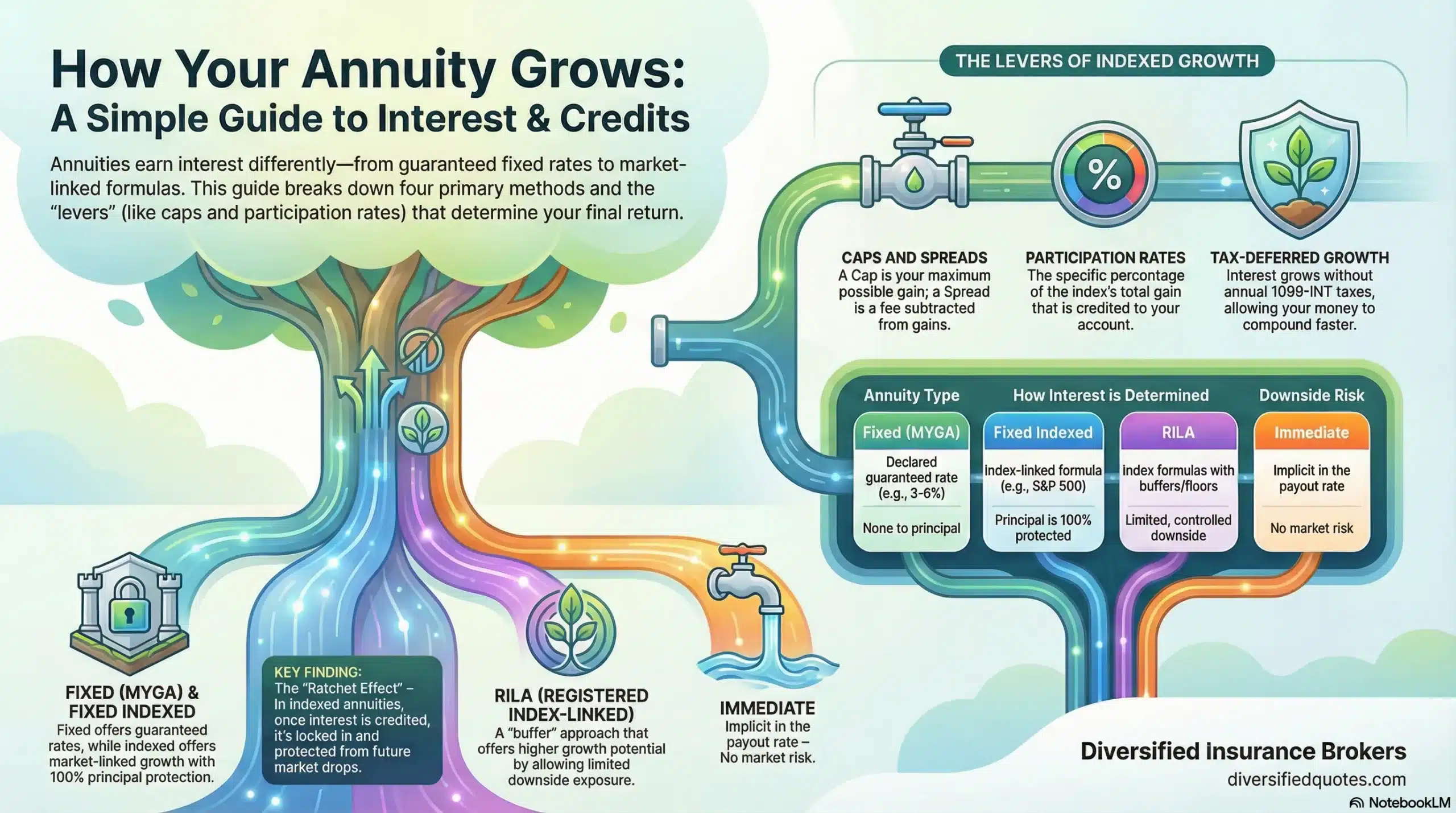
Talk With an Advisor Today
Choose how you’d like to connect—call or message us, then book a time that works for you.
Schedule here:
calendly.com/jason-dibcompanies/diversified-quotes
Licensed in all 50 states • Fiduciary, family-owned since 1980
How does the SEP IRA rollover process differ from a SIMPLE IRA or Solo 401(k) rollover?
The SEP IRA rollover is the simplest qualified plan transition of any type covered in our rollover series — and that simplicity is established by the IRS explicitly: a SEP-IRA account is a traditional IRA and follows the same investment, distribution, and rollover rules as traditional IRAs. The contrast with the other rollover types in the series is stark. The SIMPLE IRA imposes a two-year waiting period from the first employer contribution; rollovers to a non-SIMPLE IRA before that period is complete trigger a 25% early distribution penalty rather than the standard 10%. The SEP IRA has no waiting period of any kind — contributions made yesterday can roll to a Traditional IRA tomorrow, with no additional penalty structure beyond what applies to any IRA distribution. The Solo 401(k) requires a Form 5500-EZ filing upon termination (if plan assets ever exceeded $250,000), requires resolution of any outstanding plan loans before rollover, and may involve liquidating illiquid self-directed alternative investments before the cash can transfer. The SEP IRA requires none of these steps — there is no plan document termination process, no filing requirement, and no loan payoff requirement (IRAs don’t allow loans). The rollover mechanics are a direct trustee-to-trustee transfer from the SEP IRA custodian to the Traditional IRA — the same as any IRA-to-IRA transfer. Understanding how the resulting Traditional IRA annuity’s free withdrawal provisions work is the relevant post-rollover planning question rather than any pre-rollover compliance requirement. The only rule to track at the IRA level: the one-per-12-months limitation on indirect rollovers (not applicable to direct trustee-to-trustee transfers). Participants who receive a check from the SEP IRA custodian have 60 days to deposit the full amount into the Traditional IRA to avoid a taxable event; those who execute a direct transfer have no such time constraint.
What is the QLAC dollar limit under SECURE 2.0, and how does it interact with a large SEP IRA balance?
Understanding the QLAC changes under SECURE 2.0 — and how they interact with a large SEP IRA balance — requires understanding three structural changes SECURE 2.0 made effective for contracts purchased after the legislation’s effective date. First, the 25% of account balance cap was eliminated. Under prior law, the QLAC premium could not exceed the lesser of $125,000 or 25% of the IRA account balance. For a SEP IRA participant with a $600,000 balance, the 25% cap limited the QLAC premium to $125,000 (because 25% of $600,000 = $150,000, which exceeds the dollar limit). Under SECURE 2.0, the 25% cap is gone entirely — the only limit is the inflation-adjusted dollar maximum (which was $200,000 as of the legislation’s effective date). For a SEP IRA participant with any balance above $200,000, this means the full $200,000 QLAC limit is now available regardless of the account balance’s proportion. Second, the dollar limit increased from $125,000 to $200,000 and is indexed to cost-of-living adjustments going forward — verify the current limit at irs.gov before committing. Third, a 90-day free-look period was added, allowing the owner to rescind the QLAC contract within 90 days of purchase for a refund of premium. The SEP IRA is an ideal QLAC funding source precisely because SEP IRA participants — having contributed at the employer-only full percentage rate — often accumulate balances that easily exceed the QLAC dollar limit, making the QLAC premium a defined slice of a larger IRA universe rather than a proportionally constrained commitment. The QLAC premium, once committed, is excluded from the IRA balance used to calculate RMDs until QLAC income payments begin — which for a participant who purchases the QLAC at age 65 and defers income to age 80 means 15 years of reduced RMD obligations on the QLAC premium amount, potentially saving meaningful ordinary income tax across those 15 years while securing guaranteed income for the deep longevity window when other assets may be depleted.
If I have a multi-employee SEP IRA — meaning I also made SEP contributions for my employees — how does the rollover work?
This is one of the most important structural distinctions of the SEP IRA that many business owners misunderstand: in a SEP IRA, each employee owns their own separate SEP IRA account. When the employer establishes a SEP plan, contributions flow from the employer into individual IRA accounts at the custodian — one IRA account per employee, each titled in that employee’s name and Social Security number, each managed by that employee independently. The employer made the contribution, but the account belongs to the employee the moment it is deposited. There is no vesting schedule — SEP contributions are 100% immediately vested at deposit. When a business owner decides to terminate the SEP plan and roll their own SEP IRA to an annuity, they are making a decision about their own IRA account only. The employees’ SEP IRAs are not within the employer’s control or rollover decision — each employee can do whatever they choose with their own SEP IRA funds independently, including rolling them to a Traditional IRA annuity of their choice. This is fundamentally different from a 401(k) plan termination, where the employer plan administrator coordinates the distribution of all participant accounts, sends required notices, and manages the termination process for all participants simultaneously. The SEP IRA termination is entirely employer-side: the employer stops making contributions and notifies employees that no further contributions will be made. Each employee’s existing SEP IRA account simply continues to exist as their individual IRA going forward — they can keep it, roll it, invest it, or convert it however they choose. The employer’s own SEP IRA account follows the employer’s rollover decision for their own retirement planning. Understanding whether an annuity is a good investment for each individual’s specific retirement situation — the employer’s rollover decision and the employees’ individual rollover decisions — may produce different answers for different people in the same SEP plan, and appropriately so.
Can I use SEPPs from my SEP IRA annuity before age 59½ — and how does the IRA aggregation rule affect the calculation?
Yes — understanding how Substantially Equal Periodic Payments (SEPPs) work under IRC Section 72(t) in the SEP IRA context follows the same framework as any Traditional IRA. After rolling the SEP IRA to a Traditional IRA and funding an annuity, the 72(t) SEPP election can be made on that IRA to take penalty-free distributions before age 59½ using one of the three IRS-approved calculation methods: life expectancy, annuitization, or amortization. The SEPP must continue for the longer of 5 years or until age 59½, and any modification before the continuation period ends retroactively reinstates all 10% early distribution penalties plus interest for every prior distribution. The IRA aggregation rule creates a meaningful planning opportunity for SEP IRA rollover participants who have the SEP IRA annuity alongside other Traditional IRA accounts: the SEPP can be calculated and taken from any one or combination of Traditional IRA accounts, not necessarily from the annuity that holds the SEP rollover. This means a participant can calculate the SEPP amount using the combined balance of all their Traditional IRAs — which typically produces a larger annual distribution than calculating the SEPP from the annuity alone — and satisfy the entire SEPP from a non-annuity IRA account, leaving the annuity’s surrender schedule intact and its free withdrawal provision available for other uses. The critical caution: the SEPP must be calculated consistently using the account balance method specified. Once the annuity and other IRAs are designated as the SEPP pool, the calculation must be applied consistently across that pool for the full continuation period. Understanding how 72(q) applies to non-qualified annuity assets provides the parallel framework for any non-qualified annuities in the broader portfolio — the SEPP rules apply only to the IRA-qualified SEP rollover annuity, while 72(q) governs any separately held non-qualified annuity accounts.
How does a SEP IRA rollover annuity fit within a 401(a) or 403(b) participant’s broader retirement picture if they also have a SEP?
A common but underappreciated scenario: professionals who are simultaneously employees (covered by an employer-sponsored 401(a) or 403(b) plan) and self-employed on the side (earning consulting, speaking, or practice-management income through a separate business). The IRS permits this dual participation — a physician employed by a hospital who also has a separate private consulting practice can maintain a hospital-sponsored 403(b) plan and a separate SEP IRA for the self-employment income from the consulting practice, contributing to both simultaneously. When this professional approaches retirement or winds down the consulting business, they face a rollover decision specifically for the SEP IRA component while the 403(b) continues to accumulate (or has its own separate rollover). Our companion resources on what to do with a 401(a) after retirement cover the institutional plan rollover framework for that account type. The SEP IRA rollover annuity, in this dual-participation context, can serve the protected accumulation function for the self-employment earnings component while the institutional plan serves the primary retirement income function — or the SEP IRA rollover can be directed to a QLAC to address longevity risk specifically, with the 403(b) rollover handling the early retirement income coverage. The IRA aggregation rule’s RMD benefit compounds in this context: the QLAC premium from the SEP IRA rollover reduces the RMD base for all Traditional IRAs, including any IRA funded by the 403(b) rollover, potentially producing meaningful cumulative tax savings across the early retirement distribution years when both accounts are being managed simultaneously. For participants seeking pension alternatives through annuities — specifically those whose professional career provided a modest institutional pension but whose self-employment consulting income was accumulated in the SEP IRA without pension-equivalent protection — the SEP IRA rollover to an income annuity provides the pension-equivalent stream for the self-employment earnings chapter that the institutional plan could not cover.
About the Author:
Jason Stolz, CLTC, CRPC, DIA, CAA and Chief Underwriter at Diversified Insurance Brokers (NPN 20471358), is a senior insurance and retirement professional with more than 25 years of real-world experience helping individuals, families, and business owners protect their income, assets, and long-term financial stability. As a long-time partner of the nationally licensed independent agency Diversified Insurance Brokers, Jason provides trusted guidance across multiple specialties—including fixed and indexed annuities, long-term care planning, personal and business disability insurance, life insurance solutions, Group Health, Travel Medical and Evacuation Insurance, and short-term health coverage. Diversified Insurance Brokers maintains active contracts with over 100 highly rated insurance carriers, ensuring clients have access to a broad and competitive marketplace.
His practical, education-first approach has earned recognition in publications such as VoyageATL, and contributions from his agency featured in Kiplinger and GoBankingRates— highlighting his commitment to financial clarity and client-focused planning. Drawing on deep product knowledge and years of hands-on field experience, Jason helps clients evaluate carriers, compare strategies, and build retirement and protection plans that are both secure and cost-efficient. Visitors who want to explore current annuity rates and compare options across multiple insurers can also use this annuity quote and comparison tool.
Explore More Lifetime Income Options: Browse our complete guide to How to Transfer a Retirement Account to an Annuity — covering IRA, 401k, 403b, TSP, pension, Roth IRA, SEP IRA, 457b & more rollover guides from 100+ carriers.
Last Reviewed: July 6, 2026 |
Reviewed by: Jason Stolz, CLTC, CRPC, DIA, CAA
Chief Underwriter, Diversified Insurance Brokers, Inc. | NPN: 20471358 | Diversified Insurance Brokers, Inc. — Licensed in all 50 states
Fact Checked by: Tonia Pettitt, CMIP©
Medicare Specialist, Diversified Insurance Brokers, Inc. | NPN: 14374308 | Diversified Insurance Brokers, Inc. — Licensed in all 50 states
Did you find this content helpful? Leave us a Google review — it helps others find trustworthy guidance too.
Editorial Standards: Diversified Insurance Brokers maintains rigorous editorial standards to ensure accuracy, clarity, and independence in all content. Learn more about our editorial standards and commitment to transparency.
