
Disability Insurance for Horticulturists
As an Independent Disability Insurance Broker, we have access to exclusive discounts and negotiated pricing most captive agents can’t offer — see the full breakdown near the end of this page.
Disability Insurance for Horticulturists

Jason Stolz CLTC, CRPC, DIA, CAA
Disability insurance for horticulturists is an income protection planning area whose complexity is underappreciated because the horticulture profession spans one of the widest ranges of actual working conditions, occupational hazard exposures, and employment structures of any science-based career in America. A horticulturist conducting basic plant genetics research in a university laboratory, a certified professional horticulturist designing and managing commercial landscape installations, a nursery owner operating a production growing facility, a greenhouse manager overseeing year-round crop production with sustained pesticide and chemical exposure, a golf course superintendent managing turf science across a major facility, and a horticultural consultant advising growers and land managers on crop production and pest management all carry the professional designation of horticulturist — but they occupy fundamentally different disability insurance planning situations in terms of occupational classification, hazard exposure, insurable income structure, and the policy features most important for their specific professional context.
This spectrum from field-active physical horticulture to office and laboratory-based horticultural science creates the most important planning threshold in disability insurance for horticulturists: the duty split between hands-on physical field, nursery, or greenhouse work and office, laboratory, or consulting-based professional activity. That distinction determines occupational classification tier, which in turn determines premium rates, available benefit periods, and access to the strongest own-occupation definitions. A horticulturist who can accurately document that the majority of their professional time is spent in analytical, advisory, management, or research activities — rather than direct physical horticultural production work — may qualify for a significantly more favorable disability insurance classification than one whose primary work involves sustained physical plant production, chemical application, or outdoor grounds management.
At Diversified Insurance Brokers, we help horticulturists across all specializations — nursery and greenhouse operators, landscape professionals, research and university horticulturists, golf course superintendents, horticultural consultants, and horticulture business owners — structure disability insurance coverage that accurately reflects their specific duty profile, income structure, and the disability risks most relevant to how they actually practice their profession.
Protect Your Horticultural Professional Income
Compare disability insurance options designed for horticulturists across all specializations — nursery and greenhouse operators, landscape professionals, research scientists, consultants, and horticultural business owners.
Request Disability Insurance OptionsThe Occupational Classification Spectrum for Horticulturists
The single most important disability insurance planning consideration for most horticulturists is occupational classification — and that classification varies dramatically across the horticulture profession based not on job title but on what the horticulturist actually does in their working hours. Disability insurance underwriters evaluate duty profiles, not credentials, which means that two horticulturists with identical educational backgrounds and professional certifications can receive very different classifications based on how their working day is actually structured.
Horticulturists whose work is predominantly office, laboratory, or consulting-based — university research faculty, horticultural scientists in commercial plant breeding programs, independent horticultural consultants advising clients from an office, and horticultural therapists in institutional settings — typically receive the most favorable disability insurance classifications. These roles involve cognitive, analytical, and advisory work performed in benign physical environments, with no physical hazard exposure beyond normal office and laboratory settings. The favorable occupational classification for these horticulturists provides access to the strongest available own-occupation definitions, benefit periods extending to age 65 or beyond, and the full menu of supplemental riders at competitive premium rates. The occupational classification advantage for research and consulting horticulturists parallels that available to other scientific professionals in predominantly analytical and office-based roles, including biologists and plant scientists whose laboratory and research-based professional work supports favorable disability insurance classification and botanists and plant research professionals managing disability insurance for cognitively intensive scientific practice.
Horticulturists whose work involves significant hands-on field and production activity — nursery managers who perform regular planting, propagation, and physical plant management work; greenhouse production horticulturists with sustained pesticide and chemical exposure; landscape installation professionals who perform physical site work; golf course superintendents who personally operate turf equipment and apply chemicals — receive classifications that reflect the physical demands and chemical exposure of their actual work. These professionals may still access meaningful disability coverage, but their classification and premium will reflect the genuine occupational hazard of hands-on horticultural production work. The duty-based classification distinction for horticulturists is identical in structure to that documented for other mixed office-and-field science professionals, including geologists whose disability insurance classification depends critically on the office-versus-field duty split in their professional practice.
Pesticide and Chemical Exposure — The Long-Latency Disability Risk
Pesticide and chemical exposure is one of the most specifically documented occupational health concerns in horticulture — and it represents a long-latency disability risk that affects greenhouse horticulturists, nursery production workers, certified pesticide applicators, and any horticulture professional who regularly handles crop protection chemicals, fertilizers, growth regulators, and other agricultural inputs as a routine part of their professional work.
Published research on greenhouse workers — a population whose chemical exposure is documented as higher than equivalent outdoor agricultural workers due to enclosed conditions that concentrate airborne chemical residues — found that 96.2% of greenhouse workers report contact with chemicals, and that pesticides were identified as a risk factor by nearly two-thirds of workers with skin or respiratory system disorders. The use of pesticides is associated with a broad spectrum of health outcomes including dermatitis, eye injuries, respiratory diseases, and cancers. Published research on pesticide handling work in agriculture specifically documents injury rates of 4.9 to 5.0 per 100 full-time worker equivalents for pesticide handling activities — one of the highest documented injury rate categories in agricultural work broadly.
For horticulturists whose professional work involves regular pesticide application, chemical mixing, and sustained exposure to crop protection products, the long-latency occupational illness risk — respiratory sensitization, occupational asthma, contact dermatitis, and potential long-term carcinogenic consequences from sustained chemical exposure — represents a disability risk that may not manifest for years or even decades after the initial occupational exposures began. Individual disability insurance covers any qualifying disability from any cause including long-latency occupational illness, regardless of when the disabling condition develops after the initial exposure period. The pesticide and chemical exposure long-latency disability risk for horticulturists parallels that documented for other sustained agricultural and scientific chemical contact professions, including farmers and agricultural producers managing long-latency chemical exposure disability risk alongside acute agricultural injury risk and chemists and analytical scientists managing occupational chemical exposure disability risk across laboratory and field environments.
Musculoskeletal Disability Risk — The Defining Career-Wear Hazard
Musculoskeletal disorders are documented as the most frequent and most costly work-related injuries in most industries — and published research is explicit that musculoskeletal health and hazard rates for some types of horticultural and agricultural work far exceed the average for all private sector employment. For horticulturists engaged in physical plant production and landscape work, the musculoskeletal disability risk reflects the specific biomechanical demands of sustained outdoor horticultural labor: repeated bending and stooping for planting, weeding, and transplanting operations; sustained kneeling for ground-level plant care and installation work; overhead reaching and sustained awkward postures during pruning, training, and canopy management; repetitive hand tool use for propagation, grafting, and plant manipulation; heavy lifting during container movement, soil amendment applications, and equipment operation; and the sustained physical loading of working across large production areas throughout full working days.
Research on greenhouse and horticultural production workers documents that musculoskeletal pain is among the primary complaints — particularly neck, lower back, shoulders, hands, wrists, and knees — with nearly half of workers with musculoskeletal diseases attributing their complaints directly to physical overload at work. Left unaddressed, these musculoskeletal disorders can result in lifelong pain and permanent disability. A horticulturist who develops disabling lumbar disc disease from years of sustained planting and transplanting postures, a serious rotator cuff condition from sustained pruning and overhead canopy work, or progressive knee osteoarthritis from sustained kneeling in production operations faces genuine occupational disability that prevents continued physical horticultural work even when many other activities remain possible. The musculoskeletal career-wear disability risk for production and landscape horticulturists parallels that documented for other sustained outdoor plant and land management professionals, including arborists and gardeners managing the documented career-wear musculoskeletal disability risk of sustained outdoor plant management work.
Greenhouse Horticulturists — The Enclosed Environment Hazard Amplification
Greenhouse horticulturists who manage year-round production in enclosed growing facilities face a specific and well-documented occupational health risk profile that differs in important ways from equivalent outdoor horticultural work. The enclosed greenhouse environment — while offering climate control and weather protection — concentrates airborne chemical residues, pollen, and biological agents to levels that exceed equivalent outdoor exposures, creating elevated respiratory sensitization and chemical exposure risk for horticulturists who spend their professional careers in enclosed growing structures.
Published research specifically documents that greenhouse workers experience higher pesticide exposure than outdoor farm workers due to enclosed conditions, and that the occupational exposures in greenhouse cultivation result in significantly elevated rates of respiratory disease, skin disorders, and musculoskeletal conditions compared to reference populations. The combination of sustained pesticide and chemical exposure in concentrated enclosed conditions, sustained physical plant production demands, high humidity environments that promote skin and respiratory sensitization, and biological agent exposure from plant disease and pest management work creates a multi-dimensional occupational health burden that accumulates across greenhouse horticulture careers. The enclosed environment disability risk amplification for greenhouse horticulturists parallels the elevated occupational illness exposure documented for other professionals working in enclosed chemical and biological exposure environments, including agricultural and greenhouse production professionals managing enclosed environment occupational illness disability risk.
Nursery and Landscape Horticulturists — Acute and Environmental Injury Risk
Nursery professionals and landscape horticulturists face the acute physical injury risk categories that characterize outdoor plant production and installation work alongside the chemical exposure risks of pesticide and fertilizer application. Falls from ladders during tree and shrub canopy work, equipment injuries from tractors, mowers, and power tools, struck-by injuries from falling branches and plant material during pruning and installation operations, vehicle accidents during travel between nursery locations and client sites, and heat-related illness from sustained outdoor work in summer conditions all contribute to the acute disability risk profile of active nursery and landscape horticultural practice.
Landscape horticulturists who manage crews and oversee installation projects — performing significant physical site work alongside their professional plant selection and design advisory functions — occupy a mixed-duty profile where the physical site work component affects occupational classification while the advisory and design functions represent the professional knowledge that generates premium service income. Accurately presenting the duty split between physical site work and professional advisory functions to disability insurance underwriters is important for achieving the most favorable available classification for landscape horticulturists with meaningful office and consulting components to their practice. The acute and environmental injury risk profile for nursery and landscape horticulturists parallels that documented for other mixed-duty outdoor horticultural professionals, including florists and ornamental plant professionals managing physical and chemical disability risks in plant handling and production work.
Research, University, and Consulting Horticulturists
Research horticulturists at universities, agricultural experiment stations, and commercial plant breeding programs occupy a professional context where disability insurance planning is most favorable — their work is predominantly cognitive, analytical, and laboratory-based, with field research components that can be documented in the duty profile. University faculty horticulturists who teach, conduct basic research, advise graduate students, and engage in extension education work may have access to employer group disability plans through their institutional employment — but those plans carry the same structural limitations as all employer group plans: benefits calculating on base academic salary while excluding research stipends and consulting income, own-occupation to any-occupation conversion after two years, and portability limitations when career moves between institutions occur.
Independent horticultural consultants — professionals who provide expert advisory services on crop production, pest management, landscape design, or specialty plant production to growers, landowners, municipalities, and commercial clients — generate Schedule C self-employment income that represents earned professional income fully available for disability insurance benefit calculation. For self-employed horticultural consultants, the disability insurance need is the acute version: no employer sick pay, no group plan, and income stopping immediately when disability prevents consulting work. The self-employment income protection planning framework for independent horticultural consultants parallels that applicable to other self-employed scientific and agricultural advisory professionals, including agronomists and agricultural science consultants managing self-employment income protection planning and independent contractors and self-employed consultants managing income protection without employer-provided benefits.
Case Study: Nursery and Greenhouse Horticulturist Earning $78,000 Per Year
Consider a certified professional horticulturist managing a mid-sized nursery and greenhouse production operation, earning $78,000 annually from a combination of nursery management salary and consulting income. This horticulturist spends approximately 60% of professional time in greenhouse and nursery production management — including pesticide application supervision, plant propagation, container management, and physical production oversight — and 40% in office-based client advisory, plant sourcing, and business management functions. During a nursery equipment incident, this horticulturist sustains a serious shoulder injury requiring surgical repair and eight months of recovery during which active nursery and greenhouse production management is medically prohibited.
| Scenario | Without Disability Insurance | With Disability Insurance |
|---|---|---|
| Monthly Income During Recovery | $0 from consulting; any salary depends on business continuing without owner participation | $3,250–$3,900 individual benefit |
| 8-Month Total Income | Severely reduced or zero depending on business continuity | $26,000–$31,200 |
| Production Season Impact | Spring production season lost entirely — peak revenue period for nursery operations | Disability benefit supports household and business stability through spring season recovery |
| Return to Work Decision | Financial pressure may force premature return before shoulder is surgically healed | Recovery on medical timeline; return only when shoulder function genuinely restored |
Equipment injuries during nursery operations — including tractor, material handling, and powered equipment incidents during production management — are a documented and predictable injury category in horticultural production settings. Disability insurance for horticulturists ensures that a production season injury does not simultaneously produce a financial crisis that pressures return to nursery physical management before surgical recovery is genuinely complete.
Key Policy Features for Horticulturist Disability Insurance
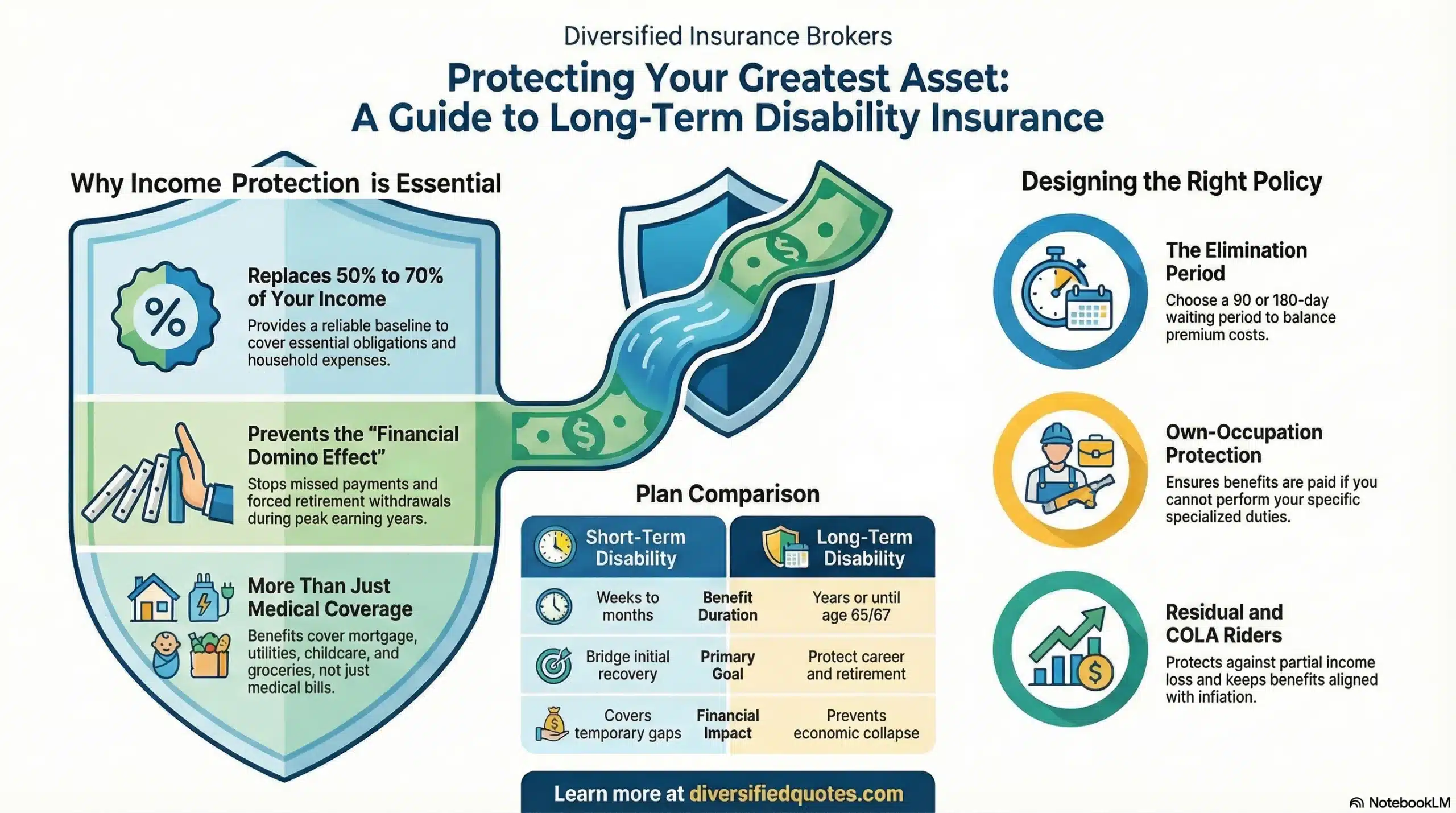
Disability insurance for horticulturists should incorporate policy provisions appropriate to the specific horticultural practice context — with features calibrated to the field versus office duty balance, production versus consulting income structure, and the specific disability risks relevant to each horticulturist’s professional specialty. The own-occupation definition is foundational — ensuring that a horticulturist who cannot perform the specific physical production, chemical application, or professional advisory duties of their horticultural practice receives disability benefits regardless of theoretical capacity for other less specialized or less physically demanding work. Our comprehensive resource on own-occupation disability insurance explained covers how this definition protects horticultural professional income from the conditions most likely to prevent continued active practice.
A residual disability rider is important for horticulturists whose conditions may reduce professional capacity without eliminating it entirely — a nursery manager who can handle office management and client advisory functions but cannot perform physical production work earns reduced income without being totally disabled. Our resource on how residual disability insurance benefits work explains how partial disability coverage supports horticulturists through graduated return-to-work periods. The elimination period should be calibrated to available financial reserves and seasonal production income patterns — our guide on how disability insurance elimination periods work provides the complete framework. A cost-of-living adjustment rider preserves real benefit value across extended disability periods from progressive chemical exposure illness — our resource on disability income insurance with a COLA rider explains this protection. Our guide on how to buy short-term disability insurance covers short-term coverage options for seasonal horticultural professionals.
Application Timing — Why Early in a Horticultural Career Matters Most
The long-latency chemical exposure disability risk of horticultural work creates a specific and urgent timing consideration for disability insurance applications. Pesticide exposure, herbicide contact, fungicide handling, and sustained fertilizer and growth regulator exposure create occupational health records — through routine periodic health monitoring, respiratory function assessments, and any documented treatment for chemical-related symptoms — that accumulate in the medical record over a horticultural career and can affect disability insurance underwriting if present at application. Applying for disability insurance before any chemical exposure occupational health findings, before any musculoskeletal treatment from production work physical demands, and before any respiratory symptoms from greenhouse chemical exposure have been documented ensures the most comprehensive coverage for the conditions most likely to eventually produce long-term disability in horticulture practice.
The non-cancelable and guaranteed renewable provision locks in the early-career health rating for the policy’s entire duration. A future increase option rider secured early allows benefit amounts to grow with horticultural career income progression — from entry-level production work through senior management, consulting, or business ownership roles — without requiring new medical underwriting when occupational health changes from years of chemical and physical horticultural work may have narrowed available coverage options. The application timing parallel for horticulturists applies to other professionals in sustained agricultural and scientific chemical exposure contexts, including self-employed agricultural and horticultural professionals managing early career disability insurance decisions without institutional protection frameworks.
Why Horticulturists Need an Independent Disability Insurance Broker
Disability insurance for horticulturists requires expertise in duty-based occupational classification for a profession whose actual working conditions span from fully favorable sedentary office and laboratory settings to physically hazardous outdoor and greenhouse production environments, knowledge of how to present mixed field-and-office duty profiles most favorably for underwriting, understanding of both employed and self-employed horticultural income documentation requirements, and experience with the specific long-latency occupational illness considerations that chemical exposure creates for disability insurance underwriting. A standard retail application is not optimized for the classification nuances of the horticulture profession, and a general agent unfamiliar with how duty splits affect horticultural occupational classification will not produce the most favorable available coverage terms for any individual horticulturist’s specific professional profile.
At Diversified Insurance Brokers, we evaluate the full competitive marketplace for every horticulturist we work with — identifying the carriers whose classification approach most favorably accommodates each individual’s specific duty profile and income structure, presenting occupational and income information most accurately for underwriting, and structuring coverage genuinely calibrated to how that horticulturist earns their income and what conditions would most likely affect their specific ability to continue practicing horticulture at their current professional level. Our dedicated resource on why independent disability insurance brokers matter explains the full value of this approach for horticultural professionals with complex duty profiles and diverse income structures.
Final Thoughts on Disability Insurance for Horticulturists
Horticulturists contribute essential expertise to food production, landscape design, environmental management, plant research, and the health and beauty of the built and natural environment. Whether practicing in a university greenhouse, a commercial nursery, a landscape consulting office, or a botanical garden, the income that expertise generates depends on continuing professional capacity — and whether that capacity is primarily physical, cognitive, or a blend of both depends entirely on the specific horticultural practice context. Getting disability insurance right for a horticulturist means understanding that context first and building coverage from an accurate picture of how that individual horticulturist actually earns, what would genuinely prevent them from continuing to practice, and what policy features provide the most meaningful protection for the specific disability risks their professional life creates.
Related Pages
Talk With an Advisor Today
Choose how you’d like to connect—call or message us, then book a time that works for you.
Schedule here:
calendly.com/jason-dibcompanies/diversified-quotes
Licensed in all 50 states • Fiduciary, family-owned since 1980
Disability Insurance for Horticulturists FAQs
Occupational classification for horticulturists depends critically on what the individual horticulturist actually does in their professional practice — not on their educational credentials or professional title. Horticulturists whose work is predominantly office, laboratory, or consulting-based — university research faculty, commercial plant breeding scientists, independent horticultural consultants, and horticultural therapists in institutional settings — typically receive the most favorable disability insurance classifications, providing access to strong own-occupation definitions, competitive premium rates, and benefit periods extending to age 65 or beyond. Horticulturists whose work involves significant hands-on physical production activity — greenhouse managers with sustained pesticide exposure, nursery production horticulturists who regularly perform propagation and planting work, landscape horticulturists who personally perform installation labor, and golf course superintendents who operate turf equipment and apply chemicals — receive classifications reflecting the physical demands and chemical exposure of their actual work. For horticulturists with mixed professional profiles spanning both office and field activity, accurately documenting the duty split between physical production work and analytical or advisory functions is the critical factor in achieving the most favorable available classification. For context on how duty-based classification works for scientific professionals with mixed profiles, see our page on disability insurance for geologists navigating the office-versus-field duty split that determines their occupational classification.
The disability risk profile for horticulturists varies significantly by practice specialty. For production and landscape horticulturists engaged in physical plant work, musculoskeletal disorders are the most prevalent and most career-disabling conditions — published research is explicit that musculoskeletal health and hazard rates for some types of horticultural and agricultural work far exceed the average for all private sector employment. Lower back disc conditions from sustained bending and lifting, rotator cuff conditions from overhead pruning and canopy work, knee osteoarthritis from sustained kneeling in production operations, and upper extremity conditions from repetitive hand tool use and propagation work are the most commonly documented musculoskeletal disability categories. For greenhouse horticulturists and certified pesticide applicators, occupational respiratory disease from pesticide and chemical exposure — occupational asthma, reactive airways dysfunction syndrome, chronic obstructive pulmonary disease — and contact dermatitis from sustained chemical and wet work contact represent long-latency illness disability risks that develop gradually over production careers. Acute injuries from nursery equipment, falls during canopy work, heat-related illness from summer outdoor work, and vehicle accidents during travel between sites add to the acute injury disability risk profile. For research and office-based horticulturists, the disability profile is similar to other sedentary scientific professionals — neurological events, serious illness, and cognitive health conditions that prevent sustained research and advisory work.
Yes — individual disability insurance covers disability from any qualifying cause including long-latency occupational illness from pesticide and chemical exposure, when the condition prevents performing professional duties, regardless of when the disabling illness develops after initial occupational exposure. A greenhouse horticulturist who develops disabling occupational asthma from sustained pesticide exposure in enclosed growing conditions, or who develops a chronic respiratory condition from career-long chemical handling that prevents the sustained physical activity of active greenhouse management, qualifies for disability benefits under a well-structured own-occupation policy. The critical planning consideration is timing of application. Published research documents that 96.2% of greenhouse workers report contact with chemicals, and any documented history of respiratory symptoms, asthma diagnoses or treatment, or dermatological conditions related to chemical contact at the time of application can result in exclusion riders for those specific conditions. Applying for disability insurance before any pesticide-related health symptoms have been documented in the medical record — ideally early in a horticultural career before systematic chemical exposure has begun — is the most reliable approach for securing comprehensive pesticide exposure illness coverage without exclusions for the conditions most likely to develop over a chemical-intensive horticultural career. For context on long-latency chemical exposure disability coverage for scientific professionals, see our page on disability insurance for scientific and technical professionals managing long-latency chemical exposure coverage needs.
Employment structure significantly affects the disability insurance planning framework for horticulturists. University and research horticulturists employed by academic institutions typically have access to employer group long-term disability plans — but those plans calculate benefits on base academic salary while excluding research stipends, extension consulting income, and any supplemental professional earnings. Individual supplemental coverage fills the gap between group plan benefits and total professional compensation for these institutional employees. Corporate horticulturists employed by plant breeding companies, landscape firms, or horticultural businesses receive standard W-2 employment income and may have group disability plans through their employer, with the same group plan gap analysis applying as for any other employed professional. Self-employed horticultural consultants operating their own advisory practices, nursery and greenhouse owners running their own horticultural businesses, and independent landscape design professionals all generate Schedule C self-employment income that stops entirely when disability prevents professional work — with no institutional bridge of any kind. Individual disability insurance is the only meaningful income protection for self-employed horticultural professionals, and the Schedule C income documentation requirements, multi-year income averaging approach, and benefit amount calculation methodology require specific broker expertise to present most accurately for underwriting. For context on self-employment income protection for horticultural professionals, see our page on disability insurance for self-employed analytical professionals managing Schedule C income documentation.
Own-occupation disability insurance pays benefits when a disabling condition prevents a horticulturist from performing the specific duties of their horticultural professional practice — whether those duties are the physical production work of a nursery manager, the chemical application functions of a greenhouse horticulturist, the research and analytical work of a university horticulturist, or the design and consulting functions of a landscape professional — regardless of whether they could theoretically perform other less specialized or less physically demanding work. Any-occupation coverage only pays if the horticulturist cannot perform virtually any gainful employment. A greenhouse production horticulturist whose chemical-induced respiratory condition prevents sustained work in pesticide application environments but who could theoretically perform sedentary administrative work receives no any-occupation benefits, while an own-occupation policy recognizes the genuine inability to continue active greenhouse production management and pays accordingly. For horticulturists who have invested years building the plant science expertise, production systems knowledge, client relationships, and professional certifications that their practice represents, the own-occupation definition is the provision that makes disability insurance genuinely protective for the conditions most likely to affect their specific professional capacity.
Residual disability coverage pays proportional benefits when a disabling condition reduces a horticulturist’s professional capacity without completely eliminating the ability to work. A nursery manager recovering from a shoulder injury may be able to handle office management, client consultations, and business functions months before returning to full physical production management including heavy lifting and overhead pruning work. A greenhouse horticulturist recovering from a respiratory sensitization episode may be able to perform limited greenhouse duties with enhanced protective equipment before returning to full chemical application work. During these graduated return-to-full-capacity periods, professional income is reduced without being totally eliminated. Without a residual disability rider, a total-disability-only policy pays nothing during these partial capacity periods. A residual rider supplements reduced horticultural professional income proportionally throughout the return to full capacity — if professional capacity and income are reduced by 50%, the rider pays approximately 50% of the full disability benefit. For horticulturists whose most likely disabling conditions — musculoskeletal injuries, respiratory conditions, post-surgical recovery — typically produce graduated functional limitations with extended recovery timelines, the residual rider is essential for the policy to function as genuine income protection across the full arc from disability onset through complete return to full professional capacity. For context on residual disability coverage for mixed-duty scientific professionals, see our page on disability insurance for field and analytical professionals requiring comprehensive partial disability protection.
Many nursery and greenhouse horticulturists experience seasonal revenue concentration — spring planting season and fall installation season representing peak revenue periods for nursery operations, with winter months generating reduced revenue from dormant plant inventory and off-season preparation. A disability that strikes during spring production season can eliminate the most financially significant period of the year for a nursery horticulturist whose revenue depends on successful spring sales. For disability insurance benefit calculation purposes, most carriers use a multi-year average of documented income — from two to three recent complete tax years — to establish a representative earning capacity that accounts for seasonal variability rather than treating a single good or bad year as representative. For self-employed nursery and greenhouse operators whose Schedule C income reflects the seasonal variability of horticultural production business revenue, this multi-year averaging approach produces the most accurate and representative benefit calculation. The elimination period selection for seasonal horticulturists should account for the timing of any disability relative to the production season — a spring-season disability with no off-season income as a bridge creates more urgency for faster benefit access than a winter disability when income expectations are seasonally lower.
The best time for a horticulturist to apply for disability insurance is as early as possible in their professional career — ideally when first entering horticultural professional practice, before any occupational health consequences from chemical exposure, physical production demands, or field work have accumulated in the medical record. The long-latency chemical exposure risk of horticultural work makes this timing consideration especially urgent for greenhouse and nursery production horticulturists: routine occupational health monitoring for pesticide applicators — including periodic respirometry, blood tests, and cholinesterase monitoring for organophosphate handlers — creates a medical record of occupational exposure history that may affect disability insurance underwriting even when no disabling illness has yet developed. Applying before any such monitoring results document chemical exposure effects ensures comprehensive coverage for the conditions that may eventually develop. For physically active nursery and landscape horticulturists, any musculoskeletal conditions from production work, back or joint conditions from sustained field physical demands, or injury history from equipment incidents can result in exclusion riders if documented at application. The non-cancelable and guaranteed renewable provision locks in the early-career health rating for the policy’s entire duration, regardless of what occupational health developments monitoring reveals in subsequent years of horticultural practice.
An independent broker with expertise in scientific and agricultural professional disability insurance accesses multiple carriers and compares how each evaluates the specific duty profile of a horticulturist’s practice — including the office-versus-field duty split, chemical exposure history considerations, self-employment or institutional employment income documentation requirements, and the seasonal income patterns of nursery and greenhouse operations. For horticulturists whose professional work spans both physical production and advisory functions, carrier differences in how they classify the production component and how they weight the overall duty profile produce meaningfully different classification outcomes, premium rates, and available policy features. A captive agent representing a single carrier can only present that company’s approach. At Diversified Insurance Brokers, we evaluate the full competitive marketplace for every horticulturist we work with — identifying the carriers most favorably disposed to each individual’s specific duty profile and income structure, presenting occupational and chemical exposure history in the most accurate and appropriate context for underwriting, and structuring coverage with the own-occupation definitions, residual disability riders, and COLA provisions that the specific horticulturist’s practice and disability risk profile requires.
About the Author:
Jason Stolz, CLTC, CRPC, DIA, CAA and Chief Underwriter at Diversified Insurance Brokers (NPN 20471358), is a senior insurance and retirement professional with more than 25 years of real-world experience helping individuals, families, and business owners protect their income, assets, and long-term financial stability. As a long-time partner of the nationally licensed independent agency Diversified Insurance Brokers, Jason provides trusted guidance across multiple specialties—including fixed and indexed annuities, long-term care planning, personal and business disability insurance, life insurance solutions, Group Health, Travel Medical and Evacuation Insurance, and short-term health coverage. Diversified Insurance Brokers maintains active contracts with over 100 highly rated insurance carriers, ensuring clients have access to a broad and competitive marketplace.
His practical, education-first approach has earned recognition in publications such as VoyageATL, and contributions from his agency featured in Kiplinger and GoBankingRates— highlighting his commitment to financial clarity and client-focused planning. Drawing on deep product knowledge and years of hands-on field experience, Jason helps clients evaluate carriers, compare strategies, and build retirement and protection plans that are both secure and cost-efficient. Visitors who want to explore current annuity rates and compare options across multiple insurers can also use this annuity quote and comparison tool.
Explore More Disability Insurance Options: Browse our complete guide to Disability Insurance for Agriculture, Natural Resources & Outdoor Industries — covering farmers, ranchers, fishermen, foresters, miners, oil & gas workers & outdoor industries from 100+ carriers.
Last Reviewed: June 8, 2026 |
Reviewed by: Jason Stolz, CLTC, CRPC, DIA, CAA
Chief Underwriter, Diversified Insurance Brokers, Inc. | NPN: 20471358 | Diversified Insurance Brokers, Inc. — Licensed in all 50 states
Fact Checked by: Tonia Pettitt, CMIP©
Medicare Specialist, Diversified Insurance Brokers, Inc. | NPN: 14374308 | Diversified Insurance Brokers, Inc. — Licensed in all 50 states
Did you find this content helpful? Leave us a Google review — it helps others find trustworthy guidance too.
Editorial Standards: Diversified Insurance Brokers maintains rigorous editorial standards to ensure accuracy, clarity, and independence in all content. Learn more about our editorial standards and commitment to transparency.
