
Mass Mutual Whole Life Insurance
Mass Mutual Whole Life Insurance
Major Product Announcement Changes From One of the Top Insurance Carriers in the Industry.
MassMutual has paid a dividend to eligible participating policyowners every single year since 1869, through the Civil War’s aftermath, two world wars, the Great Depression, and every recession since. Dividends are never guaranteed, and MassMutual says so plainly in its own materials — but that unbroken track record, spanning more than a century and a half, is genuinely the single most important fact to understand before evaluating any MassMutual whole life policy. Everything else on this page, the nine distinct products, the riders, the funding strategies, sits on top of that foundation.

Ensure you are receiving the absolute top rates
Current Fixed Annuity Rates
Compare today’s best fixed annuity rates from top carriers.
Current Bonus Annuity Rates
See which annuities offer the highest upfront bonus today.
Request an Annuity Quote
Submit our annuity request form to get personalized rate options.
Lifetime Income Calculator
Use our calculator to see how much guaranteed income your annuity can provide.
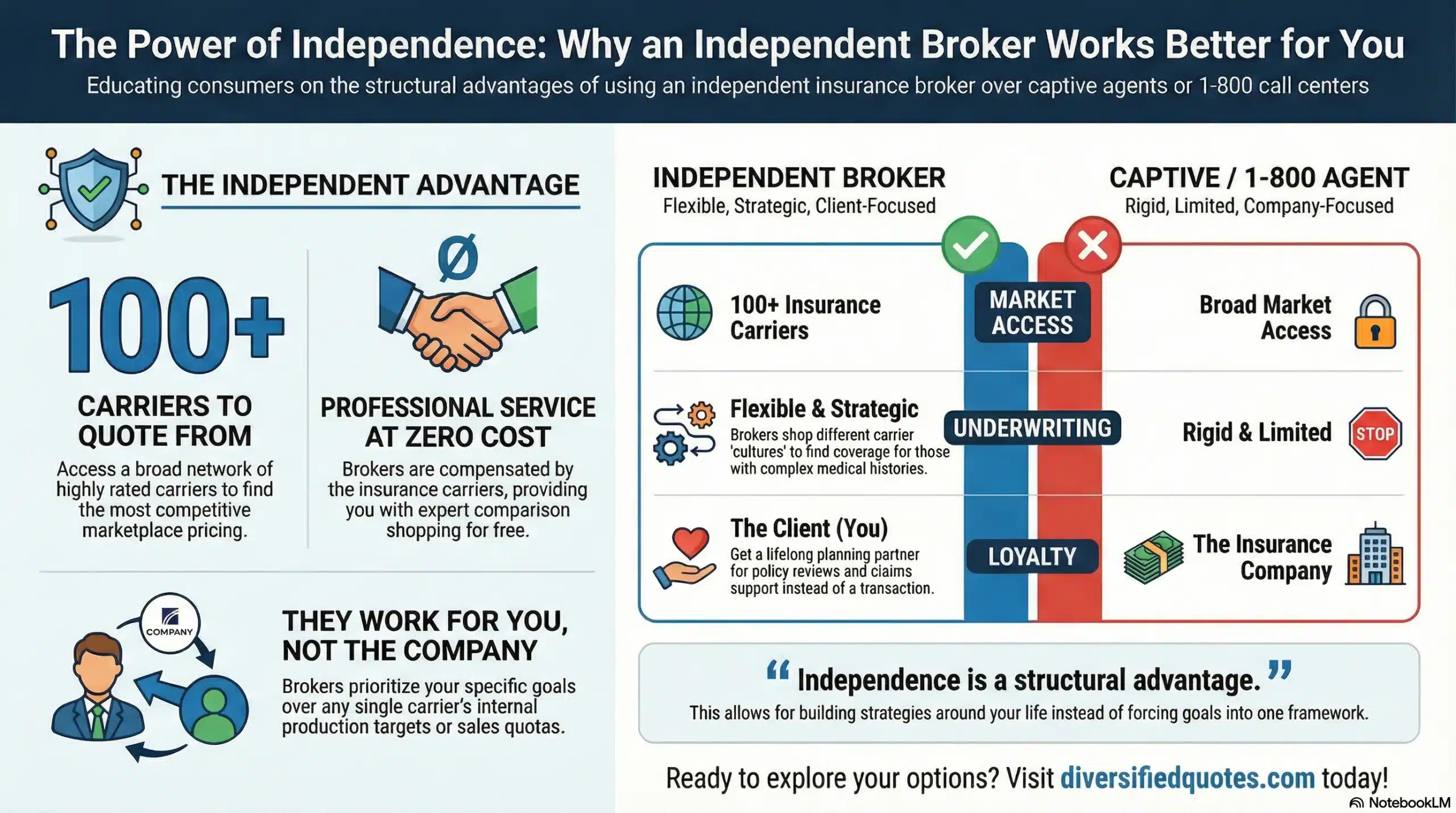
Jason Stolz, CLTC, CRPC, DIA, CAA, is Chief Underwriter at Diversified Insurance Brokers, and MassMutual’s whole life portfolio is one our office places regularly for clients across a wide range of goals. As an independent broker representing MassMutual alongside more than one hundred other carriers, our office can walk through the actual differences between these nine products in plain terms and help you determine whether MassMutual is genuinely the strongest fit for your specific goal, rather than assuming one large, well-known mutual company is automatically the right answer.
Considering a MassMutual whole life policy and want the real differences between the nine products explained plainly?
Talk to a Life Insurance Specialist
See Real-Term Rates Side by Side
Life Insurance Quoter
Nine Whole Life Products, One Portfolio
MassMutual doesn’t sell a single “whole life policy.” It offers nine distinct participating whole life products, each built around a different guaranteed interest rate, funding period, and design priority, and understanding which category a specific product falls into is the fastest way to make sense of the full lineup. MassMutual itself groups the portfolio into three broad bands: an accumulation and limited-pay protection group, a balanced performance group, and a protection and legacy group. Within all nine, the carrier’s own stated position is worth repeating directly: death benefit protection is every policy’s primary purpose. The distinguishing features below are secondary design choices layered on top of that shared foundation, not a reason to lose sight of what a whole life policy is fundamentally for.
| Product | Guaranteed Rate | Distinguishing Attribute | Positioned For |
|---|---|---|---|
| Whole Life 8 Pay | 2.75% | Shortest premium-paying period; generally a Modified Endowment Contract | Advanced short-pay, premium finance, split dollar, executive benefits |
| Whole Life 10 Pay | 2.00% | Highest guaranteed cash value in the portfolio; strongest income solves | Retirement supplement, premium finance, executive bonus, high-net-worth planning |
| Whole Life 15 Pay | 2.50% | Limited-pay flexibility with a longer funding window than the 8 or 10 Pay | Younger professionals, juvenile planning |
| Whole Life Guard 10 Pay | 3.00% | Protection-focused 10-pay design; more death benefit per premium dollar | Juvenile coverage, emerging affluent, premium finance |
| Whole Life 20 Pay | 3.00% | Defined 20-year funding period with balanced cash value and death benefit | Family protection, business planning |
| Whole Life 65 | 3.00% | Balanced design intended to be fully paid up by retirement age | Mid-career professionals, pre-retirees |
| HECV Whole Life 85 | 3.00% | Highest early guaranteed cash value in the full portfolio | Business owner balance sheet planning, executive benefits |
| Whole Life 95 | 3.00% | Full-pay, paid up at 95, with faster early cash value growth than Whole Life 100 | Term-plus-whole-life layering, small business planning |
| Whole Life 100 | 3.75% | Lowest annual premium among full-pay designs; highest initial death benefit | Coverage layering, legacy planning, estate liquidity |
Guaranteed interest rates shown reflect the minimum contractual guarantee for each product and are separate from any policy dividend, which is never guaranteed. Face amounts increase over time on products marked for face increases in the carrier’s own materials; the others maintain a level death benefit by design.
Whole Life 95 vs. Whole Life 100: A Real Trade-Off, Not a Better-or-Worse Choice
These two full-pay products exist specifically to solve different problems, and understanding the trade-off between them matters more than picking whichever one sounds more impressive on paper. Whole Life 95 builds guaranteed cash value more quickly in the early policy years than Whole Life 100 does. MassMutual built this product specifically to answer a common, entirely reasonable objection: that a permanent policy shows disappointingly little cash value in its first few years. If early accessible value matters to you, Whole Life 95 addresses that directly.
Whole Life 100 trades that early cash value advantage for a higher death benefit in the early years and throughout the working years, along with stronger guaranteed cash value later in the policy’s life, once both products have had decades to mature. It also carries the highest guaranteed interest rate in the entire nine-product portfolio, at 3.75%. Neither product is objectively superior — Whole Life 95 fits someone who wants meaningful value sooner, and Whole Life 100 fits someone more focused on maximizing eventual death benefit and long-term legacy value, particularly when it’s layered underneath term coverage as part of a broader strategy.
Whole Life Guard 10 Pay vs. Whole Life 10 Pay: Protection-First vs. Accumulation-First
Both of these products are fully paid up after ten years of premiums, but they’re built around genuinely different priorities, and the names alone don’t make that obvious. Whole Life Guard 10 Pay is the protection-first version: it guarantees a lower annual premium than standard Whole Life 10 Pay, and it delivers a higher death benefit in the early years and throughout the working years. Whole Life 10 Pay is the accumulation-first version: it carries the highest guaranteed cash value in MassMutual’s entire whole life lineup, along with the strongest income-solve potential of any product in the portfolio, in exchange for a higher premium than Guard 10 Pay at the same face amount.
The simplest way to hold this distinction in mind: if the honest priority is death benefit protection at the most efficient premium within a ten-year funding window, Guard 10 Pay is built for that. If the honest priority is maximizing guaranteed cash value and future income potential within that same ten-year window, standard Whole Life 10 Pay is built for that instead. Both are legitimate, well-designed products — the right one depends entirely on which of those two goals actually matters more to you.
Not sure which of these nine products actually fits your goal? Let’s walk through the comparison together.
Compare Your Options
Riders and Built-In Features Worth Understanding
Several riders and features are available across the MassMutual whole life portfolio, and one in particular is worth highlighting because it’s included at no additional cost on eligible policies. The Living Well Rider is built directly into eligible whole life policies, with participation entirely optional and confidential. It includes access to multi-cancer early detection resources, disease risk detection tools, everyday mental health support, and a healthy activity and sleep benefit delivered through the Living Well by MassMutual app when paired with a compatible wearable device. This is a genuinely unusual feature for a whole life policy to include, since it extends value to the policyowner during their lifetime, well beyond the eventual death benefit itself.
A Waiver of Premium Rider is also available, which waives ongoing premiums if the insured becomes totally disabled as defined in the rider, protecting the policy from lapsing during a period when paying premiums may no longer be realistic. Beyond these, general rider language across the portfolio applies: riders are available at an additional cost, or a charge may apply when a rider is actually exercised, and availability can be limited by issue age or the state where the policy is issued. Confirming exactly which riders are available on a specific product, at a specific issue age, in your specific state, is worth doing directly before finalizing any application.
Whole Life and Term Layering: Building Coverage in Stages
One of the more practical strategies built around this portfolio is layering permanent and term coverage together rather than choosing exclusively between them. The concept is straightforward: a smaller permanent whole life policy establishes a guaranteed foundation of coverage and cash value that will never expire, while term coverage layered on top provides substantially more death benefit during the years it’s needed most, typically while raising children or carrying a mortgage.
The mechanism that makes this strategy genuinely flexible over time is term conversion: term coverage can generally be converted into permanent whole life coverage later, without new medical underwriting, using the health class originally established when the term policy was issued. This means a strategy built today with a modest permanent base and a larger term layer can be adjusted years down the road, converting some or all of that term coverage into permanent protection, even if health has changed in the meantime. This is precisely why the original underwriting decision on a layered strategy matters well beyond the initial purchase.
Sales Concepts Built Around This Portfolio
A few specific planning concepts come up repeatedly with this product lineup, and each addresses a distinct goal. The Gift of a Lifetime concept uses whole life coverage purchased on a child or grandchild, with the policy eventually transferred to that individual once they reach adulthood, providing a paid-up asset with accumulated cash value as a genuinely lasting gift rather than a one-time transfer. A parallel version of this concept exists for adult children as well, rather than only younger juveniles.
Executive Bonus arrangements use participating whole life coverage as a selective benefit offered to business owners and key employees, funded by the business as a form of enhanced compensation rather than a broad-based employee benefit. And as covered above, whole life and term layering combines a permanent foundation with term coverage that can convert to permanent protection later, giving a strategy room to evolve as circumstances change without requiring a fresh application built from scratch.
Where MassMutual Stands as a Carrier
MassMutual was founded in 1851 and has operated as a mutual company throughout its history, meaning it’s owned by its policyowners rather than outside shareholders — a structural detail that shapes the long-term, dividend-focused orientation reflected throughout this portfolio. Its unbroken dividend history dating back to 1869 is the clearest evidence of that orientation in practice.
MassMutual currently holds top-tier financial strength ratings across all four major rating agencies, including an A++ (Superior) rating from AM Best, its highest possible rating category. Financial strength ratings are reviewed and can change over time, so we always confirm a carrier’s current standing directly before finalizing a recommendation, rather than relying on a figure that may have shifted. MassMutual’s own explanation of its financial strength covers how these ratings are determined and what they reflect about the company’s claims-paying ability. Our broader explanation of what an AM Best rating actually means covers this system in more general depth.
A Note on the Portfolio’s Evolution
MassMutual has retired Whole Life 12 Pay and added Whole Life 95 and Whole Life Guard 10 Pay to the portfolio. Product lineups at any major carrier evolve over time as new designs are introduced and older ones are phased out, and the nine products described on this page reflect the carrier’s current whole life offering. Confirming that a specific product is still actively available, alongside its current guaranteed rate and any applicable riders, is a standard part of the application process rather than something to assume based on this page alone.
Important Information About These Policies
MassMutual Whole Life series policies are level-premium, participating, permanent life insurance policies issued by Massachusetts Mutual Life Insurance Company (MassMutual), Springfield, MA 01111-0001. MassMutual Term Life series policies are non-participating, annually renewable term life insurance policies issued by MassMutual. The products and certain features described on this page may not be available in all states, and state variations will apply.
Any guarantees referenced are based on the claims-paying ability of the issuing insurance company. Dividends are not guaranteed. Accessing a policy’s cash value through loans or partial surrenders reduces both the cash value and the death benefit, increases the risk of lapse, and may result in a tax liability if the policy terminates before the insured’s death. Distributions, including cash dividends and partial or full surrenders, are generally income tax-free up to the policy’s cost basis. If the policy becomes a Modified Endowment Contract, loans and distributions become taxable to the extent of gain and may incur an additional 10% penalty if the policyowner is under age 59½.
The decision to purchase life insurance should be based on long-term financial goals and the need for a death benefit. Life insurance is not an appropriate vehicle for short-term savings or short-term investment strategies, and there may be little to no cash value available for loans in a policy’s early years. This information is not written or intended as specific tax or legal advice, and individuals should seek guidance from their own tax or legal counsel. These policies are not a bank or credit union deposit or obligation, are not FDIC or NCUA insured, are not insured by any federal government agency, and are not guaranteed by any bank or credit union.
Who Genuinely Fits This Portfolio
MassMutual’s whole life lineup fits a buyer who values permanent, guaranteed coverage backed by a mutual company with an exceptionally long dividend track record, and who has a specific enough goal, whether that’s maximizing early cash value, minimizing premium within a short funding window, or building the strongest possible legacy death benefit, to actually take advantage of having nine distinct products to choose from rather than one generic option. It’s a genuinely strong fit for strategies involving juvenile gifting, executive benefit planning, or layering permanent coverage with convertible term.
It fits less well for someone who hasn’t yet clarified whether their priority is early cash value, maximum death benefit, or funding period length, since choosing among nine products without that clarity first risks landing on a design that doesn’t actually match the underlying goal. This is exactly the kind of decision worth working through with guidance rather than picking a product name that sounds appealing in isolation.
How We Help
We help clients work through MassMutual’s full nine-product portfolio against their actual goal, rather than defaulting to whichever product a single-carrier agent happens to sell most often. Because we represent MassMutual alongside more than one hundred other carriers, we can also show you honestly how this portfolio compares against other strong mutual and stock companies offering permanent coverage, so the final decision reflects a genuine market comparison rather than a single company’s product lineup in isolation.
Our broader guidance on choosing the right policy and how much coverage you actually need applies directly to working through a portfolio this size. If you’d like to understand why working with an independent broker matters when a single carrier offers this many product variations, that’s worth a direct conversation.
Ready to find out which MassMutual whole life product actually fits your goal, and how it stacks up against the market?
Get Your Life Insurance Review
Financial Protection Essentials
Explore retirement distribution planning, claims guidance, and specialized coverage needs.
Talk to an Advisor or Request Your Annuity Quote
Ready to explore this annuity in more detail—or compare it with other carriers to see if even higher rates are available? With guaranteed income, principal protection, and long-term growth potential on the line, making the right choice is essential. The experienced advisors at Diversified Insurance Brokers will guide you through the options and design a strategy tailored to your retirement goals.
Schedule here:
calendly.com/jason-dibcompanies/diversified-quotes
Licensed in all 50 states • Fiduciary, family-owned since 1980
Why does MassMutual offer nine different whole life products instead of one?
Because different buyers prioritize different things: some want the fastest possible early cash value, others want the lowest premium for a given death benefit, and others want a defined, short funding period. Rather than forcing every buyer into a single design, MassMutual groups its nine products into three bands, accumulation and limited-pay protection, balanced performance, and protection and legacy, each built around a different guaranteed interest rate and design priority, while sharing the same underlying purpose of guaranteed permanent death benefit protection.
What’s the actual difference between Whole Life 95 and Whole Life 100?
Whole Life 95 builds guaranteed cash value more quickly in the early policy years, specifically addressing the common concern that a permanent policy shows little value early on. Whole Life 100 trades that early advantage for a higher death benefit in the early and working years, stronger cash value later in the policy’s life, and the highest guaranteed interest rate in the portfolio. Neither is universally better — the right choice depends on whether early accessible value or long-term death benefit and legacy value matters more.
Should I choose Whole Life Guard 10 Pay or standard Whole Life 10 Pay?
It depends on whether protection or accumulation is the bigger priority. Guard 10 Pay guarantees a lower annual premium and a higher death benefit throughout the working years, making it the protection-first choice. Standard Whole Life 10 Pay carries the highest guaranteed cash value and strongest income-solve potential in MassMutual’s entire whole life lineup, making it the accumulation-first choice, at a higher premium for the same face amount.
What is the Living Well Rider, and does it cost extra?
The Living Well Rider is built into eligible MassMutual whole life policies at no additional cost, with participation entirely optional and confidential. It provides access to multi-cancer early detection resources, disease risk detection tools, everyday mental health support, and a healthy activity and sleep benefit through the Living Well by MassMutual app when paired with a compatible wearable device. It’s a genuinely unusual feature for a whole life policy, since it delivers value to the policyowner during their lifetime, not just through the eventual death benefit.
Can term insurance be converted into one of these whole life products later?
Generally yes, which is exactly what makes the whole life and term layering strategy flexible over time. Term coverage can typically be converted into permanent whole life coverage without new medical underwriting, using the health class originally established when the term policy was issued. This means a strategy built today with a smaller permanent base and a larger term layer can be adjusted later, even if health has changed in the meantime.
How financially strong is MassMutual as a carrier?
MassMutual currently holds top-tier ratings across all four major rating agencies, including an A++ (Superior) rating from AM Best, its highest possible rating category. As a mutual company, MassMutual is owned by its policyowners rather than outside shareholders, and it has paid dividends to eligible participating policyowners every year since 1869, a track record that reflects its long-term orientation, though dividends themselves are never guaranteed.
What is the Gift of a Lifetime strategy?
It’s a planning concept using whole life coverage purchased on a child or grandchild, with the policy eventually transferred to that individual once they reach adulthood. This provides a paid-up asset with accumulated cash value as a lasting financial gift, rather than a one-time monetary transfer. A similar version of this concept also exists for adult children.
Does a policy loan or withdrawal from cash value create a tax problem?
It can, depending on the circumstances. Distributions, including cash dividends and partial or full surrenders, are generally income tax-free up to the policy’s cost basis. Accessing cash value through loans or partial surrenders reduces both the cash value and the death benefit and increases the risk of lapse, and if the policy terminates before the insured’s death, a tax liability can result. If the policy becomes a Modified Endowment Contract, loans and distributions become taxable to the extent of gain and may incur an additional 10% penalty under age 59½.
About the Author:
Jason Stolz, CLTC, CRPC, DIA, CAA and Chief Underwriter at Diversified Insurance Brokers (NPN 20471358), is a senior insurance and retirement professional with more than 25 years of real-world experience helping individuals, families, and business owners protect their income, assets, and long-term financial stability. As a long-time partner of the nationally licensed independent agency Diversified Insurance Brokers, Jason provides trusted guidance across multiple specialties—including fixed and indexed annuities, long-term care planning, personal and business disability insurance, life insurance solutions, Group Health, Travel Medical and Evacuation Insurance, and short-term health coverage. Diversified Insurance Brokers maintains active contracts with over 100 highly rated insurance carriers, ensuring clients have access to a broad and competitive marketplace.
His practical, education-first approach has earned recognition in publications such as VoyageATL, and contributions from his agency featured in Kiplinger and GoBankingRates— highlighting his commitment to financial clarity and client-focused planning. Drawing on deep product knowledge and years of hands-on field experience, Jason helps clients evaluate carriers, compare strategies, and build retirement and protection plans that are both secure and cost-efficient. Visitors who want to explore current annuity rates and compare options across multiple insurers can also use this annuity quote and comparison tool.
Explore More Life Insurance Options: Browse our complete guide to Life Insurance Buying & Cost Education — covering how to buy, costs, calculators, rates & buying guides from 100+ carriers.
Last Reviewed: September 17, 2026 |
Reviewed by: Jason Stolz, CLTC, CRPC, DIA, CAA
Chief Underwriter, Diversified Insurance Brokers, Inc. | NPN: 20471358 | Diversified Insurance Brokers, Inc. — Licensed in all 50 states
Fact Checked by: Tonia Pettitt, CMIP©
Medicare Specialist, Diversified Insurance Brokers, Inc. | NPN: 14374308 | Diversified Insurance Brokers, Inc. — Licensed in all 50 states
Did you find this content helpful? Leave us a Google review — it helps others find trustworthy guidance too.
Editorial Standards: Diversified Insurance Brokers maintains rigorous editorial standards to ensure accuracy, clarity, and independence in all content. Learn more about our editorial standards and commitment to transparency.
