
Is the Ohio State Life Insurance Company a Good Company
View the table near the end of the page to see why working with an independent insurance broker provides you the best possible rates.
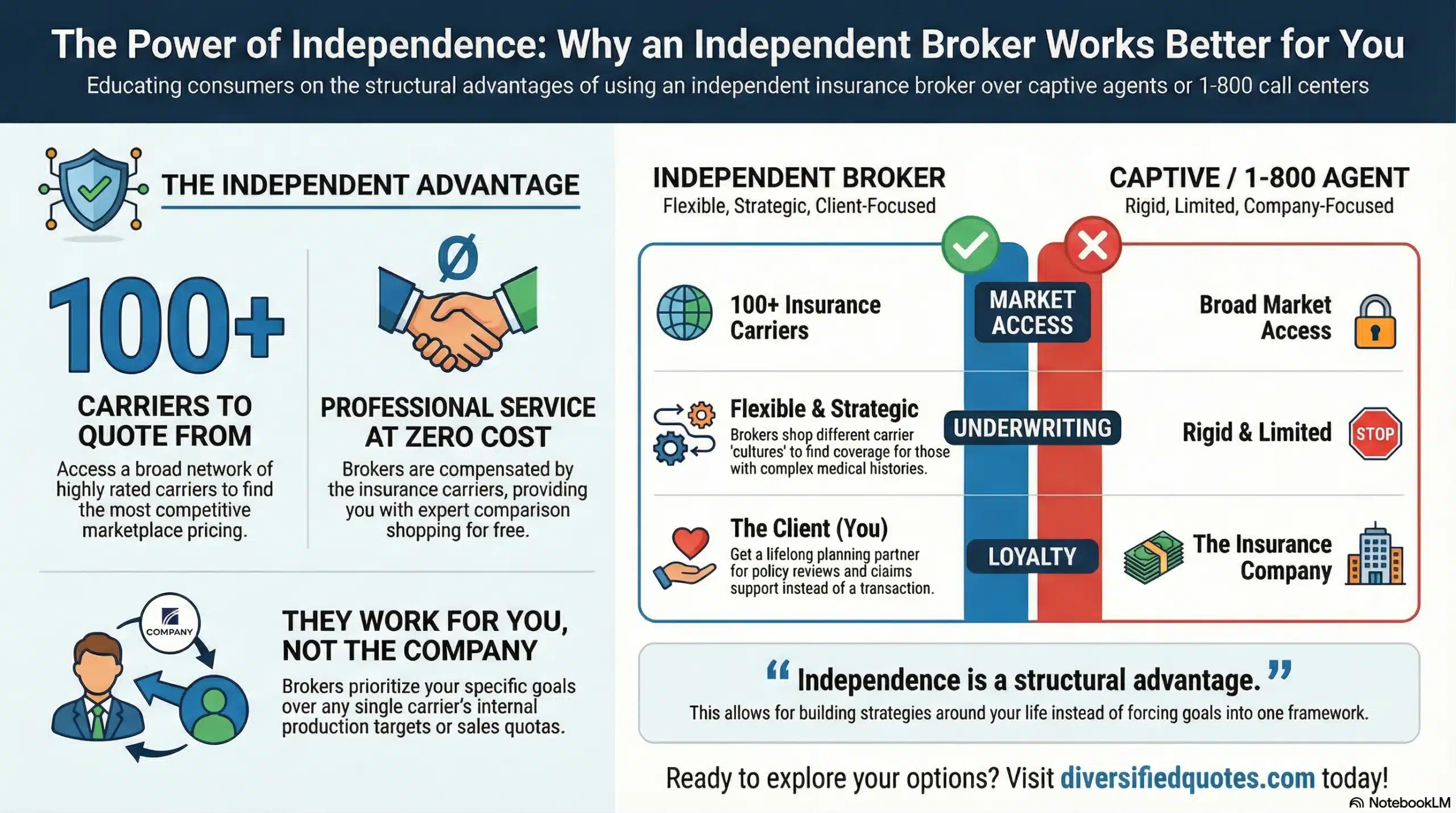
As an Independent Life Insurance Broker, we compare rates across 100+ carriers and prescreen every application before submission.
Is the Ohio State Life Insurance Company a Good Company

Jason Stolz CLTC, CRPC, DIA, CAA
AM Best Rating Disclosure
According to the company, AM Best grades The Ohio State Life Insurance Company B+ (Good) for financial strength and bbb- (Good) for issuer credit, with a stable outlook on both. B+ ranks sixth of AM Best’s thirteen financial strength levels and sits below the A- tier that many conservative annuity buyers treat as their floor. Ratings are reviewed periodically, so check the current rating before placing money with this insurer.
The Ohio State Life Insurance Company pairs a very old charter with a very new business. The company traces its operating history back more than a century, but under its current owner, NexAnnuity Holdings, it has been reinvented as a fixed annuity writer that issues multi-year guaranteed annuities and a fixed index annuity sold through independent agents and advisors. That mix of long history, reinvention, a B+ rating, and a narrow product line is what anyone weighing its contracts needs to understand. Everything else on this page sits on top of that.
Jason Stolz, CLTC, CRPC, DIA, CAA, is Chief Underwriter at Diversified Insurance Brokers, and smaller fixed annuity carriers like Ohio State Life are companies our office evaluates regularly because their rates often draw attention. Working as an independent annuity broker, we weigh what a carrier like this pays against its financial strength and against contracts from higher-rated insurers, so you can decide how much, if any, of your money belongs with it.
Wondering whether Ohio State Life’s rates are worth the rating trade-off?
Compare Ohio State Life Rates
Ohio State Life at a Glance
| Topic | What We Found |
|---|---|
| Full Name | The Ohio State Life Insurance Company |
| Headquarters | Dallas, Texas |
| Parent Company | NexAnnuity Holdings, Inc., part of the Dallas-based Nex family of financial companies |
| Operating History | More than a century, per the company; a fixed annuity writer only since its acquisition by NexAnnuity |
| AM Best Ratings | B+ (Good) financial strength; bbb- (Good) issuer credit; stable outlook |
| Main Products | NexHaven multi-year guaranteed annuities and the NexCompounder fixed index annuity; see fixed vs. fixed indexed annuities |
| How It Sells | Through independent agents, independent broker-dealers, and registered investment advisers; see what an independent insurance broker does |
| Where It Is Licensed | 46 states and the District of Columbia; the four exceptions are Vermont, Maine, Connecticut, and New York |
| Sister Insurer | Fortis Life and Annuity Insurance Company, which issues NexAnnuity’s NexVantage MYGA and NexHaven MYGA through a subsidiary |
| Life Insurance | A closed block of older life policies in runoff, managed with reinsurance; no new life sales identified |
Ensure you are receiving the absolute top rates
Current Fixed Annuity Rates
Compare today’s best fixed annuity rates from top carriers.
Current Bonus Annuity Rates
See which annuities offer the highest upfront bonus today.
Request an Annuity Quote
Submit our annuity request form to get personalized rate options.
Lifetime Income Calculator
Use our calculator to see how much guaranteed income your annuity can provide.
A Century-Old Charter Under New Ownership
Ohio State Life is one of the older names in American life insurance, with more than a century of operating history according to its parent. Its life insurance past still shows up in a closed block of older life policies that the company continues to administer, with no new life sales identified. AM Best has noted that reinsurance is used to limit the risk from that runoff block.
The modern company is a different business. NexAnnuity Holdings, Inc. acquired Ohio State Life and quickly repositioned it to issue multi-year guaranteed annuities, sold through independent distribution. Premium volume grew rapidly once those products launched, and the company later expanded into fixed index annuities. Today its new business is built almost entirely around fixed and fixed index annuity contracts rather than life insurance.
That history cuts two ways. An existing charter with a long record of licensing and regulatory oversight can give a new owner a ready platform for issuing contracts across most of the country. But the track record that matters most for an annuity buyer, how well the company manages a growing book of fixed annuity liabilities through different interest rate environments, is comparatively short. When you evaluate Ohio State Life, it is more useful to think of it as a young annuity company operating under an old name than as a century-old annuity specialist.
Who Owns Ohio State Life
The parent of Ohio State Life is NexAnnuity Holdings, Inc., an insurance holding company. NexAnnuity, the Dallas retirement solutions business built around it, designs and distributes annuities and counts itself among a group of related Nex companies, including an investment manager and a bank. Earlier NexAnnuity announcements identified NexAnnuity as an affiliate of the alternative asset manager NexPoint and a related company of NexBank.
The ownership structure explains how the business runs. NexAnnuity’s affiliates provide investment management, product development, and other management services to Ohio State Life’s retirement products, and the company has used third-party administration for policy servicing. That model can keep fixed costs low and help a small insurer compete on rates, but it also means much of the operation depends on outside and affiliated providers.
For policyholders, the key point is legal rather than organizational. NexAnnuity’s disclosures make plain that every company in the group stands on its own when it comes to obligations. A contract you buy is Ohio State Life’s promise alone, so whether it is kept depends on that insurer’s own capital and ability to pay. The strength of the wider Nex group may influence the parent’s willingness and ability to support the insurer, but it is not a guarantee of your contract.
The NexAnnuity Platform Strategy
NexAnnuity presents itself as a business created to bring greater efficiency and design to the life insurance and annuity space. In practice, that has meant building a lean annuity operation on top of an existing insurance charter, relying on affiliated investment management and outside administrators, and selling through independent agents, broker-dealers, and advisers rather than a captive sales force.
The platform has also widened over time. NexAnnuity started with a single MYGA line issued by Ohio State Life, added a fixed index annuity, and later brought in a second issuing insurer, Fortis Life and Annuity Insurance Company, for a separate MYGA. Earlier announcements noted that NexAnnuity also distributes annuity and life products from insurers outside its own group.
For Ohio State Life, that strategy has both an upside and a cost. A broader product shelf and more distribution relationships can help address the concentration AM Best flagged in its business profile assessment. At the same time, adding a second issuer means some new business that might once have gone to Ohio State Life may now be written elsewhere in the group. Watching how the company’s own premium volume, capital, and product mix evolve is the best way to judge whether the strategy is strengthening it.
Understanding the B+ Rating
AM Best’s financial strength scale runs from A++ at the top down through A+, A, A-, B++, B+, and onward to the lower grades. Ohio State Life’s B+ falls in the Good category alongside B++, and it remains within the range AM Best considers secure. At the same time, it is two steps below A-, the lowest of the Excellent ratings, and many buyers placing money for five or ten years prefer to stay at A- or better. Our guide to how AM Best ratings are assigned walks through each level.
The company also carries a long-term issuer credit rating of bbb-, which AM Best likewise labels Good. Both ratings carry a stable outlook, meaning AM Best did not signal an expected change in either direction when it last reviewed them. Ohio State Life reports that AM Best has reiterated the ratings since first assigning them.
It helps to read the rating in context. B+ is not, on its own, a warning of imminent trouble; AM Best’s commentary points to a small, fast-growing company with a limited product range and a short history as an annuity writer. What it does mean is that the margin of safety is thinner than with large, long-established insurers, so the amount you place with Ohio State Life, and whether it stays within your state’s guaranty association limit, deserves more attention than it would with an A-rated carrier.
What AM Best Highlighted
When AM Best first rated Ohio State Life, it grouped its assessment into four parts. It judged the company’s balance sheet strength adequate, noting that a dip in capital and surplus tied to unrealized investment losses was offset by a capital contribution from the parent. It described operating performance as marginal, which is common for a young MYGA writer because sales commissions are expensed up front under statutory accounting while the earnings on those contracts arrive over many years. Administrative costs paid to a third-party administrator also weighed on results.
AM Best called the business profile limited, reflecting the company’s concentration in a narrow line of fixed annuity products in a highly competitive market. It considered enterprise risk management appropriate for the company’s size and scope, while noting that the business strategy carries execution risk and that the risk framework needs continued development as the company grows.
AM Best also commented that it expected the company to maintain sufficient capital for its business plans and that it would monitor progress against those plans. None of these points is unusual for a repositioned insurer, but together they explain why the rating sits in the B range rather than the A range. Improvements in earnings, product diversification, and a longer record of stable capital would be the natural path toward a higher rating over time, though there is no assurance an upgrade will follow.
Capital Support and Growth
For a small insurer writing a growing volume of annuities, capital is the critical resource. Every new contract requires the company to hold reserves and capital against it, and rapid sales growth can consume capital faster than earnings replace it. AM Best’s note that the parent contributed capital to offset a decline in surplus is therefore an important data point: it shows the owner has been willing to support the insurer when needed.
NexAnnuity has also described strong growth on its platform, including a period in which Ohio State Life’s balance sheet expanded substantially in a single year and a later description of its annuity platform as holding under $1 billion in assets. Those figures change over time, but they place Ohio State Life among the smaller annuity issuers, a fraction of the size of the largest fixed annuity writers.
Small size is not inherently bad. Smaller carriers can be nimble and often pay competitive rates to win business. But size affects resilience: a large insurer can absorb an investment loss or an unexpected wave of surrenders more easily than a small one. Continued parent support, steady capital growth, and disciplined sales growth are the indicators worth watching, and each new AM Best review is a useful checkpoint.
How the Company Invests
A fixed annuity company earns its spread by investing premiums in bonds, loans, and other assets that yield more than the rates it credits to policyholders. The quality of those investments determines how safe the guarantees really are. When AM Best first rated Ohio State Life, it described the investment portfolio as conservative at that time.
AM Best also reported the company’s plan to reduce its holdings of NAIC class 2 bonds, the lower tier of investment-grade debt, and increase its allocation to residential and commercial mortgages for diversification. Mortgage lending can offer higher yields and diversification, but it also introduces credit and real estate risk that has to be underwritten and managed carefully. Because NexAnnuity’s affiliates provide investment management to Ohio State Life’s products, the investment strategy is shaped within the broader Nex family.
Investors who want to dig deeper can review the company’s statutory financial statements, which are filed with state insurance regulators, or ask our office to walk through the most recent figures available. The questions worth asking are how much of the portfolio sits in below-investment-grade or less liquid assets, how concentrated the holdings are, and how much capital the company holds relative to the risks in its portfolio.
Want a second opinion on an Ohio State Life quote you received?
Review My Quote
Products: The NexHaven MYGA
Ohio State Life’s core product is the NexHaven multi-year guaranteed annuity, which offers 3-, 5-, 7-, and 10-year guarantee periods with a fixed rate locked at issue. The minimum premium is $50,000, annuitants can be anywhere from birth through age 85, and interest is credited daily and compounded annually. The design will be familiar to anyone who has compared MYGAs, and our overview of multi-year guaranteed annuities explains the category.
What sets NexHaven apart is its unbundled structure. A penalty-free partial withdrawal provision, a death benefit that pays the full account value, and a nursing home waiver of withdrawal charges are each optional riders with their own cost, rather than features built into the base contract. Without them, the contract offers no penalty-free access during a term, and beneficiaries may receive the surrender value rather than the account value in most states. That design lets buyers pay only for what they need, but it makes careful rider selection part of every purchase.
Withdrawal charges on the 3- and 5-year versions start at 9 percent and decline by one point a year, and unless a rider waives it, a market value adjustment also applies whenever money leaves the contract early. Withdrawal charges are waived for 30 days following the end of each guarantee period. These terms are typical of the MYGA market, and they underline the main rule for any Ohio State Life MYGA buyer: choose a term the money can truly stay in for, and decide on riders before applying.
Products: The NexCompounder Fixed Index Annuity
Ohio State Life also issues the NexCompounder fixed index annuity, NexAnnuity’s fixed index annuity. A fixed index annuity credits interest based partly on the performance of market indexes, with protection from index losses, rather than paying a single declared rate. Our explainer on what a fixed indexed annuity is covers how these contracts work.
NexAnnuity’s product page lists three index options for NexCompounder: the S&P 500, the Nasdaq-100 Volatility Control 12% NCTM Index, and the Franklin US CorePlus (7.5% Vol) Index, which blends U.S. equities and fixed income. Two of the three use volatility control, a technique that adjusts exposure to keep the index’s swings within a target range, which can allow insurers to offer more generous crediting terms on those options. Our article on why volatility targeting has spread explains the trade-offs.
The summaries we reviewed do not detail NexCompounder’s surrender schedule, crediting methods, caps, participation rates, or riders, so those terms should come from the current product materials before any decision. Choosing among the index options is its own decision, and our guide to choosing the correct annuity indexes offers a framework. As with the MYGA, the same B+ issuer stands behind every guarantee.
How Ohio State Life Relates to Fortis and NexVantage
NexAnnuity now issues its products through two insurers. Ohio State Life issues NexHaven and NexCompounder, while Fortis Life and Annuity Insurance Company, through its subsidiary Opportunity Life Insurance Company, issues a separate MYGA called NexVantage. The products share a platform, a brand, and a similar look, which can make it easy to assume they share an issuer. They do not.
The distinction matters because the issuer determines who owes you the guarantee. NexHaven contracts are obligations of Ohio State Life, rated B+ by AM Best. NexVantage contracts are obligations of Opportunity Life, a company with a short operating history for which we have not found a published AM Best rating. NexAnnuity’s disclosures are clear that each affiliate answers for its own obligations.
Their designs diverge as well. NexVantage’s base contract already includes several charge-free withdrawals a year, RMDs without a charge from day one, and a death benefit equal to the full value. NexHaven makes buyers pay for a single annual charge-free withdrawal and the full-value death benefit through riders, offers charge-free RMDs only through that paid withdrawal rider, which is not usable until after the first contract year, and is the only one of the two with a nursing home waiver option. Anyone comparing NexAnnuity products should confirm which insurer issues the specific contract being quoted, and weigh the issuers’ financial strength alongside the features and rates.
Where Ohio State Life Does Business
Ohio State Life is licensed in 46 states and the District of Columbia. Residents of Connecticut, Maine, New York, and Vermont are outside its footprint because the company holds no license in those four states. Within the states where it operates, specific products and riders may still vary; for example, NexHaven’s nursing home rider is not offered in California or South Dakota, and death benefit rules differ in Florida and California.
The company’s own profile on NexAnnuity’s About Ohio State Life page lists its licensing, ratings, and administrative contact information. Because state approvals can change, confirm that the product you are considering, and every rider you want, is approved in your state before you apply.
State of residence also matters after you buy. If an insurer ever failed, the safety net you would rely on is run by your home state, and each state sets its own coverage ceiling. For buyers in the states where Ohio State Life operates, that limit is a sensible reference point when deciding how much to place with the company, a topic covered in more detail below.
Service and Administration
Ohio State Life relies on outside administration for much of its policy servicing. AM Best referred to third-party administrative costs when it rated the company, and the company’s published administrative address is a post office box in St. Paul, Minnesota, rather than its Dallas headquarters. Service correspondence goes to that administrative office.
Outsourced administration is common and can work well, but it puts a premium on accuracy and responsiveness during key events, such as the end of a guarantee period or an outgoing exchange, when timing matters. Owners can protect themselves by submitting time-sensitive requests early, confirming receipt, and keeping copies of everything they send.
The simplest safeguards are practical. Keep your contract number, issue date, and term end date in one place, confirm that your address and phone number on file are current, and start any end-of-term transfer well before the window opens. Our office can help coordinate those requests and follow up with the administrator when deadlines are close.
Checking Complaints and Reviews
Complaint data is one of the most useful ways to judge how an insurer treats its customers. The National Association of Insurance Commissioners publishes complaint information through its Consumer Insurance Search tool, and many state insurance departments publish their own complaint ratios. For a small company, complaint ratios can swing widely because a handful of complaints has an outsized effect, so it helps to look at several years and to read the nature of the complaints rather than relying on a single number.
Consumer review sites offer another perspective, though they tend to attract a small number of reviews and skew toward people with problems. The Better Business Bureau has listed Ohio State Life with an A+ grade while noting that it is not a BBB-accredited business; BBB grades largely reflect how a company handles complaints and other BBB factors rather than its financial strength.
None of these sources replaces the financial strength rating or a review of the company’s statutory filings, but together they help answer a different question: when something goes wrong, how is it handled? For a company that outsources much of its servicing, that question is worth asking before you buy, and our office can share what we learn about the company’s service as we work on client cases.
Guaranty Association Protection
Every state has a life and health insurance guaranty association that protects policyholders of member insurers that become insolvent, up to limits set by state law. These associations are funded by assessments on the other insurers licensed in the state, not by the government, and they step in to continue coverage or pay claims up to their limits.
For buyers considering a B+ rated insurer, the guaranty association limit is a practical planning tool. Keeping the amount placed with any one lower-rated insurer at or below your state’s limit for annuity benefits means that, even in a worst case, your protection does not depend solely on that company. Larger amounts can be spread across several insurers, each kept within the limit. Our page on state guaranty associations explains how the protection works.
The protection has limits beyond the dollar cap. Coverage rules, waiting periods, and the treatment of amounts above the limit vary, and associations are generally prohibited from being used as a sales tool. The guaranty association is a backstop, not a reason to choose an insurer. The better approach is to choose an insurer whose strength you are comfortable with, and then use the limit as a guide to how much to place there.
Want to know how much to place with a B+ carrier in your state?
Plan My Allocation
How It Compares With Other Fixed Annuity Carriers
Ohio State Life competes in a crowded MYGA market that includes very large insurers with top-tier ratings, mid-sized carriers rated in the A range, and a growing number of smaller, often recently acquired companies rated in the B range. Companies in that last group frequently compete on rate, and their offers can stand out on rate comparison sites. The comparison that matters is whether the extra yield justifies the difference in financial strength for the amount and term you have in mind.
It can help to read about carriers on either side of that line. Our reviews asking is Axonic a good company and is Americo a good company cover carriers that issue MYGAs and fixed index annuities through partners and long-established operations, respectively, while our reviews asking is EquiTrust a good company and is Knighthead Life a good company look at other carriers that annuity buyers frequently compare.
Ratings are only one part of a carrier comparison. Product design, liquidity provisions, death benefit treatment, service quality, and the specific contract’s surrender schedule all matter. Ohio State Life’s unbundled NexHaven design, for instance, can work out cheaper or more expensive than a competitor’s bundled contract depending on which riders you need. The only reliable way to compare is side by side, using current rates for the same term and the same features.
Strengths and Concerns
Pulling the research together, Ohio State Life presents a mix of real advantages and meaningful cautions. The table below summarizes them, and the sections that follow explain how to weigh them for your situation.
| Strengths | Concerns |
|---|---|
| Long operating history as a licensed insurer | Short history as a fixed annuity writer under current ownership |
| AM Best B+ (Good) with a stable outlook, within AM Best’s secure range | Below the A- level many conservative buyers require |
| Parent has contributed capital when surplus declined | Small company with a limited, concentrated product line |
| Licensed in 46 states and the District of Columbia | Not available in Connecticut, Maine, New York, or Vermont |
| MYGA design lets buyers pay only for the riders they need | Key liquidity and death benefit features require paid riders |
| Wide annuitant age range, from birth through 85 | Reliance on outsourced administration for policy service |
This table reflects the information available in the company’s disclosures and AM Best’s published commentary, and each entry can shift as the company grows. A strength like parent support is only as durable as the parent’s continued willingness and capacity to provide it, and a concern like a short annuity track record naturally fades as the company accumulates years of results. Read the table as a snapshot of the trade-offs you are accepting today rather than a permanent verdict, and revisit it whenever AM Best publishes a new review or the company changes its product line or ownership. Weighing the two columns against your own goals, timeline, and amount is what turns this list into a decision.
Rate Versus Rating: A Simple Example
A hypothetical comparison shows how to think about the trade-off. Suppose a B+ rated carrier offers a rate a quarter of a percentage point higher than an A-rated carrier on the same five-year MYGA. On a $100,000 contract, that difference is worth roughly $250 a year, and somewhat more over the full term once compounding is counted. The question is whether that amount compensates you for the thinner margin of financial strength.
For many buyers placing an amount comfortably within their state’s guaranty association limit, a meaningful rate premium can be a reasonable trade. For a buyer placing several times that amount with one company, or relying on the money for essential retirement needs, the same premium may not be worth the added concentration. The size of the gap matters too: a premium of a few hundredths of a point is rarely worth any extra risk, while a larger gap deserves serious consideration.
Rider costs belong in the same calculation. If the higher-rate contract requires you to buy riders for withdrawals or a full death benefit that the other contract includes, the true gap is the difference in net rates after those costs. Our office runs this math for the actual quotes in front of you, so the decision rests on dollars rather than headline rates.
Sizing a Purchase With a B+ Carrier
For many buyers, the right question is not whether to use Ohio State Life at all but how much to place with it. A common disciplined approach is to keep the amount with any single B-rated insurer at or below the annuity coverage limit of your state’s guaranty association, and to spread larger sums across several insurers with different ratings and terms. That way, an attractive rate can still play a role in your plan without concentrating risk in one smaller company.
Splitting money across carriers also pairs naturally with laddering, staggering contracts so they come due at different times. A ladder gives you regular access points, spreads interest rate risk, and lets you reassess each insurer’s condition as its contract comes due. Our article on laddering fixed annuities shows how to build one.
Term length matters too. A shorter term limits how long your money depends on any one insurer and creates an earlier opportunity to move if the company’s condition changes. Because surrender charges on MYGAs are highest in the early years, the term you choose effectively sets how long you are committed, and what an early exit would cost is laid out in annuity surrender charges explained.
If You Already Own an Ohio State Life Contract
Existing owners do not need to take action simply because of the rating. Your contract’s guarantees remain in force under its terms, and a B+ rating with a stable outlook does not by itself signal a problem. What existing owners can do is monitor: watch for changes in the AM Best rating or outlook, keep an eye on the company’s financial filings or news, and mark the end of your guarantee period so you can decide what to do next on your own schedule.
The end of a term is the natural decision point. Withdrawal charges are waived for 30 days following the end of each guarantee period, which is the time to compare the renewal rate with what other insurers are offering and to reconsider how much you want with the company. A move to another annuity at that point can usually be handled as a tax-free swap for non-qualified money, explained in our guide to how 1035 exchanges work, or through a direct transfer for IRA money.
Leaving before the term ends is rarely worth it unless circumstances change significantly, because withdrawal charges and a market value adjustment can take a meaningful bite. If a rating downgrade or other development makes you uneasy mid-term, the better first step is a careful review of the costs and alternatives, which our office can provide, rather than a hasty surrender.
What Could Change the Picture
Several developments would change how Ohio State Life should be viewed. On the positive side, a rating upgrade, a longer record of profitable operations, steady capital growth, and greater product diversification would all strengthen the case for the company. On the negative side, a downgrade or a shift to a negative outlook, a significant capital decline, rapid growth without matching capital, or a change in ownership would each warrant a fresh review.
Existing contracts keep their guaranteed terms through each guarantee period regardless of these changes, so the practical effect falls mainly on renewal decisions and new purchases. Renewal rates are declared by the insurer at the end of each period, which means a change in the company’s condition could show up in what it offers at renewal.
The simplest way to stay informed is to check the company’s rating each time a guarantee period nears its end, and before adding new money. AM Best publishes rating actions as they occur, and NexAnnuity has reported rating reiterations on its own site. Pairing that check with a fresh rate comparison at every renewal keeps your money working with an insurer you remain comfortable with, rather than one you chose years earlier under different circumstances.
Who Ohio State Life Fits, and Who It Does Not
Ohio State Life can suit buyers willing to accept a B+ issuer for the sake of a better rate, who place an amount sized within their state’s guaranty association limit, and who either want the flexibility to choose only the NexHaven riders they need or are interested in its fixed index annuity. It can also fit buyers using it as one rung in a diversified ladder alongside higher-rated carriers.
It suits buyers less well if they require an A-rated insurer, who want to place a large share of their savings with one company, or who prefer contracts with liquidity and death benefit features built in rather than purchased as riders. Residents of Connecticut, Maine, New York, and Vermont cannot buy its contracts at all.
The deciding factor in most cases is the rate difference. When Ohio State Life’s rate for your term, net of any riders you need, is only slightly above what A-rated insurers pay, the stronger carrier usually wins. When the difference is meaningful and the amount is sized sensibly, Ohio State Life can earn a place in a well-built fixed income plan.
Questions to Ask Before Choosing Ohio State Life
Start by confirming the current AM Best rating and outlook, since ratings can change between reviews. Then ask how much higher the rate is than comparable contracts from A-rated insurers for the same term and features, and whether that difference is worth it for the amount you plan to invest.
Next, look at the specific contract. Which riders would you need, and how do they affect your net rate? What are the surrender charges and market value adjustment terms? How are required distributions handled if the money comes from an IRA? Is the product, and every rider you want, approved in your state?
Finally, consider your overall plan. How much of your savings would be with this one insurer? Is that amount within your state’s guaranty association limit? Would a ladder across several carriers and terms serve you better? Asking these questions before you apply turns a rate comparison into a sound decision, and our office can help you work through each one with current numbers.
How Our Office Helps
Our evaluation of Ohio State Life for any client begins with the purpose of the money and the client’s comfort with carrier ratings. Jason and our office look at how long the money can stay in place, how much of total savings it represents, whether IRA rules or heirs come into play, and how a B+ issuer fits with the rest of the client’s holdings.
We then compare Ohio State Life’s current rates and contract terms with MYGAs and fixed index annuities from A-rated insurers and from NexAnnuity’s other issuer, so the rating trade-off is visible in dollars. We also help size the purchase relative to your state’s guaranty association limit and suggest how to spread larger amounts across carriers and terms. Clients often ask whether a broker’s help raises the price, and our article is it cheaper to use a broker answers.
For existing Ohio State Life owners, we can review your contract, track the end of your guarantee period, and compare renewal terms with the market when the window opens. As an independent office, we have no obligation to any single insurer, so our recommendation can be to stay, to move, or to split the money, whichever best serves you.
Ready to compare Ohio State Life with higher-rated carriers?
Talk to Our Office
Financial Protection Essentials
More resources for choosing a fixed annuity and the insurer behind it.
Talk With an Advisor Today
Choose how you’d like to connect—call or message us, then book a time that works for you.
Schedule here:
calendly.com/jason-dibcompanies/diversified-quotes
Licensed in all 50 states • Fiduciary, family-owned since 1980
Frequently Asked Questions
Is Ohio State Life the same company as Ohio National?
No. The Ohio State Life Insurance Company is owned by NexAnnuity Holdings and headquartered in Dallas, while Ohio National is a separate insurance group with its own ownership, ratings, and products. The similar names cause confusion, so check the issuer on any quote. Our review of whether Ohio National is a good company covers that insurer.
How long has Ohio State Life been in business?
NexAnnuity describes Ohio State Life as having more than a century of operating history. Its experience as a fixed annuity writer is much shorter, since the company began issuing multi-year guaranteed annuities only after NexAnnuity Holdings acquired it.
Is my money safe with a B+ rated insurer?
B+ is a Good rating within AM Best’s secure range, but it signals a thinner margin of safety than A-rated insurers. Sizing the purchase to fit under your state’s guaranty limit, and dividing anything larger among several companies, keeps that risk in check. Higher-rated choices are reviewed in safe fixed annuity options.
Are Ohio State Life annuities FDIC insured?
No. Annuities are insurance products, not bank deposits, so their guarantees depend on the issuing insurer, backed in part by state guaranty associations within their limits. That is one of the key differences between a MYGA and a bank CD. The remaining differences are covered in MYGAs versus bank CDs.
Can I leave an Ohio State Life annuity before the term ends?
Yes, but during a guarantee period, taking more than a purchased rider permits, or cashing out completely, generally triggers a withdrawal charge and a market value adjustment, which can raise or lower the amount you receive. Waiting for the 30 days after the term ends avoids the withdrawal charges. Those costs are detailed in how surrender charges and MVAs work.
Does Ohio State Life still sell life insurance?
Its new business centers on annuities. AM Best has described a closed block of older life insurance in runoff, managed with reinsurance, rather than an active life insurance product line. For life coverage, an independent comparison across many carriers is the better route, which our independent life insurance broker page describes.
How are Ohio State Life annuities taxed?
Like other deferred annuities, interest grows tax-deferred, and withdrawals from non-qualified contracts are generally taxed as ordinary income on the earnings first. A 10 percent IRS penalty generally applies as well to taxable money taken out before 59 and a half, unless an exception fits. The full rules appear in how annuities are taxed.
Can I use IRA money for an Ohio State Life annuity?
Annuities can generally be held inside an IRA, typically funded by a direct transfer from another IRA custodian. Confirm with the specific product that your account type is accepted and plan how required minimum distributions will be taken. Our explainer on what an IRA annuity is covers the basics.
How do Ohio State Life’s rates compare with other MYGAs?
Rates change frequently, and smaller carriers like Ohio State Life can price competitively. The key is whether the rate, net of any riders you need, beats A-rated alternatives by enough to justify the rating difference. For a benchmark, see where carriers land on our best MYGA annuity rates page.
About the Author:
Jason Stolz, CLTC, CRPC, DIA, CAA and Chief Underwriter at Diversified Insurance Brokers (NPN 20471358), is a senior insurance and retirement professional with more than 25 years of real-world experience helping individuals, families, and business owners protect their income, assets, and long-term financial stability. As a long-time partner of the nationally licensed independent agency Diversified Insurance Brokers, Jason provides trusted guidance across multiple specialties—including fixed and indexed annuities, long-term care planning, personal and business disability insurance, life insurance solutions, Group Health, Travel Medical and Evacuation Insurance, and short-term health coverage. Diversified Insurance Brokers maintains active contracts with over 100 highly rated insurance carriers, ensuring clients have access to a broad and competitive marketplace.
His practical, education-first approach has earned recognition in publications such as VoyageATL, and contributions from his agency featured in Kiplinger and GoBankingRates— highlighting his commitment to financial clarity and client-focused planning. Drawing on deep product knowledge and years of hands-on field experience, Jason helps clients evaluate carriers, compare strategies, and build retirement and protection plans that are both secure and cost-efficient. Visitors who want to explore current annuity rates and compare options across multiple insurers can also use this annuity quote and comparison tool.
Review More Carrier Reviews: Browse our complete Annuity Company Reviews — covering Allianz, Athene, Jackson National, North American, and more annuity carriers.
Last Reviewed: October 19, 2026 |
Reviewed by: Jason Stolz, CLTC, CRPC, DIA, CAA
Chief Underwriter, Diversified Insurance Brokers, Inc. | NPN: 20471358 | Diversified Insurance Brokers, Inc. — Licensed in all 50 states
Fact Checked by: Tonia Pettitt, CMIP©
Medicare Specialist, Diversified Insurance Brokers, Inc. | NPN: 14374308 | Diversified Insurance Brokers, Inc. — Licensed in all 50 states
Did you find this content helpful? Leave us a Google review — it helps others find trustworthy guidance too.
Editorial Standards: Diversified Insurance Brokers maintains rigorous editorial standards to ensure accuracy, clarity, and independence in all content. Learn more about our editorial standards and commitment to transparency.
