
Life Insurance with PCOS
As an Independent Life Insurance Broker, we compare rates across 100+ carriers and prescreen every application before submission.
Life Insurance with PCOS

Jason Stolz CLTC, CRPC, DIA, CAA
Polycystic ovary syndrome, usually called PCOS, is one of the most common hormonal conditions in women, and it is rarely a barrier to life insurance by itself. Across the carrier underwriting guides we checked, PCOS either does not appear as its own impairment or appears only as a mild, potentially upgradable item, which tells you underwriters look past the label to the numbers that come with it. Those numbers are what decide your rate class: your blood sugar and A1C, your height and weight, your blood pressure and cholesterol, your liver tests, and whether sleep apnea, depression, or type 2 diabetes have entered the picture. An applicant with PCOS and normal lab results can often qualify for the same classes as anyone else. Everything else on this page sits on top of that.
Jason Stolz, CLTC, CRPC, DIA, CAA, is Chief Underwriter at Diversified Insurance Brokers, and this page reflects how our office approaches PCOS cases. Working as an independent life insurance broker, we compare how several carriers treat insulin resistance, prescription histories, and build, then direct your application to the company whose guidelines suit your actual results rather than to the first company that quotes a price.
Living with PCOS and shopping for life insurance?
Find My Best Rate Class
What Underwriters Look at With PCOS
| Factor | Supports the Best Classes | Can Lower the Class or Add a Rating |
|---|---|---|
| Blood Sugar and A1C | A1C and fasting glucose in the normal range | Prediabetes, or a diagnosis reviewed under life insurance with diabetes guidelines |
| Height and Weight | Weight within the carrier’s preferred build chart | Weight above the standard build limits for your height |
| Blood Pressure | Normal readings, with or without medication | Readings above the carrier’s limits or recent medication changes |
| Cholesterol | Total cholesterol and ratio within preferred limits | Low HDL with a high ratio, especially alongside other risk factors |
| Liver Tests | Normal liver enzymes on the exam blood panel | Persistent elevations reviewed as elevated liver enzymes |
| Sleep Apnea and Narcolepsy | No sleep apnea, or apnea treated with documented compliance | Untreated or poorly controlled sleep apnea |
| Mental Health | Mild, stable symptoms managed by a provider | Recent hospitalization, frequent medication changes, or time off work |
| Medications | Prescriptions explained clearly on the application | Unexplained prescriptions that suggest a more serious diagnosis |
See Real-Term Rates Side by Side
Life Insurance Quoter
PCOS in Plain Terms
The CDC’s guidance on PCOS and diabetes describes PCOS as a lifelong condition and a common cause of infertility, affecting as many as 5 million women. The exact cause is not known. The CDC notes that androgen imbalances may play an important role and that family history and excess weight may contribute. Symptoms can begin as early as age 11 or 12, around the time of the first menstrual period, although many women do not learn they have PCOS until they try to become pregnant.
The condition looks different from one woman to the next. Some have few symptoms, while others deal with several at once. The CDC lists acne, excess hair growth, darkened skin in body creases, irregular periods, and weight gain among the common signs. Not every woman with ovarian cysts has PCOS, and not every woman with PCOS has visible cysts, which is one reason the diagnosis can take time.
For life insurance, the most important part of the CDC’s description is the connection to insulin resistance. Many women with PCOS make insulin but cannot use it effectively, and the CDC states that more than half of women with PCOS develop type 2 diabetes by age 40. That single fact explains why underwriters focus so closely on blood sugar for applicants with PCOS, and why a normal A1C is often the strongest piece of evidence in the file.
How PCOS Is Diagnosed
There is no single test for PCOS. Doctors generally make the diagnosis when a woman has at least two of three features: irregular or absent ovulation, which shows up as irregular or missing periods; high levels of androgens, the hormones sometimes called male hormones, or physical signs of them such as acne and extra hair growth; and many small follicles on one or both ovaries seen on ultrasound. Some women meet the definition without any visible ovarian changes.
Part of the process is ruling out other conditions that can look similar. Depending on the symptoms, a doctor may check thyroid function, prolactin levels, and other hormones, and in some cases test for conditions such as Cushing’s syndrome. It is normal for records to document several rounds of testing before a doctor settles on PCOS. An underwriter reading those records wants to see how the workup ended, not just that it happened.
The way PCOS is described in your chart can matter. A note that reads “PCOS, irregular cycles, managed with oral contraceptives, normal glucose” tells a very different story than “PCOS with insulin resistance and elevated A1C.” Both describe the same condition, but they point the underwriter toward different questions. If your doctor has recently checked your A1C, fasting glucose, lipids, and blood pressure, those results help show where you fall on that spectrum. Knowing what your records say before you apply lets you answer the application questions accurately and anticipate what the underwriter will ask next.
Why PCOS Rarely Stands Alone on an Application
Fully underwritten carriers typically hand agents a field guide with starting ranges for the conditions they see most. In two of the guides we reviewed, PCOS has no entry of its own, which generally means the underwriter evaluates the conditions and lab results associated with it rather than assigning a rating for the diagnosis itself. A third guide lists polycystic ovary syndrome, along with impaired glucose tolerance, among the impairments eligible for a program that can potentially improve a Table 2 rating to Standard, as long as it is the only rated item and the rest of the case qualifies.
The practical message is that PCOS is generally treated as a marker rather than a diagnosis that drives the decision. One guide we reviewed lists blood sugar that is medically monitored but not diabetes at Standard. That aligns with what many applicants experience: PCOS with normal labs and a healthy build is often a non-issue, while PCOS combined with elevated glucose, high blood pressure, or a heavy build is rated for those findings.
Field guides change, and the references above reflect the editions we reviewed rather than a promise from any carrier. They are also starting points. A final offer depends on the full medical file, the exam results, the prescription history, and how the pieces fit together. That is why it is worth preparing the file carefully and choosing the right carrier, even when the diagnosis seems minor. A small difference in how a carrier weighs blood sugar or build can move an applicant from one rate class to the next.
Blood Sugar Is the Center of the Review
Because PCOS and insulin resistance so often travel together, the underwriter’s first stop is your blood sugar. The paramedical exam blood panel usually includes a hemoglobin A1C, which reflects average blood sugar over roughly the past three months, and many carriers also look at fasting or random glucose. Your medical records may contain earlier A1C results, glucose tolerance tests, or notes about insulin resistance.
The clinical thresholds most doctors use are easy to remember. An A1C below 5.7 percent is considered normal, 5.7 to 6.4 percent is considered prediabetes, and 6.5 percent or higher is consistent with diabetes. Carriers set their own limits for each rate class, but an A1C in the normal range removes the biggest underwriting question for most applicants with PCOS. Some carriers even offer credit programs that can improve a table rating when results such as a low A1C are strong.
Prediabetes is not diabetes, and many carriers treat it far more gently. A modestly elevated A1C may limit access to the very best class at some companies while still allowing a Standard or better offer at others. The trend matters too. An A1C that has dropped from 6.1 to 5.6 percent after lifestyle changes or treatment tells a stronger story than one creeping upward. If you have been told your blood sugar is borderline, it is worth reviewing your most recent results before you apply, so there are no surprises when the exam lab comes back.
When PCOS Leads to Type 2 Diabetes
If PCOS has progressed to type 2 diabetes, the diabetes guidelines take over, and they can be strict for younger applicants. Diabetes ratings depend heavily on age at diagnosis and current age, because a diagnosis at 30 means many more years of exposure than a diagnosis at 65. One field guide we reviewed lists well-controlled type 2 diabetes without tobacco use at Table 6 to decline for applicants in their twenties, Table 3 to Table 6 for ages 30 through 49, and Standard from age 50.
Other guides use a single range for all adult ages. One lists type 2 diabetes after age 20 at Standard to Table 8 as its best-case range, and another describes Standard as a best case and Table 2 to Table 4 as a typical case, with poorly controlled cases and those with complications declined. You can see what each step costs in our explainer on how table ratings affect premiums. Preferred classes usually exclude a personal history of diabetes.
Because women with PCOS are more likely to develop diabetes at younger ages, this is the area where carrier selection matters most. Control is the deciding factor: A1C results, the medications used, the absence of kidney, eye, or nerve complications, and regular follow-up with a doctor. Our page on life insurance with type 2 diabetes covers how carriers weigh those factors. For younger women with PCOS who do not yet have diabetes, locking in coverage while blood sugar is normal can be one of the most valuable financial decisions available.
Weight and Build Charts
Every carrier uses a build chart that sets weight limits for each height and rate class. Weight gain is one of the common signs of PCOS listed by the CDC, and insulin resistance can make weight harder to manage, so build is often the second key factor in a PCOS file. An applicant whose weight falls within the preferred range may qualify for the best classes even with a PCOS diagnosis, while one above the standard limits may receive a rating based on build alone.
Build charts differ more between carriers than many people expect. One company’s Standard limit can be another company’s Standard Plus limit, and some carriers allow more weight when blood pressure, cholesterol, and blood sugar are all normal. That makes build one of the easiest places to gain ground simply by applying to the right company. Our page on coverage for overweight applicants explains how build charts work and how carriers apply them.
Recent weight loss is generally viewed positively, though some carriers want to see it maintained for a period before giving full credit. Weight loss surgery is evaluated on its own terms, with attention to how long ago it occurred and how stable your weight and lab results have been since. Our guide to life insurance after bariatric surgery covers those rules. If you are actively losing weight, a broker can help you judge whether applying now or after a few more months will produce the better offer.
Blood Pressure, Cholesterol, and Heart Health
The CDC lists high blood pressure, high LDL cholesterol, low HDL cholesterol, heart disease, and stroke among the health problems linked to PCOS, especially when excess weight is part of the picture, and it notes that heart disease risk rises with age. Those are the same measures life insurance underwriters use to sort applicants into rate classes, so they carry real weight in a PCOS file.
Blood pressure is checked at the paramedical exam and reviewed in your medical records. Most carriers set limits for each class, and treated blood pressure that stays well controlled is generally acceptable for good classes, while readings above the limits or a recent string of medication changes can lower the class. For the details, read about life insurance with high blood pressure and how carriers set those limits.
Cholesterol is reviewed through the exam blood panel, with attention to total cholesterol, HDL, and the ratio between them. Women with PCOS sometimes have a low HDL, which can push the ratio up even when total cholesterol looks reasonable. A statin or other cholesterol treatment is not a problem in itself; what matters is that the treated numbers fall within the carrier’s limits. If several of these measures are borderline at the same time, the combination can matter more than any single result. A short conversation with your doctor about your most recent numbers, and a look at the carrier’s limits before applying, can help avoid an unexpected downgrade.
Sleep Apnea and PCOS
Sleep apnea appears on the CDC’s list of health problems associated with PCOS. It is easy to overlook, because many women assume snoring or daytime tiredness are just part of a busy life. For underwriting, sleep apnea is a separate impairment that carriers evaluate on its own, and it often comes up when records mention a sleep study or a CPAP prescription.
Treated sleep apnea is usually manageable. Carriers look at the severity of the original diagnosis, whether you use your CPAP or other treatment consistently, and whether you have related problems such as high blood pressure or heart rhythm issues. Many carriers offer Standard or better classes for mild to moderate apnea with good compliance. Untreated moderate or severe apnea, or a prescription that is rarely used, can lead to a rating. More detail is in our page covering life insurance with sleep apnea.
If you suspect sleep apnea but have not been tested, it is worth understanding the timing. A pending sleep study is often a reason for a carrier to postpone a decision until the results are in. If you already have a diagnosis, bringing a recent compliance report from your CPAP device to the application process gives the underwriter clear evidence of treatment and can make a measurable difference in the offer you receive.
Fatty Liver and Liver Tests
Insulin resistance and excess weight are both associated with fat buildup in the liver, and some women with PCOS have mildly elevated liver enzymes on routine blood work. The paramedical exam blood panel includes liver function tests, so an elevation can appear even if you have never discussed your liver with a doctor.
Underwriters look at how high the enzymes are, whether they are rising or stable, and whether imaging or a specialist has evaluated them. Mild elevations explained by fatty liver, with normal liver function otherwise and no alcohol concerns, are often acceptable at Standard or better at many carriers. Higher or unexplained elevations can lead to a request for more information, a rating, or a postponement until the cause is clear. Our page on life insurance with fatty liver disease covers how carriers evaluate it.
This is one of the areas where preparation helps. If your doctor has already identified fatty liver and documented a plan, such as weight management or better blood sugar control, that note helps the underwriter put a lab abnormality into context. If an elevated result appears for the first time on the exam, a carrier may ask for a retest. Avoiding alcohol and strenuous exercise for a day or two before the exam can help keep a temporary spike from affecting the result.
Not sure how your lab results will be viewed?
Ask an Underwriting Question
Mood, Anxiety, and PCOS
The CDC notes that PCOS is linked to depression and anxiety, although the connection is not fully understood. Living with symptoms such as acne, hair growth, weight changes, and fertility concerns can be stressful, and many women with PCOS receive care for mood or anxiety at some point. That care will appear in your records and prescription history.
Carriers evaluate mental health on its own terms. Mild to moderate depression or anxiety that is stable, managed by a provider, and has not required hospitalization or extended time off work is often compatible with Standard or better classes. Underwriters pay closer attention to recent hospitalizations, frequent medication changes, multiple medications, any history of self-harm, and disability claims. Our guide to life insurance with depression explains the factors in more detail.
Two practical points help here. First, answer the mental health questions on the application fully and accurately, because prescription checks will show antidepressants and anti-anxiety medications. Second, if your provider’s notes describe your condition as stable and well managed, that language matters. Underwriters read context, and a clear record of steady treatment is far more reassuring than a list of prescriptions without explanation.
Medications That Show Up on Your Prescription History
Carriers routinely check prescription databases, and the medications commonly used for PCOS can be confusing out of context. Metformin is the clearest example. It is one of the most widely used medicines for type 2 diabetes, but it is also prescribed off-label for insulin resistance in PCOS. An underwriter who sees metformin without an explanation may assume diabetes until the records say otherwise.
Other medications raise similar questions. Spironolactone, often used to reduce excess hair growth and acne, is also used for high blood pressure and heart failure. Letrozole, sometimes used to help women with PCOS ovulate, is also a breast cancer medication. Hormonal birth control is common and rarely a concern; the related question is simply whether you have ever had a blood clot. In each case, the drug itself is not the problem; the question is what it was prescribed for.
The solution is simple: list each medication on the application along with the reason it was prescribed, and make sure your medical records support that explanation. Carriers also check the MIB database used by insurers for coded information from prior applications, so your answers should match what you disclosed before. A short cover note explaining that metformin is for insulin resistance with normal A1C, or that spironolactone is for hair growth, can save weeks of follow-up and keep the underwriter from assuming a more serious diagnosis.
Birth Control Pills and Blood Clot Questions
Combined oral contraceptives, which contain both estrogen and a progestin, are among the most common long-term treatments for PCOS. They regulate cycles, reduce androgen-related symptoms, and help protect the uterine lining in women who ovulate infrequently. Using them is not an underwriting concern in itself, and many applicants with PCOS take them for years without any effect on their rate class.
The underwriting connection is blood clots. Estrogen-containing contraceptives are associated with a higher risk of venous blood clots, and that risk is higher in women who smoke, are older, or carry extra weight. Applications ask about any history of deep vein thrombosis or pulmonary embolism, and an underwriter will look at whether a clot was provoked by a temporary factor such as birth control, surgery, or a long flight, or whether it occurred without an obvious cause.
A single clot linked to a temporary risk factor, treated and resolved, is usually viewed more favorably than repeated or unexplained clots. Our page on life insurance after a blood clot covers how carriers evaluate the different patterns. If you have never had a clot, this section simply means you can answer the clot questions with a clear no, and the birth control on your prescription history should not raise further concerns.
Fertility Treatment and Underwriting
PCOS is widely recognized as a leading cause of infertility related to irregular ovulation, and many women first learn they have PCOS while trying to conceive. As a result, fertility treatment is a common part of PCOS records, from ovulation-inducing medications to more involved procedures such as in vitro fertilization.
Fertility treatment by itself is generally not a reason for a rating. Underwriters look at it mainly to understand the overall medical picture: whether there were complications, such as ovarian hyperstimulation, and whether you are currently pregnant or planning to become pregnant soon. Ovulation medications on your prescription history should be explained just like any other medicine, especially letrozole because of its use in breast cancer treatment.
Timing matters most here. If you are in the middle of a treatment cycle or expect a pregnancy soon, some carriers may handle the application differently, and a pregnancy can change how build and blood pressure are evaluated. Many families find it helpful to put coverage in place before or early in the fertility process, while health and lab results are stable. A broker can help you understand how specific carriers treat applicants who are undergoing fertility treatment so you can choose the right moment to apply.
Applying During or After Pregnancy
Pregnancy brings its own underwriting rules, and women with PCOS face a few extra considerations. The CDC lists gestational diabetes among the health problems associated with PCOS, and a history of gestational diabetes is something underwriters note, because it signals a higher future risk of type 2 diabetes. Blood pressure problems during pregnancy are also reviewed.
Carriers vary in how they handle applicants who are currently pregnant. Some will consider an uncomplicated pregnancy and may use pre-pregnancy weight for the build chart, while others prefer to wait until after delivery, especially if there are complications. The common approaches, and what to expect at the exam, are laid out in our resource on life insurance for pregnant women.
After delivery, the key question is whether pregnancy-related conditions resolved. A history of gestational diabetes with normal glucose testing after the baby is born is often viewed far more favorably than diabetes that persisted. If you had gestational diabetes, ask your doctor about follow-up glucose testing, which many guidelines recommend, and keep those results handy. A new baby is also one of the most common reasons families add or increase life insurance, so planning ahead makes it easier to act when the timing is right.
Conditions That Overlap With PCOS
Several conditions share symptoms with PCOS or are evaluated alongside it. Endometriosis, for example, is a separate condition that also affects menstrual and reproductive health, and some women are evaluated for both. Our page on life insurance with endometriosis explains how carriers view it. In most cases neither condition, on its own, has a large effect on life insurance.
Other hormonal conditions can mimic PCOS, which is why doctors sometimes test for thyroid disease, high prolactin, or adrenal conditions before confirming the diagnosis. Cushing’s syndrome, caused by excess cortisol, can produce weight gain, irregular periods, and excess hair growth. It is evaluated very differently from PCOS, and our guide to life insurance with Cushing’s syndrome covers those rules. If your records show testing for Cushing’s that came back negative, that result helps confirm that PCOS is the correct diagnosis.
Long stretches without periods can affect the uterine lining over time, which is one reason doctors often recommend treatment to regulate cycles. If your records include a uterine biopsy or ultrasound, the underwriter will want to see the outcome. A benign result closes the question quickly. Making sure your records show how each test ended helps the underwriter see the full picture.
Can You Get Preferred Rates With PCOS?
Many applicants with PCOS can qualify for preferred classes, because the best classes are defined mostly by measurable factors rather than by diagnoses like PCOS. Preferred and preferred plus classes typically require a build within tight limits, blood pressure and cholesterol within set ranges, no tobacco use, a clean driving record, and limited family history of early heart disease or cancer. Most also require no personal history of diabetes.
That means an applicant with PCOS, a normal A1C, a healthy weight, and good blood pressure and cholesterol may have a path to the top classes at many carriers. An applicant with PCOS and prediabetes may qualify for preferred at some carriers and not at others, depending on how each one treats a borderline A1C. An applicant whose PCOS has progressed to diabetes is usually limited to Standard or a table rating, as described earlier on this page.
Each carrier publishes its own preferred criteria, and the differences can be meaningful. One carrier may allow a slightly higher cholesterol ratio, another a few more pounds, another a more generous blood pressure limit. When you are close to the edge on one or two measures, comparing those criteria side by side is one of the most effective ways to improve your offer. The goal is to find the carrier whose preferred limits fit your specific numbers, not the carrier with the lowest advertised price.
Accelerated Underwriting and No-Exam Coverage
Many carriers now offer accelerated underwriting programs that can approve healthy applicants without a paramedical exam, relying instead on application answers, prescription history, the MIB database, motor vehicle records, and other data. For women with PCOS who are otherwise healthy, these programs can be fast and convenient.
There are limits. Some accelerated programs exclude applicants with diabetes, and a prescription history that shows metformin, blood pressure medication, or several mental health prescriptions can push an application into full underwriting, where an exam and medical records are required. That is not a decline; it simply means the carrier wants more information. For applicants with PCOS and normal labs, full underwriting can sometimes produce a better class than an accelerated program would, because the exam results show the underwriter exactly where you stand.
Simplified issue policies, which rely on a brief health questionnaire and skip the exam, are another option, particularly for smaller amounts. They usually cost more than fully underwritten coverage for the same health profile, because the carrier is taking on more uncertainty. For most applicants with PCOS, a fully underwritten or accelerated policy is likely to offer better value. A broker can help you decide which route makes sense based on your prescriptions and recent lab results.
Timing Your Application
Timing can make a noticeable difference for applicants with PCOS. Because the decision rests so heavily on lab results and build, applying when those numbers are at their best can improve your class. If you have recently started a new treatment, such as metformin or a lifestyle program that is lowering your A1C or weight, waiting a few months for those improvements to show up in your records and lab work may produce a better offer.
The opposite is also true. Because PCOS raises the risk of developing type 2 diabetes, waiting too long carries its own risk. An applicant with normal blood sugar today may face a stricter review in a few years if her A1C rises. For younger women in particular, putting coverage in place while lab results are normal can lock in a rate class for the full length of a term policy, regardless of what happens to blood sugar later.
A few practical steps help on exam day. Schedule the exam in the morning after fasting if the carrier requests it, avoid heavy exercise and alcohol the day before, stay hydrated, and bring a list of your medications with the reasons for each. If you use a CPAP, have a recent compliance report ready. These small steps help ensure the exam reflects your typical health rather than a bad day.
Wondering whether now is the right time to apply?
Talk Through My Timing
Choosing Coverage for a Growing Family
Many women with PCOS shop for life insurance at the same stage of life when they are building a family, buying a home, or growing a career. Term life insurance is often the most efficient way to cover those years, because it provides a large death benefit for a set period, such as 20 or 30 years, at a lower cost than permanent coverage. The length of the term can be matched to a mortgage or to the years until children are grown.
A conversion privilege is worth extra attention for applicants with PCOS. Many term policies let you convert to permanent coverage during a set window without new medical underwriting. If blood sugar or other health measures change in later years, that feature lets you keep coverage for life based on the health class you earned when you first applied. Checking the length of the conversion window and which permanent products are available is a smart step before choosing a policy.
Stay-at-home parents need coverage too. The value of childcare, household management, and other work done at home would be costly to replace, and carriers generally allow meaningful coverage for a nonworking spouse based on the household’s income. Some families also layer several term policies of different lengths, so coverage steps down as the mortgage shrinks and children become independent. The right mix depends on your budget, your debts, and the years your family will rely on your income or care.
Records and Lab Results That Help Your Application
A PCOS application goes more smoothly when the underwriter can see a complete and current picture. The most helpful documents are recent lab results, especially an A1C, fasting glucose, cholesterol panel, and liver tests, along with a note from your doctor that describes your PCOS, your treatment, and your current status. If your A1C has improved over time, showing that trend can strengthen your case.
A clear medication list with the reason for each prescription is just as valuable. Explaining that metformin is for insulin resistance with normal blood sugar, that spironolactone is for hair growth, or that letrozole was used for ovulation removes the most common sources of confusion. If you have sleep apnea, a recent CPAP compliance report helps. If you have been treated for depression or anxiety, a note describing stable symptoms and steady treatment is useful.
Consistency matters as much as completeness. Your answers on the application should match your medical records, your prescription history, and any earlier applications you have submitted. If a previous application listed a diagnosis differently, or if you are unsure how a condition was coded, it is worth reviewing before you apply. Underwriters are generally comfortable with a well-documented history, but unexplained inconsistencies slow the process and can lead to a more cautious decision.
Common Mistakes Applicants With PCOS Make
The first common mistake is assuming PCOS will cause a decline and never applying. For most applicants with normal labs, PCOS has little effect on the decision, and waiting can be costly if blood sugar or other measures change later. The second is the opposite: assuming PCOS is too minor to mention. Leaving it off an application, or leaving off the medications used to treat it, can lead to delays, a less favorable decision, or problems during the contestable period, which typically lasts two years.
A third mistake is failing to explain medications. Metformin, spironolactone, and letrozole can each suggest a different and more serious diagnosis without context. A fourth is applying with the first carrier available rather than the carrier whose build, blood sugar, and cholesterol limits fit your numbers. Because carriers differ so much in those areas, the first offer is not always the best one.
A fifth mistake is applying at the wrong moment, such as during a pending sleep study, in the middle of a fertility cycle, or right after a medication change, when a short wait would produce a cleaner file. Finally, some applicants submit several applications at once to see which comes back best. That creates overlapping records requests and inquiries, and it is usually better to prescreen first and then apply to the carrier most likely to make a strong offer.
How Carrier Selection Affects Your Offer
No two carriers weigh the measures tied to PCOS in quite the same way. One may be more generous with build, another with cholesterol ratios, another with a borderline A1C. One may view metformin for insulin resistance as a non-issue when glucose is normal, while another may treat it more cautiously. These differences are rarely visible from a quote alone, but they can determine whether you land in preferred, standard, or a rated class.
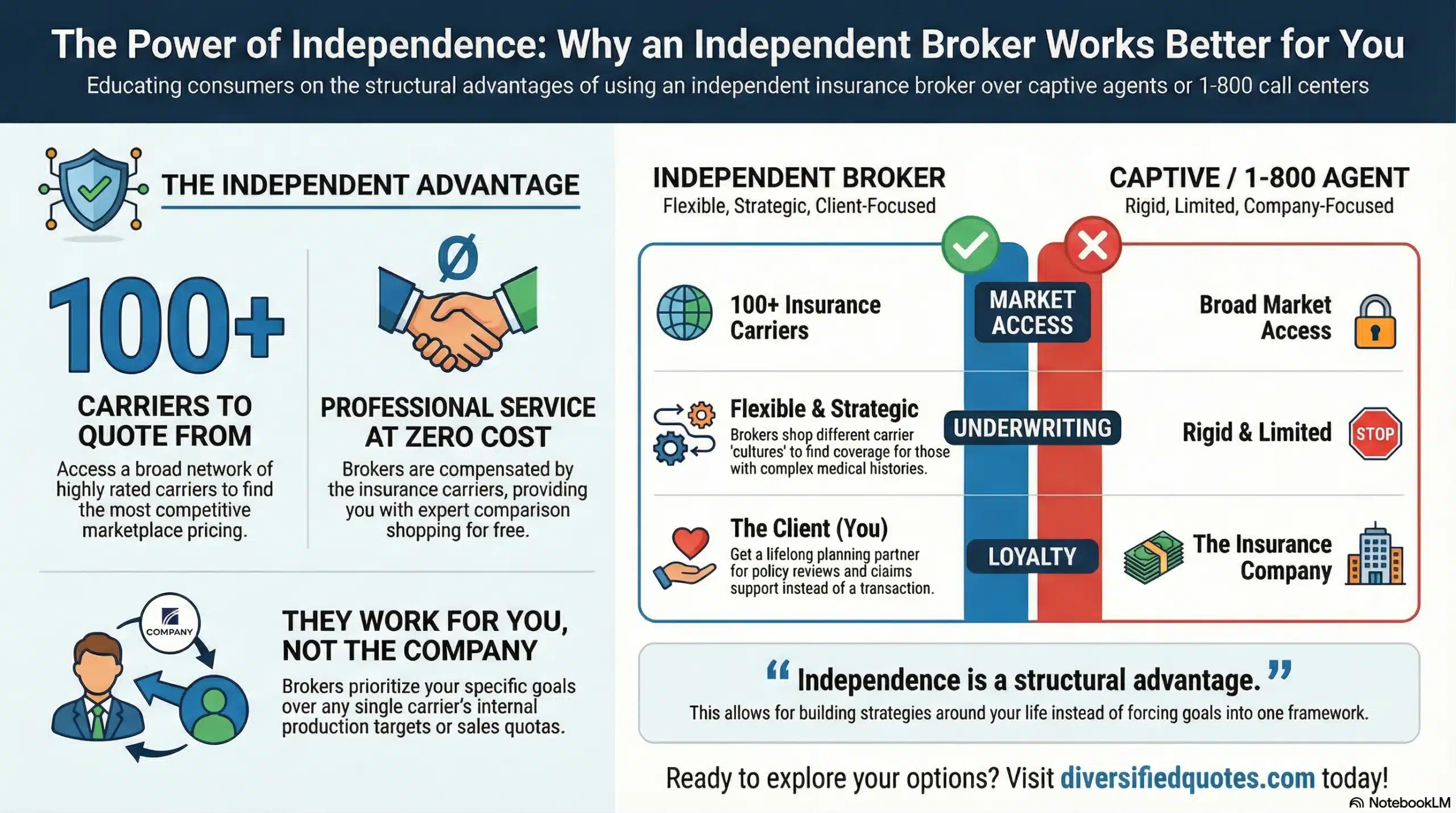
An independent broker can compare those guidelines across carriers and prescreen your case before an application is submitted. This can matter a great deal for an applicant whose numbers sit near the edge of a class, since moving up one class can noticeably lower the premium across the life of a term policy.
A broker generally does not add to what you pay. Each carrier sets the price for its products and rate classes, and that price is normally identical whether the policy is bought direct or through a licensed agent. We go deeper on this in a piece asking whether using a broker costs less. What a broker adds is reach: more carriers, more underwriting opinions, and a better chance of matching your numbers to the right guidelines.
How Our Office Helps
We begin by learning your full picture: when you were diagnosed, how your PCOS is treated, your most recent A1C and other lab results, your height and weight, your blood pressure and cholesterol, and any related conditions such as sleep apnea or depression. We also want to know the job the coverage has to do, such as protecting a mortgage, replacing income, or providing for children.
With that information, we run an informal prescreen with carriers that suit your numbers, before any formal application exists. The feedback shows which companies are likely to offer the best class, how each will read your medications, and whether an improved lab result would help. After that we suggest a carrier and timing, and help you assemble a medication list and records that tell your story clearly.
After you apply, we stay involved through the exam and records requests and answer any questions the underwriter raises. When an offer arrives, we explain it, compare it with what other carriers would likely offer, and help you decide whether to accept it or seek a better class elsewhere. Because we are an independent office, our recommendation is based on your results and your goals, not on any one company’s guidelines.
Ready to find the carrier that fits your PCOS history?
Start My Prescreen
Financial Protection Essentials
Planning guides for women protecting a family, a home, and future goals.
Talk With an Advisor Today
Choose how you’d like to connect—call or message us, then book a time that works for you.
Schedule here:
calendly.com/jason-dibcompanies/diversified-quotes
Licensed in all 50 states • Fiduciary, family-owned since 1980
Frequently Asked Questions
Does PCOS affect life insurance rates?
Often very little on its own. Underwriters focus on the measures linked to PCOS, especially A1C, build, blood pressure, cholesterol, and liver tests. With normal results, many applicants qualify for the same classes as anyone else. For a broader look, see how carriers handle coverage with pre-existing conditions.
Do I have to disclose PCOS on a life insurance application?
Yes. Answer every health question accurately and list your medications with the reason for each. PCOS and its treatments will appear in medical records and prescription checks, and an omission can delay the decision or create problems during the contestable period.
Will taking metformin for PCOS hurt my application?
Not if it is explained. Metformin is widely used for type 2 diabetes, so an underwriter may assume diabetes unless your records and application show it is for insulin resistance with normal blood sugar. If your A1C is elevated, our guide to coverage with a high A1C covers how carriers respond.
What happens at the life insurance exam?
A paramedical examiner records your height, weight, and blood pressure and collects blood and urine samples, usually at your home or office. The blood panel typically includes A1C, cholesterol, and liver tests. Each step is covered in our explainer on what the life insurance exam involves.
Can I get coverage without an exam if I have PCOS?
Often, yes, if your PCOS is mild and your prescriptions do not suggest diabetes or other conditions that push the case into full underwriting. Some accelerated programs exclude diabetes. See how life insurance without an exam programs decide who qualifies.
How fast can I get an approval?
Accelerated decisions can come within days for healthy applicants, while fully underwritten cases that need medical records usually take longer. Speed and price do not always go together. Our article asking whether instant decision term life is expensive compares the trade-offs.
My offer came back lower than expected. What should I do?
Find out which measure caused it, such as A1C, build, or cholesterol, then compare how other carriers treat that same result. Limits differ widely between companies. Here is how to get a second opinion on your quote.
I was declined. Can I still get life insurance?
Often. A decline frequently reflects one carrier’s limits or a temporary issue rather than a final answer. Another carrier, or the same one after your results improve, may view the file differently. Read about applying after a prior decline for next steps.
Should I buy coverage before trying to start a family?
For many women with PCOS, yes. Applying while lab results are normal and before pregnancy or fertility treatment can make the process simpler and lock in a rate class. Our page on life insurance for new parents covers how much coverage families typically consider.
About the Author:
Jason Stolz, CLTC, CRPC, DIA, CAA and Chief Underwriter at Diversified Insurance Brokers (NPN 20471358), is a senior insurance and retirement professional with more than 25 years of real-world experience helping individuals, families, and business owners protect their income, assets, and long-term financial stability. As a long-time partner of the nationally licensed independent agency Diversified Insurance Brokers, Jason provides trusted guidance across multiple specialties—including fixed and indexed annuities, long-term care planning, personal and business disability insurance, life insurance solutions, Group Health, Travel Medical and Evacuation Insurance, and short-term health coverage. Diversified Insurance Brokers maintains active contracts with over 100 highly rated insurance carriers, ensuring clients have access to a broad and competitive marketplace.
His practical, education-first approach has earned recognition in publications such as VoyageATL, and contributions from his agency featured in Kiplinger and GoBankingRates— highlighting his commitment to financial clarity and client-focused planning. Drawing on deep product knowledge and years of hands-on field experience, Jason helps clients evaluate carriers, compare strategies, and build retirement and protection plans that are both secure and cost-efficient. Visitors who want to explore current annuity rates and compare options across multiple insurers can also use this annuity quote and comparison tool.
Explore More Life Insurance Options: Browse our complete guide to Life Insurance for Diabetes, Weight & Metabolic Conditions — covering Type 1 and Type 2 diabetes, high blood pressure, and weight-related underwriting from 100+ carriers.
Last Reviewed: November 1, 2026 |
Reviewed by: Jason Stolz, CLTC, CRPC, DIA, CAA
Chief Underwriter, Diversified Insurance Brokers, Inc. | NPN: 20471358 | Diversified Insurance Brokers, Inc. — Licensed in all 50 states
Fact Checked by: Tonia Pettitt, CMIP©
Medicare Specialist, Diversified Insurance Brokers, Inc. | NPN: 14374308 | Diversified Insurance Brokers, Inc. — Licensed in all 50 states
Did you find this content helpful? Leave us a Google review — it helps others find trustworthy guidance too.
Editorial Standards: Diversified Insurance Brokers maintains rigorous editorial standards to ensure accuracy, clarity, and independence in all content. Learn more about our editorial standards and commitment to transparency.
